• Skip to main content
  • Skip to primary sidebar
  • Skip to footer

LifeCare Chiropractic

The Best Chiropractic Care in Mesa, Arizona

  • Home
  • About
    • Why Lifecare?
    • About Dr. Bogash
    • Team Members
  • Common Conditions
    • Wrist Pain/Carpal tunnel syndrome
    • Elbow Pain/Epicondylitis
    • Headaches
    • Knee Pain and Knee Injuries
    • Low Back Pain
    • Shoulder Pain and Rotator Cuff Problems
  • Additional Services
  • Testimonials
  • Blog
  • E-Books
  • Contact

Headache, Migraine and Seizure Cures

Having Seizures? What are YOU Doing to Protect Your Brain?

June 2, 2015 by James Bogash

Natural remedies for seizures
Too few seizure patients make good choices

There are natural remedies for seizures that have shown strong effectiveness in medical studies; the same types of studies that are used to document the effectiveness of the drugs that are used to treat seizures.

In other words, natural approaches to helping seizures like good sleep, omega 3 fatty acids, vitamin D, the ketogenic diet and exercise have just as much support behind them as do the drugs used to treat epilepsy.  But for some reason these approaches take a back seat to medications.

They are used as a last-ditch-backup-plan effort.  And even then sometimes only after you ask your neurologist about them.  There is this general bias that, if something is not a drug then it’s not really going to be as effective or powerful.

This bias extends throughout all specialties.  How many oncologists talk to their patients about dietary changes and exercise?  In my experience all too few.  And this is despite many studies that find that dietary factors can double survival rate (good choices) or lower life expectancy (bad choices).

Given the many lifestyle choices that can have an active role and benefit in seizure severity, frequency and response to treatment, these are choices that every epileptic should be embracing.

Right?

I mean—it’s your BRAIN we’re talking about here.  Not the pinky toe on your left foot or the nail of your index finger.

Which makes the results of this particular study a little bit more disturbing.  In it, researchers looked at how many people with seizures where living a lifestyle that includes some of these simple recommendations.  Here’s what they found:

  • About 22% of adults with active epilepsy smoked.
  • Only 35% of adults with active epilepsy met recommended physical activity guidelines.
  • Only 40% with active epilepsy reported walking for at least 10 min during the last 7 days.
  • Only 50% with active epilepsy reported sleeping 7 or 8 hours each day.

These are all brain-healthy behaviors that have been shown to have an impact on either the severity or frequencies of seizures or the response to anti-seizure medications.  Despite this, these simple behaviors are performed at a way higher rate than they should be in people with epilepsy.  And at a worse rate then the general population who do not experience seizures.

Maybe some of these percentages are due to the seizures themselves.  Maybe epileptic patients are sleeping as well because of medications.  Maybe they are unable to exercise because of the danger to injuring themselves or because they are too sore from the grand mal they had yesterday.  And I’m sure that is the case for some of the people questioned for this study.

But smoking?  There’s no excuse to make a distinct effort at quitting a behavior that is literally destroying your brain all by itself, but then is making your epilepsy worse.

There is the chance that this is due a lack of emphasis on the part of the treating physician in regards to how important these choices are for overall brain health, especially in someone who is already challenged in the brain-health department.

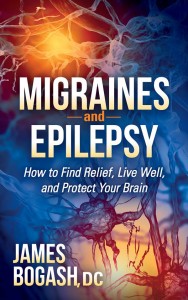
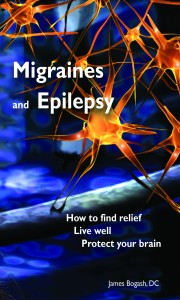
If you are epileptic, it is up to YOU to protect your brain in every way possible.  It is up to YOU to educate yourself on ways to do so (and, if I may add, checking out my Migraines and Epilepsy book would be a good idea to start you along your way).  And most importantly, it’s up to YOU to adopt these brain-healthy behaviors so that you can better control or even eliminate your seizures for a lifetime.
Filed Under: Seizures / Epilepsy Tagged With: epilepsy, natural remedies for seizures, seizures / epilepsy

Anti-Seizure Medications: Are You on Too Many?

May 25, 2015 by James Bogash

seizure medication use
Too many seizure meds may create problems

The mainstream approach to treating seizures is to use medications.  And it pretty much stops there.

You may get some cursory advice to exercise and watch your stress levels, but the reality is that many neurologists believe that nothing you can do will be as powerful as the anti-seizure medications.

When those medications don’t work at all (which is about 30% of the time) another medication is tried.  Most of this is guesswork.  There really is no science behind who will benefit from Drug A over Drug B.  Much of this is provider experiences—they go with what they know.  And they are more likely to try the new fancy drugs over the older ones that have decades of history.

When the list of drugs doesn’t work or doesn’t give adequate seizure control, another drug is added to the mix.  At this point, we’re completely out of the realm of double-blind placebo controlled studies and into guesswork.

Every anti-epileptic drug has a list of side effects.  Some minor, some life-debilitating.  And the more drugs you add in, the longer this list of side effects becomes.  And this still does not guarantee that the seizures will be controlled.

Poor controlled seizures are called refractory.  In this interesting study, researchers took 962 patients with drug refractory epilepsy and put them in a neurology ward to see what would happen if the number of medications they were on were reduced from an average of 4.24 down to a maximum of three AEDs during their stay in the ward.

Personally, I think 3 meds still sounds like an awful lot of foreign chemicals running through the brain.  I’d wonder how many of these patients were also trying natural approaches to seizures that have been shown to be effective like exercise, omega 3 fatty acids, vitamin D and diet.

Here’s what they found after these patients were followed up 6 months later:

  • After the tapering of the drugs, patients were on an average of 2.65 AEDs.
  • In 82.7% patients there was either a REDUCTION in seizure frequency or no change at all.

So basically, taking these patients off of some of their drugs led to no change or an actual improvement in seizure frequency.  Clearly there is something wrong with the way these patients were managed.  For me, this makes it clear that medications are not the only answer and can actually begin to create more problems than they solve.

If you suffer from seizures and the first medication that you take does not adequately control your seizures, it is clear that you can no longer rely on medications alone to help heal your brain.

While it is beyond the scope of this post to outline things that can be done to heal your brain, feel free to check out my Migraines and Epilepsy book by clicking here.

Filed Under: Seizures / Epilepsy Tagged With: AED, epilepsy, epilepsy medication, seizure medication, seizures / epilepsy

Chronic Migraine Headaches, Inflammation and Your Belly

May 17, 2015 by James Bogash

Chronic migraine headaches and obesity
Naeblys/Dollar Photo Club

There ARE answers to eliminating or reducing your chronic migraine headaches, but the solution is not likely going to come in a pill.

Having been active on several of the larger Facebook migraine groups, the attitudes seem to be split.  There are those who are seeking answers because they know that there is an answer someone out there.  The others are there for support because they do not ultimately feel like there is a solution for their chronic headaches.  This group does not like to see the word “cure” anywhere near chronic migraine headaches because they do not believe that there is such a thing.

It’s very easy to see where these patients get this “there is no cure” mentality.  From their doctors.  If the only tools your doctor has in his toolbox are medications, then he or she will quickly run out of treatment options.  Then, since your doctor could not “cure” the headaches, he or she proclaims that there are no cures.

While I have definitely come across a small handful of patients who have, despite doing everything right, could not cure their chronic headaches, these patients are in the minority.  The vast majority of migraine sufferers can indeed find an answer.

But, as I mentioned, this answer is not going to be found in a single pill.  Nor will it be found in a single exercise or single supplement or a single perfectly executed chiropractic adjustment.  Rather, conquering true migraines requires a comprehensive approach that includes stress reduction, exercise, diet, chiropractic care, supplements, stress management and attention to the chemicals you are exposed to.

I never said it was going to be easy.

Sometimes, the answers IS easy and all it takes is the right advice or treatment from someone who can view migraines from a unique perspective.  Other times, the changes needed require a much more committed attack on your part.  Some of these may include:

  1. Identification and management of sleep apnea
  2. Quitting smoking
  3. Getting stress out of your life
  4. Achieving and maintaining an optimal body weight

These items can’t just be done with the flip of an internal switch.  I don’t really remember ever telling a patient that he or she needs to stress less. quit smoking or  lose weight and he or she got a surprised look saying that he or she never thought of that before and will start right away on making positive changes.  Nope.  These things require a complete turning around or your interior thought process and a solid commitment to making the right choices for your brain.

And yet they have to be done.  A smoker who is having migraines cannot expect a “cure” until he or she quits smoking.  The same with the other 3 on the list.  Oftentimes, when someone says there is no cure, what they really mean is that there is no medicine or supplement or manual treatment that is going to overcome the damage that these 4 factors are doing to your brain.  Period.

Just to emphasize this point, I’d like to present this particular article.  In it, researchers looked at a small group of migraine sufferers to evaluate the levels of abdominal fat-derived hormones (called adipokines–you can read a prior blog article where I covered this topic more in detail by clicking here) and how these related to the severity of the headaches as well as the response to treatment.  Here’s what they found:

  • Initial pain severity was higher as the number and ratios of adipokines increased (HMW:T-ADP ratio and resistin levels).
  • In those who responded to the use of sumatriptan/naproxen to control the pain of the headaches, certain fat-derived hormone levels dropped within 2 hours of being given the treatment (T-ADP and resistin levels).
  • In addition, in those who responded to treatment, other adipokine ratios improved (HMW:T-ADP ratio decreased and LMW:T-ADP ratio).

So what do the authors conclude?  That we need to look at these adipokines as a new route to treating migraine headaches.  In other words, we need to find a drug that can control adipokines and thereby better control headache pain.

It is this attitude that has kept migraine sufferers from thinking that there is no cure.  The real take home message from this study is that hormones that come from unhealthy fat in your gut play a very large role in chronic migraine headaches.  This means that achieving and maintaining an ideal body weight is an absolute necessity when it comes to migraine treatment.  Without this on the treatment plan, your abdominal fat is actually rising up against your brain, creating inflammation in the short term and damaging the blood vessels that provide all-important nutrients to your brain cells in the long run.


Filed Under: Migraine, Obesity and Weight Loss Tagged With: adipokines, chronic migraine headaches, headaches, lepitn, migraine, migraine headache cure, obesity and weight loss, resistin

MS, Seizures, Migraines–Can Your Gut Protect Your Brain?

April 18, 2015 by James Bogash


gut bacteria and the brain
fotoliaxrender / Dollar Photo Club

Anyone with a neurological condition, whether anxiety, depression, epilepsy, migraines or MS, will tell you that symptoms wax and wane.  But why?

While a common occurrence, it seems that few question why this is so.  It is considered more as just a course of the condition.  But what if the fluctuations of symptoms are not only explainable, but possibly controllable?

The blood brain barrier (BBB) is a layer of cells that basically separates your brain cells from the rest of your body.  Consider it like the Great Wall of China for your brain.  And there are very specific gates that restrict access to only what your brain needs.  Even immune cells cannot cross this barrier.  Luckily, the brain has its own set of immune cells (called the microglia) to fight off anything that threatens to attack the brain cells.

The BBB develops very early in the womb and, as a result, the immune system never really “sees” the cells that make up the central nervous system.  In other words, it’s a very sheltered, protected environment due to the presence of the BBB.  Or at least it would be if the BBB remain intact.

We know that in certain neurological conditions, like multiple sclerosis (MS), the BBB solidity fluctuates, sometimes doing what it is supposed to be doing and sometimes letting in chemicals, compounds and immune cells that the brain would be better off not being exposed to.  This leaky BBB has been linked to symptom flare ups in MS.

What if you could better control your blood brain barrier through lifestyle choices?  That’s exactly the question raised by this particular study.  In it, researchers looked at two groups of mice.  The first were born to mothers who were raised in sterile, germ-free environments.  In other words, this group of mice did not have the benefit of being exposed to bacteria from the womb on.  The second group was born to mothers who were raised with normal exposures to bacteria.

Here’s what happened:

  • The germ-free mice had a leaky BBB while the normal mice did not.
  • The leaky BBB started in the womb and continued through birth and during adulthood.
  • The mice with leaky BBB had reduced expression of proteins that protect the brain barrier (tight junction proteins occludin and claudin-5).
  • However, when the gut bacteria from the normal mice were put into the damaged BBB mice, the blood brain barrier stabilized and there was a higher production of tight junction proteins.

This is an animal study and done under controlled conditions, but given how much the gut bacteria have been shown to play a role in other neurological conditions, the results of this study are likely to fit in with what we already know.  The relationship between the bacteria in our gut and just about every aspect of health is literally exploding at an exponential rate.  It seems like every day we learn more about how it affects our health and risk of chronic disease.

Despite this, I have patients come in time and time and time again given drugs like antibiotics, steroids and NSAIDs that completely disrupt the delicate balance of the bacteria in the gut.  This remains a topic that mainstream medicine seems determine to remain oblivious to no matter how much research is published.

Filed Under: Migraine, Probiotic, Seizures / Epilepsy Tagged With: antibiotics, anxiety, depression, epilepsy, migraine, MS, multiple sclerosis, probiotics, seizures / epilepsy

Chronic Migraines and Seizures Linked-Does Your Neuro Know?

February 28, 2015 by James Bogash

chronic migraines and seizures
Piumadaquila / Dollar Photo Club

One of the first reactions to my Migraines and Epilepsy book is that people don’t understand what these two conditions have in common.

At it’s foundation, these two conditions share the same mechanism.  I have personally known this for at least a decade, but the information seems to be taking a while to get out there.  Which may seem strange because chronic migraine headaches and seizures are both within the realm of neurology.  Indeed, over the past few years there has been increasing overlap between anti-seizure drugs being used to treat migraines (Topamax, for example).  Taking this even further, anti-seizure medications like Depakote have also been used to treat certain psychological disorders like bipolar disorder.

All in all, if you can take a step back you can see that many of the “brain” conditions overlap.  There is a high incidence of depression in those who suffer from seizures.  Anxiety disorder is also found in much higher numbers in people with epilepsy.  And of course, the aforementioned relationship between seizures and migraines headaches has been demonstrated fairly consistently in clinical studies.

In many cases these relationships are termed “comorbidities” meaning that they occur commonly together.  Kind of like curds and whey.  You can certainly have curds without whey or whey without curds, and neither choice is really connected together other than at some point someone decided to start a trend of eating them together (most likely Little Miss Muffet…).

In most comorbidities pointed out by mainstream medicine the conclusion almost always recommendations to look for the comorbid condition and throw medications at this problem as well.  Need an example?  How about high cholesterol and high blood pressure?  Two conditions that are frequently seen together and considered comorbidities.  And these conditions are given two completely different types of meds for each one.

But these conditions are NOT two separate conditions!!!  Ugh!  At what point will medicine wake up and realize that, in almost every case, comorbid conditions are two conditions that occur from the same problem.  Sticking with the use of analogies, if your car has a severely worn out tire that is flip-flopping and making all kinds of noises as you drive as well as pulling the car to the right would it make ANY sense to adjust the steering so it counteracts the pulling and then turn up the radio so you don’t hear the flip-flopping?

Of course not!!  That would be the most asinine thing you could imagine and you’d shoot the mechanic who recommended this two-pronged “fix.”

Welcome to medicine.

When we identify two conditions occurring at a high frequency with one another, never do we step back and ask, “Hey!  What on Earth could be wrong with the body to produce both migraines and seizures?”

Nope.  We just add on more medications for the second condition.

When it comes to both migraines and seizures there has been evidence for many years now that the underlying mechanism is the same or at least real similar.  The underlying problem centers around the ability of the brain cells to generate enough energy for that brain cell to function optimally.  Without enough energy the brain cell goes haywire.  In some people this produces a migraine, in others a seizure.

Now, it’s not quite that simple, but that’s the basics.  This is also why so many things that have been shown to be helpful for migraines are helpful for seizures and vice versa.  Exercise, essential fatty acids, antioxidants, magnesium, vitamin D….the list is pretty long.

So what does all of this have to do with this particular study?  In it, researchers asked 772 neurologists across 89 hospitals as well as two tertiary epilepsy clinics about whether they thought current headaches are more frequent in people with epilepsy than in the general population.  Keep in mind that this relationship has been understood for some time now and I have written about this in past blog posts.  In other words, it’s not new news.

Here’s what the researchers found:

  • Only 1/3 of the neurologists correctly understood that headaches are more common among people with epilepsy.
  • A mere 8% understood that these headaches are consistent with migraine.
  • The number of years of experience did not influence knowledge on headaches in epilepsy patients.
  • However, the interest in epilepsy and the number of epilepsy patients per month seen in the polyclinic did.

I have said time and time again that the vast majority of physicians are decades behind the medical research, specialists included.  This article just reinforces the idea that there is a VERY good chance that your neurologist does not really understand the relationship between chronic migraine headaches and seizures.  Maybe you could buy him or her a copy of my book for Christmas…

Filed Under: Migraine, Seizures / Epilepsy Tagged With: chronic migraine headaches, epilepsy, headaches, migraine, seizures / epilepsy

Children, Gluten, Sleep Apnea and Headaches, Oh My!

February 25, 2015 by James Bogash

gluten sensitivity in children
duckman76 /Dollar Photo Club

Here’s the reality of human physiology; we will NEVER understand how complicated it is.   Gluten sensitivity’s effect on the brain falls under this category.

There’s no doubt that many of us has a grasp on small amounts of how the body works, but the big picture is just too big for any one of us to understand fully.  It’s kind of like–I can drive around here in Phoenix quite well and know where I’m at or at least how to get to where I need to go.  But drop my in Dubai without a map or GPS and I’m pretty much screwed (especially since my Arabic is a little rusty…).

That’s a pretty good analogy to the human body and its complexity.  The most that any of us can hope for is a glimpse of insight into how it works and how we, as physicians, can help patients heal and live full lives.

This is one of the reasons why my passion has always been normal physiology and how the lifestyles we are SUPPOSED to be living impact that.  I figure it’s easier to match how we are designed to live then to figure out the details of that process.  Sort of like recommending more vegetables in your diet (because it’s the right thing to do) instead of understanding how glucosinolates in broccoli assist detoxification of environmental contaminants.

Just to complicate things even more, every system in the human body communicates and interacts with every other system.  The connections between the gut and the brain are particularly strong.  This is why treatment for any “brain disorder” should always include a look at the gut.

While this relationship may seem a little strange at first glance, the reality is that the gut is considered the body’s “second brain” since its production of neurotransmitters is as heavy as the brain.  As an example, 2/3 of the body’s serotonin is produced in the gut NOT the brain.

To further complicate matters, your DNA codes for about 25,000 different genes that make all kinds of different proteins to make sure your body is working the way it is supposed to.  Just in case that sounds a little overwhelming, the bacteria in your gut, collectively, have about 3 MILLION genes, all equally capable of making proteins that effect your health and risk of disease.

With this as a background, we can now look at just how absolutely jaw-dropping amazing this particular study is.  It brings together so many of these concepts that it is going to make your head spin.  In this small study, researchers looked at 19 children who had newly diagnosed celiac disease confirmed through an intestinal biopsy and followed them for 6 months while on a gluten free diet.

In these children with gluten sensitivity, there were some disturbing findings:

  • 37% of the children had headaches that affected daily activities.
  • 32% demonstrated symptoms of obstructive sleep apnea.
  • 48% of the children had abnormalities on EEG (a test using electrodes to check brain activity).

These findings clearly indicate that gluten (essentially a gastrointestinal condition) was having very definite negative effects on the brain.  And make no mistake–these are serious conditions to be found in children.

Luckily, the researchers then found some amazing things that were affected by 6 months of a gluten free diet:

  • The headaches disappeared in 72% of children.
  • EEG abnormalities disappeared in 78% of the children.
  • ALL children no longer had symptoms of obstructive sleep apnea.

As I mentioned, this is a small study.  However, it does link to and support other studies that have found an increase in migraine headache in those with gluten sensitivity, which gives it more weight.  While many have called the gluten free diet a “fad” I think these naysayers have managed to miss much of the medical literature linking gluten with a long list of health problems.

Even better, this is a DIETARY change with no real downside or side effects.  It is an approach that truly gets to the root of the problem rather than just glazing over the symptoms with dangerous medications with a long list of side effects.

Also, while this study only evaluated biopsy-confirmed celiac disease, which is at the far end of the spectrum, you can bet that lesser degrees of sensitivity will also link to neurological damage.  It will just be more subtle.


Filed Under: Celiac Disease, Migraine, Sleep Apnea Tagged With: celiac, children, EEG, Gluten, headache, migraine, sleep apnea

Chronic Migraine Relief Starts in Childhood

January 31, 2015 by James Bogash

chronic migraines and childhood abuse
dmitrimaruta/Dollar Photo Club

As a parent, it breaks my heart to think of any child having to worry about things like being loved, fed properly and treated with respect. Unfortunately, the effects of childhood maltreatment can last a lifetime.

This maltreatment can come in the form of nutritional abuse, sexual abuse, physical abuse or emotional abuse.  While I firmly believe that the damage from raising a malnourished child can be greatly reduced or even eliminated by better nutritional choices in the future, the other forms of abuse, however, leave scars that are worn on the inside.  These scars can’t be seen with an MRI, CT scan or bloodwork.  And far too often as the abused child grows into adulthood he or she may not even recognize the damage that has been done.

Or many may think that they have risen above it and it remains a dim memory.  Little does he or she think that being raised in an abusive household is now playing a major role in why he or she is depressed, obese, has high blood pressure and heart disease.  Or that abuse from decades ago may be a critical factor in the fact that he or she suffers from chronic migraines.

To understand just how strong these links can be, this particular study looked at the relationship between childhood maltreatment and headaches.  Researchers looked at  8,305 people who suffered from chronic migraines and 1,429 people who had episodic tension-type headaches to see if recalled adverse childhood experiences (ACEs) played a role in the headaches.  Here’s what they found:

  • 24.5% of migraine sufferers had ACEs and 21.5% of chronic tension headache sufferers also had ACEs.
  • Migraines were linked to emotional abuse (22.5%) as well as tension headaches (16.7%).
  • Sexual abuse in migraines was 17.7% and 13.3% in tension headaches.
  • Overall, migraine sufferers were 23% more likely to have reported emotional neglect, 46% higher emotional abuse and 35% more likely to have experienced sexual abuse than those with chronic tension type headaches.

Overall, both groups of chronic headache sufferers had strong relationships to adverse childhood experiences, but the migraine sufferers were much more likely to have experienced childhood abuse.

This was a very large study, encompassing about 10,000 headache sufferers.  It is astounding that almost 1/4 of this group had experienced childhood abuse.  Maybe psychologists out there that deal with past childhood experiences may not be as surprised as I am about just how common this is, but quite frankly it disgusts me.

Even worse, this damage carries forward and can drastically affect the health of the child as he or she grows up.  There is nothing fair at all to the adult who is suffering today as a result of abuse that happened in the past when it was well beyond his or her ability to control.

If you suffer from chronic migraine headaches and have been a victim of abuse as a child, it seems clear that developing a relationship with a skilled therapist to help you manage your health should be as essential as a part of your team as a chiropractor or neurologist.


Filed Under: Migraine Tagged With: childhood abuse, Chronic Migraine Headache, migraine, tension type headache

Migraines and Stroke Risk

January 19, 2015 by James Bogash

IS YOUR MIGRAINE DANGEROUS?
Other than the obvious brain tumor causing a headache (which is actually not common for some brain tumors like gliomas), the answer is YES.  First off, let’s clarify something.  Many, if not most, patients who come in telling me they have a migraine do not actually, have migraines.  Most are tension type headaches in disguise.  Which is good, because these are usually pretty easy to treat.  Migraines, however, are the brain’s way of screaming out that it’s not happy about the health of the body.  So medications that suppress migraines and don’t fix the body do NOTHING for the long term risks of heart disease and stroke that migraines are at risk for.  The ONLY correct approach to migraine treatment is to comprehensive address the patients lifestyle.  If you have migraines and your neurologist or PCP has not talked to you about lifestyle changes for your migraines, maybe it’s time to find a new one.
Read More

Filed Under: Migraine, Stroke Tagged With: chronic migraine headaches, headaches, tension type headache

  • « Go to Previous Page
  • Page 1
  • Page 2
  • Page 3
  • Page 4
  • Page 5
  • Interim pages omitted …
  • Page 18
  • Go to Next Page »

Primary Sidebar

Patient Quick Guide

Schedule An Appointment
Contact Our Office
Download Patient Forms

Categories

Chiropractic Mesa Arizona

Arthritis Chiropractor Mesa AZ
Graston Technique Mesa AZ
Back Pain Chiropractor Mesa AZ
Back Pain Doctor Mesa AZ
Wrist Pain Chiropractor Mesa AZ
Rotator Cuff Chiropractor Mesa AZ
Shoulder Pain Chiropractor Mesa AZ
Knee Pain chiropractor Mesa AZ
Manipulation Under Anesthesia In Mesa AZ
Headache Chiropractor Mesa AZ
Chiropractic Mesa AZ
Stem Cell Therapy Mesa AZ
Regenerative Medicine Mesa AZ
Massage Therapist Mesa AZ
Shoulder Pain Doctor Mesa AZ
PRP Therapy Mesa AZ
Chiropractic Mesa AZ
Who Is The Top Chiropractor In Mesa AZ?
Knee Injury Doctor Mesa AZ?

Footer

Resources

Site Map
Disclosure
Additional Resources

Best Massage Therapist Mesa AZ
Arthritis Doctor Mesa AZ
Chiropractic Mesa AZ
Back Pain Doctor Mesa AZ
Rotator Cuff Doctor Mesa AZ
Chiropractor Mesa AZ
Massage Therapist Mesa AZ
PRP Therapy Mesa AZ
Knee Pain Doctor Mesa AZ
Stem Cell Therapy Mesa AZ
Headache Doctor Mesa AZ
Shoulder Pain Doctor Mesa AZ

Office

Lifecare Chiropractic
1830 S. Alma School Rd, Ste 135
Mesa, AZ 85210
(480)-839-2273
Also Serving Tempe, AZ

Get Directions

  • Home
  • About
  • Common Conditions
  • Additional Services
  • Testimonials
  • Blog
  • E-Books
  • Contact

Copyright © 2026 · LifeCare Chiropractic · All Rights Reserved.