• Skip to main content
  • Skip to primary sidebar
  • Skip to footer

LifeCare Chiropractic

The Best Chiropractic Care in Mesa, Arizona

  • Home
  • About
    • Why Lifecare?
    • About Dr. Bogash
    • Team Members
  • Common Conditions
    • Wrist Pain/Carpal tunnel syndrome
    • Elbow Pain/Epicondylitis
    • Headaches
    • Knee Pain and Knee Injuries
    • Low Back Pain
    • Shoulder Pain and Rotator Cuff Problems
  • Additional Services
  • Testimonials
  • Blog
  • E-Books
  • Contact

Headache, Migraine and Seizure Cures

Migraines Have Potentially Deadly Consequences

November 16, 2015 by James Bogash

I frequently have patients tell me that this or that condition is “under control” with medication.  As a society we have been completely duped into this type of thinking.

Migraines are no exception.

Regardless of whether someone is medicated or not, the fact that they are having migraines means that something is wrong.  Merely the suppression of the symptoms does NOTHING for the underlying cause.  In this particular study, the research strongly suggests that patients who experience migraines with aura are under much higher levels of oxidative stress and inflammation, which has consequences such as heart disease and stroke.

Here’s what they found:

  • Women with active migraine with aura had a 225% higher risk of a haemorrhagic stroke.
  • For bleeding within the cerebral cortex (intracerebral haemorrhage) the risk was slightly higher at 278%.
  • For fatal strokes, the number skyrocketed at 356% higher risk.

This association plays out pretty consistently in the medical literature.  The bottom line is that we have to make the changes necessary to get rid of the migraines or suffer the long term damage.
 

Filed Under: Migraine, Stroke Tagged With: chronic migraine headaches, migraine, migraines, stroke

The Ketogenic Diet; How to Make a Good Thing Better

November 8, 2015 by James Bogash

The ketogenic diet has been a powerful tool for seizures forever.  Longer even then the drugs to treat seizures that are commonly used.

The unfortunate fact is that natural approaches to seizures are almost always the last tool recommended by neurologists, despite the fact that they typically perform better than medications.

Maybe one of the reasons that doctors don’t recommend natural approaches like the ketogenic diet because they require a much greater commitment to care than does taking a medication once or twice a day.  But this decision should ALWAYS be left up to the patient—it is not your doctor’s choice to decide whether or not you will make the commitment.

There are basically two “problems,” if you will, with the ketogenic diet.  One is compliance (needing to avoid carbohydrates can be too restrictive for some, especially with hidden triggers in all kinds of foods) and the other is effectiveness.

What if these two issues could be address with additional tools?  And what if these tools were the same?

This cannot be said of medication.  Let’s say you’re on Topamax for your seizures (for the sake of simplicity we won’t go into how often epileptic patients end up on multiple medications).  Really the only options for you to increase seizure control would be to increase the dose.  And along with that added dose comes greater side effects.

(And just in case you thought you’d try the ketogenic diet along with your medication, recent research suggests that certain anti-epileptic drugs can actually reduce the effectiveness of the ketogenic diet–this should be of grave concern to anyone on anti-epileptic drugs.)

And the risks of increasing your anti-epileptic drug dose includes getting shot by overzealous video game addicts who have played one too many zombie-killing games.  That and drooling on a new shirt.

Or you could always add another medication.  Although most often this is mere guesswork and just increases the side effect list without a real improvement in quality of life.

This is not going to be the case when you add tools to the ketogenic diet.  Adding tools could mean that you need to adhere to a slightly less stringent protocol or that you could get even better seizure control.  Just imagine living life on the edge by staring into a strobe light or going to see Blue Man Group.

Let’s cover these two options separately.

First has to do with modifications to the standard ketogenic diet.  Some of these are modifications, while some of them I’m including because they are diets that you should be aware of.  The best resource, unquestionably, is the Charlie Foundation, which was formed to promote the use of the ketogenic diet.

  1. Standard ketogenic diet—this one is the most restrictive, with a 4:1 ratio of fats to carbs/proteins.
  2. MCT ketogenic diet–this diet uses MCTs from coconut oil as the main source of calories, allowing for a higher carb intake and more variety in the diet
  3. Modified Atkin’s Diet (MAD)—the ratio is less restrictive at 1:1 of fats to carbs/proteins
  4. Glutamate/Aspartate Restricted Diet (GARD)—designed to restrict the intake of the excitatory neurotransmitter glutamate found in certain foods (the best resource on the specifics can be found here).

All of these can be extremely powerful natural tools for managing seizures.  The clinical studies have been done and the anecdotal stories from patients are everywhere.  I remain amazed by one particular group on Facebook specifically geared towards Diets for Epilepsy.  The specific knowledge of the people in this group has continually reminded me of how much I have to learn.

One of the problems with the ketogenic diet is that we just don’t really know how it works specifically.  There is lots of educated conjecture, but nothing to date has nailed it.  Some theories about how the ketogenic diet works include:

  • Alteration of the gut bacteria, changing the neurotransmitters released from the gut to a less excitatory pattern
  • Avoidance of gluten on the ketogenic diet (gluten has been established as a player in many persons with epilepsy)
  • Change in dietary fat intake since fat plays such a major role in brain cell function and health

Besides these theories, looking at it from a deeper biochemical level, ketogenic diets are known to increase levels of a compound in the brain called hypoxia-inducible factor-1α (HIF-1α).  HIF-1α is a compound that is released in response to lowered levels of oxygen.  Basically a protective compound released that causes the brain to go into “uh-oh” mode and snap to attention, leading to all kinds of VERY positive changes in brain cell function.

Besides HIF-1α, there is also evidence that the ketogenic diet can activate Sirt1 in brain cells.  For those of you not familiar with Sirt1, it is a gene that does all kinds of wonderful things in our body and is considered by some as a “longevity gene.”  Well-known is its ability to increase both the number and function of the mitochondria in cells.  More mitochondria means more ATP with less by products.  More ATP means a much healthier brain cell able to control firing and thus seizure activity.

Thanks to the author of this particular article, we can look at this mechanism of the ketogenic diet and see if there are other tools that we can use to make the ketogenic diet even more powerful.  The author suggests that the biochemical changes induced by the ketogenic diet can go as far as helping the brain cells “clean house;” removing damaged mitochondria within brain cells.

Here are some ideas of how we could help this process naturally:

  • Berberine, a compound found in certain herbs such as goldenseal.
  • Metformin (not a natural approach and not my preference, but if a drug like metformin could reduce or eliminate the need of far more toxic anti-seizure drugs, well….).
  • Compounds known to increase Sirt1 activity such as nicotinamide riboside and resveratrol.
  • Medium-chain triglycerides (found in coconut oil)
  • Compounds known to increase the formation of ketone bodies (the compounds formed during the ketogenic diet from the higher intake of fats and very low levels of carbs) like carnitine and hydroxycitrate.

These are just some of the tools that could work.  This list is practically endless as there are a lot of other natural compounds that affect this pathway.

Interestingly, many of these approaches are already well-known to patients using the ketogenic diet.  Carnitine and coconut oil are common additions to the diets of people on the ketogenic diet.

If these tools can help to increase the effectiveness of diets for epilepsy or can make less restrictive diets work for others, this would be a drastic change to the way medicine handles seizures.

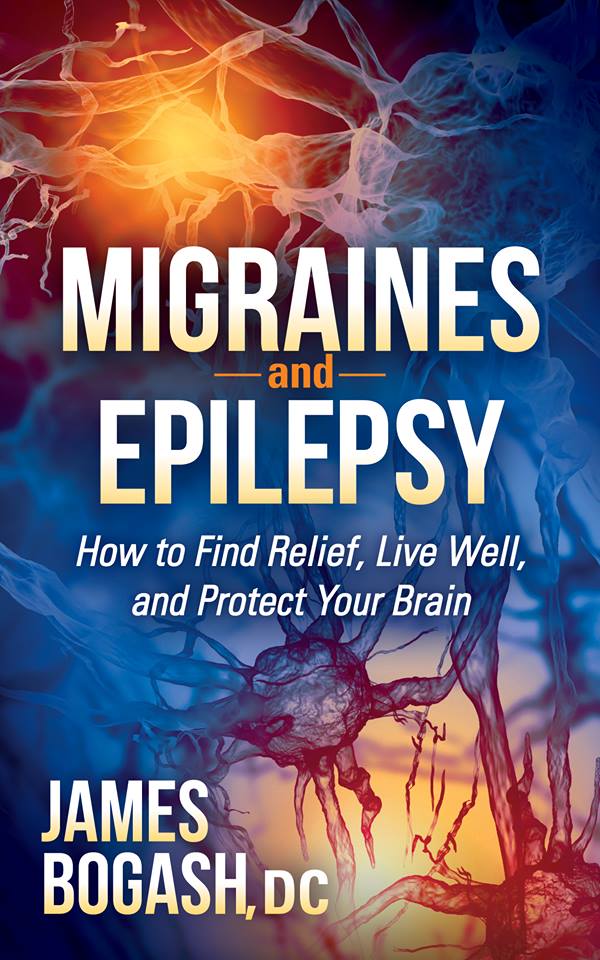
If this type of approach seems to make more sense to you then guessing which seizure med you should try next, then I’d strongly advise you joining the Diets for Epilepsy Facebook group as well as getting your hands on a copy of my Migraines and Epilepsy book.

Filed Under: Seizures / Epilepsy Tagged With: diets for epilepsy, epilepsy, GARD, ketogenic diet, natural approaches to seizures, seizures / epilepsy

Migraine Patients at High Risk for Dangerous Condition

November 5, 2015 by James Bogash

Have I mentioned that patients with migraines are at increased risk for all kinds of bad things because the headache is merely a reflection of something going very wrong with their physiology?  I wasn’t sure if I had…

This particular study finds a strong association between migraines and prediabetes.  Given how very dangerous prediabetes is for us (arguably more dangerous to our health than cigarette smoking), it does not surprise me that there is an association.

The good news for those with migraines?  Regardless of whether the prediabetes is contributing to the headaches or the physiological disturbances leading to the migraines also increase the risk of diabetes, it really doesn’t matter.  Improving the way your brain functions will impact both scenarios.  Kind of simple, huh?

Every migraine sufferer should be leading a lifestyle that is anti-diabetic.  This is of critical importance for chronic migraine relief and not usually a discussion that neurologists typically have with their headache patients.  You can not rely on medications to be the answer–lifestyle is the key to long term relief.

Filed Under: Migraine, Prediabetes Tagged With: chronic migraine headaches, Hyperinsulinemia, prediabetes

Do Migraines Harm Your Developing Baby?

October 26, 2015 by James Bogash

If you have read any of my articles that relates to migraines, then the answer that springs to mind is a strong YES.

I really don’t need to belabor the prior bit of information.  Bottom line is, if you suffer from migraines, do not be led into a false sense of security if the migraine medication you are on is controlling your headaches.  Fix the problem instead.

This particular article looks at the relationship between migraines sufferers and the risk of of adverse pregnancy outcomes (low birthweight, preterm birth, infants born small for gestational age, Caesarean section (CS) and pre-eclampsia).  Here’s what the researchers found when they looked at the pregnancy outcomes from 4911 women with migraines:

  • Low birth weight – 16% increased risk
  • Preterm birth – 24% higher risk
  • C-section – 16% higher risk
  • Pre-eclampsia – 34% higher risk

What does this tell us?  That the problem with migraines are NOT limited to the head.  If they were and medications did anything to fix the problem, than these higher pregnancy risks wouldn’t be present.

Filed Under: Healthy Pregnancy, Migraine Tagged With: Birth Defects, C-section, chronic migraine headaches, healthy pregnancy, migraine headaches, Pre-eclampsia, pre-term birth

Chronic Migraine Relief; Fats and Your Brain

October 24, 2015 by James Bogash

Natural remedies for seizures
fats and your seizures

Every migraine sufferer wants that miracle drug, treatment or cure that will provide chronic migraine relief. Personally, I don’t think this will ever happen.

Headaches are too diverse and too complex to be treated with a single approach. The only exception to this is those people who have been incorrectly diagnosed with migraine when what they really have is an isolated “structural headache.”  This is my term for a headache that comes from the structures of the head and neck. These headaches will respond incredibly well to treatment from a chiropractor who also fully understands how to treat the soft tissues involved in addition to adjusting the cervical spine.

But even patients with structural headaches are likely to have migraine-headaches overlaid upon the structural headaches. This means that structural treatment alone is not going to be enough in the long run. It may provide some relief in the short term, but ultimately the headaches will come back until you address the other factors.

Among other things, fats play a big role in how your brain works. If you remember way back to high school biology class, all of our cells are made up of a fatty cell membrane. And this cell membrane is a critical factor in determining what comes into the cell and what leaves the cell. This includes building blocks to make proteins in the cell as well as messages.

A healthy cell membrane makes sure that messages that are supposed to make it in get in and also make sure that messages that are NOT supposed to get into the cell stay out. This is why dietary choices that emphasize intake of healthy fats (raw nuts, seeds, wild caught fish, wild game and olive oil) and avoid the intake of unhealthy fats (corn oil, soybean oils and hydrogenated oils) are good the for brain. This applies whether we are talking about chronic migraine headaches, seizures, Alzheimer’s dementia, Parkinson’s disease or cognitive decline.

Fats play a critical role. Which fits into the results from this particular study. In it, researchers looked at the levels of a particular class of cell-membrane fat called sphingolipids in a group of 88 women with episodic migraine. For those of you a little rusty in Jeopardy’s “I’ll take brain fats for $500, please, Alex” sphingolipids are a specific type of waxy fat found in high concentrations in the cell membranes of your brian cells.  In general, higher levels means that your brain cells are going to be more stable.  In addition, certain sphingolipids play a critical role in sending messages within the brain cells themselves.

With this in mind, here’s what they found:

  • Total ceramide and dihydroceramide levels were lower in those with episodic migraine.
  • Each standard deviation increase in total ceramide and dihydroceramide led to a 92% lower risk of experiencing migraines when compared to a control group.
  • In addition, every standard deviation increase in the sphingomyelin species C18:0 led to a massive 428% higher risk of experiencing migraines.
  • The same was true with the sphingomyelin species C18:1, leading to a 293% higher risk.

So what does all of this mean?  Other than the fact that I apparently didn’t pay enough attention in biochemistry?

First of all, higher sphingomyelin levels have been consistently shown in prior studies to be linked to prediabetes.  This fits in incredibly well with the concept that prediabetes is very bad for the health of your blood vessels and the unhealthy blood vessels are the key player in the development of migraine headaches.

In addition, ceramides can be converted into sphingomyelin.  That would lead to lower levels of ceramides (increasing risk of migraines) and higher levels of sphingomyelin (again leading to increasing risk of migraines).  It all seems to fit.

While scientists are still trying to figure out what this all means, I would venture to say that this study again links the poor blood vessel health of prediabetes to chronic migraine headaches.  And an anti-diabetic diet will have huge payoffs when it comes to chronic migraine relief.


Filed Under: Migraine Tagged With: ceramide, chronic migraine headaches, chronic migraine relief, dihydroceramide, migraine

Should I See a Mesa Chiropractor for My Chronic Migraine Headaches?

October 22, 2015 by James Bogash

Why am I even asking this (it was rhetorical, by the way)?  The answer is unquestionably yes.

It never ceases to amaze me how many new patients come into my office that have been having headaches for years and have never been to a chiropractor in Mesa.  Many of these patients begin to feel better in as little as a week.  The caveat here is that you need to find a Mesa chiropractor who addresses the soft tissue (muscle, ligaments, tendons, fascia) aspect of your problem and not just adjusting.  Many times the soft tissue aspect has been present for so long that just adjusting, just exercising, just ultrasounding, just interferentialling (is that a word??), just strengthening or just adjusting is not going to be enough.

This particular study just supports this link, finding close associations between tenderness in the trapezius muscles and chronic tension headaches as well as migraine headaches that were present only on one side of the head.

Filed Under: Chiropractic Care, Massage, Migraine Tagged With: chiropractic, chiropractor, chronic migraine headaches, chronic migraine relief, headache, migraine, tension headache

Red Wine and the Brain

July 30, 2015 by James Bogash

DO I NEED TO DRINK MORE WINE TO PROTECT MY BRAIN?
It’s no surprise that wine (or specifically, the resveratrol content of red wine) has protective benefits in moderation, but you may not understand exactly how resveratrol works.
Calorie restriction without nutrient restriction has consistently shown to extend lifespan in mammals.  This calorie restriction works by improving the health and number of the mitochondria by activating a set of genes called the Sirtuin genes.
Research on resveratrol has found that it resveratrol activates this same Sirtuin pathway.  In this particular study, researchers looked at the additional ability of resveratrol to protect the brain from a neurotransmitter called glutamate, which can create a wave of brain damage with seizures and migraines.
Read study here


Filed Under: Alzheimer's, Migraine, Seizures / Epilepsy Tagged With: brain health, Glutamate, protect your brain, red wine, Resveratrol

Sudden Unexpected Death in Epilepsy – Closer to an Answer?

July 25, 2015 by James Bogash


Natural remedies for seizures
SUDEP answers

Among epilepsy sufferers, one of the greatest fears is SUDEP – sudden unexplained death in epilepsy.

Maybe this is because it seems like we don’t know why it happens. Maybe it’s because it seems to happen for no reason.

SUDEP is a very real concern for people with epilepsy. People with epilepsy are at an increased risk of dying when compared to the general population who do not have seizures. Some of this increase risk is from obvious causes like drowning and motor vehicle accidents as a direct result of things that happen during a seizure.

But other deaths are not quite as clear cut. For this reason researchers are constantly searching for answers. High on the list of potential suspects is cardiac rhythm abnormalities. This particular study attempts to clarify the links between sudden cardiac arrest and epilepsy. Specifically, ventricular tachycardia and fibrillation (VT/VF) were identified. V-fib is a condition where the heart is beating out of sync. As a result, blood cannot be efficiently pumped through the heart. This is a life-threatening condition.

Ventricular tachycardia is a condition where the ventricles of the heart are beating at too fast of a rate. While not as life-threatening as V-fib, it is a sign that something is seriously wrong with the ability to control the rate that the heart is beating.

With this in mind, the researchers looked at 3 groups of participants:

  1. 18 people with active epilepsy as well as ECG-confirmed VT/VF.
  2. 470 individuals with VT/VF without epilepsy
  3. 54 individuals with epilepsy but without identified without VT/VF

These groups of individuals were then compared to see how

Here’s what they found:

  • In the group of 18 epileptics with VT/VF, 10 had an obvious cardiac cause for the heart rhythm problems and 5 had a presumed cardiovascular cause.
  • In 2 of the remaining 3 epileptics with VT/VF, near–sudden unexpected death in epilepsy (SUDEP) was established after successful resuscitation.
  • In these two, there was a higher prevalence of congenital/inherited heart disease (17% vs 1%), and they experienced VT/VF at younger age (57 vs 64 years) than VT/VF individuals without epilepsy.

Based on this, the authors concluded that the heart rhythm abnormalities that occurred in epileptic patients was a result of underlying cardiovascular disease rather than something related to the epilepsy. In other words, a “comorbidity,” or two conditions occurring at the same time but not necessarily related.

Here’s my take…

For some reason, we have been very, very, very slow to adopt what the research has been saying for decades now—that epilepsy is, at it’s root, a problem with the mitochondria in the brain cells. Due to a long list of potential problems and damage that occurs to the mitochondria, the brain cells are no longer able to function in a normal manner.

This lack of energy leads to brain cells firing before they are supposed to fire, creating a seizure. This is a concept that we dance around in treatment while never really addressing. Sadly, medications do not fix this aspect of epilepsy and some even make it worse.

Here’s the rub. The way that brain cells regulate their firing is the exact same way that the heart regulates its rhythm. It makes absolute complete sense that there is a potential for sudden cardiac death in persons with epilepsy, leading to SUDEP.

This study also highlights an additional underlying concern; epileptics need to focus on leading a brain-healthy lifestyle. This same lifestyle is inherently protective against heart disease. And yet, in this study, it seems like the participants with epilepsy actually had worse cardiovascular health than their non-epileptic counterparts.

Not good.

Filed Under: Seizures / Epilepsy Tagged With: epilepsy, seizures / epilepsy, sudden expected death in epilepsy, sudep

  • « Go to Previous Page
  • Page 1
  • Page 2
  • Page 3
  • Page 4
  • Interim pages omitted …
  • Page 18
  • Go to Next Page »

Primary Sidebar

Patient Quick Guide

Schedule An Appointment
Contact Our Office
Download Patient Forms

Categories

Chiropractic Mesa Arizona

Arthritis Chiropractor Mesa AZ
Graston Technique Mesa AZ
Back Pain Chiropractor Mesa AZ
Back Pain Doctor Mesa AZ
Wrist Pain Chiropractor Mesa AZ
Rotator Cuff Chiropractor Mesa AZ
Shoulder Pain Chiropractor Mesa AZ
Knee Pain chiropractor Mesa AZ
Manipulation Under Anesthesia In Mesa AZ
Headache Chiropractor Mesa AZ
Chiropractic Mesa AZ
Stem Cell Therapy Mesa AZ
Regenerative Medicine Mesa AZ
Massage Therapist Mesa AZ
Shoulder Pain Doctor Mesa AZ
PRP Therapy Mesa AZ
Chiropractic Mesa AZ
Who Is The Top Chiropractor In Mesa AZ?
Knee Injury Doctor Mesa AZ?

Footer

Resources

Site Map
Disclosure
Additional Resources

Best Massage Therapist Mesa AZ
Arthritis Doctor Mesa AZ
Chiropractic Mesa AZ
Back Pain Doctor Mesa AZ
Rotator Cuff Doctor Mesa AZ
Chiropractor Mesa AZ
Massage Therapist Mesa AZ
PRP Therapy Mesa AZ
Knee Pain Doctor Mesa AZ
Stem Cell Therapy Mesa AZ
Headache Doctor Mesa AZ
Shoulder Pain Doctor Mesa AZ

Office

Lifecare Chiropractic
1830 S. Alma School Rd, Ste 135
Mesa, AZ 85210
(480)-839-2273
Also Serving Tempe, AZ

Get Directions

  • Home
  • About
  • Common Conditions
  • Additional Services
  • Testimonials
  • Blog
  • E-Books
  • Contact

Copyright © 2026 · LifeCare Chiropractic · All Rights Reserved.