• Skip to main content
  • Skip to primary sidebar
  • Skip to footer

LifeCare Chiropractic

The Best Chiropractic Care in Mesa, Arizona

  • Home
  • About
    • Why Lifecare?
    • About Dr. Bogash
    • Team Members
  • Common Conditions
    • Wrist Pain/Carpal tunnel syndrome
    • Elbow Pain/Epicondylitis
    • Headaches
    • Knee Pain and Knee Injuries
    • Low Back Pain
    • Shoulder Pain and Rotator Cuff Problems
  • Additional Services
  • Testimonials
  • Blog
  • E-Books
  • Contact

Headache, Migraine and Seizure Cures

What Causes Migraines? The Answer is Decades Old

July 3, 2014 by James Bogash

Looking over several Facebook pages related to migraines as well as some message boards, I am continually saddened by the continual search for treatments and lack of discussion on a cure.

And maybe “cure” is not the right word.  Somewhere along the lines we decided that migraines were the problem and not just a symptom.  Of course, “not just a symptom” is downplaying the experience of someone who suffers from migraine headaches.  I truly understand the frustration and hopelessness that goes along with chronic, debilitating headaches.

All the evidence points to a combination of vascular dysfunction (basically a sickening of the health of your blood vessels) and mitochondrial dysfunction (an inability to make the energy needed for brain cells to survive and function the way they are supposed to.  This particular article, while a few years old (2011), highlights the process known as cortical spreading depression.

Cortical spreading depression is a slow wave of brain cells firing that occurs in a wave-like pattern.  Consider the proverbial wave at a sporting event, but when this wave occurs in the brain it wreaks havoc.  This review article summarizes the research that links cortical spreading depression to neurological disorders like migraines, stroke, subarachnoid hemorrhage and traumatic brain injury.  In migraines, this cortical spreading depression may be the wave that creates the headache, while in stroke, hemorrhage and traumatic brain injury it is the result of the damage.  So, while cortical spreading depression is a principle piece of the migraine puzzle, the important question to ask is where does this come from in the first place?

Obviously in a stroke or traumatic brain injury there is damage that disrupts the brain cells.  But where is the “damage” that kicks off a migraine?  Rarely does this discussion come up between a migraine sufferer and the physician who is relied on for answers.  Instead, we dive wholeheartedly into controlling the headaches with medications.

I have said this hundreds of times now, but I’ll say it again, medications used to treat migraines do absolutely, positively NOTHING to fix the underlying problem.  And the underlying problem is a big one.  Poor blood vessel health / vascular health has strong links with cardiovascular problems (heart attacks, stroke and dementia).  Mitochondrial dysfunction is the root of all evil with links to pretty much every chronic disease.

The list of things to do to help improve the mitochondrial problem and improve blood vessel function is long enough to take up a book (which, conveniently, I happen to have written and can be found by clicking here).  The short list begins by avoiding behaviors that abuse the mitochondria in our brain cells.  Here are a few of the more dangerous risks:

  • Stress
  • Chemicals in our environment
  • Prediabetes and diabetes

After you’ve cleaned up the mess, the next thing to focus on is aspects of lifestyle that are well-known to protect the brain.  The general recommendations that I promote for all chronic diseases remains the same and can be found by clicking here.  Besides lifestyle, there are numerous supplements that have some pretty good support for protecting the brain.  These include:

  1. Vitamin D
  2. Choline
  3. Magnesium threonate
  4. Vitamin E.

These are things that HAVE to be fixed if you are a chronic migraine sufferer.  It’s not an option.  Controlling the headaches may be a very important step, but it can’t be the goal.  In the vast majority of patients, chronic migraine patients can be cured by making the right lifestyle choices.

Filed Under: Migraine Tagged With: chronic migraine headaches, cortical spreading depression, migraines, mitochondrial, vascular dysfunciton, what causes migraines

Seizures and Epilepsy: Risk May Start in Infancy With This

April 18, 2014 by James Bogash

Infant formula and seizures
Photo courtesy of https://www.flickr.com/photos/heather_joy/

Ever since it has been commercially available, formula manufacturers have made an attempt to equate formula with breast milk.

Let me clarify that I understand that not every new mom will be able to nurse. However, many times the problem is not an unfixable problem. Rather, the new mom needs to be matched with a non-hospital based lactation consultant (maybe I’m biased, but they just don’t seem as motivated) to make sure that every avenue is explored. Formula needs to be the LAST option, not the first.

That being said, the question arises as to which type of formula if nursing is really not an option. Personally, I think that both soy and dairy based formulas are a problem. It is too much of the same proteins getting thrown at a developing immune system again and again and again, day after day. For this reason, I recommend a hydrolyzed formula like Nutramigen or Alimentum. These formulas are “pre-digested” and have less proteins for an infant’s delicate immune system to react to.

To further complicate the issue, this particular study looks at a pretty surprising link between soy based formulas and seizures. Admittedly, this relationship came as quite a big surprise and had been forwarded to me by a colleague who knows that I have an interest in seizures. In the study, researchers looked at the influence that infant formula had on seizures in a population of autistic children. Here’s what they found:

• In autistic children fed soy-based formula, there was a 2.6-fold higher rate of febrile seizures (4.2% versus 1.6%).
• There was a 2.1-fold higher rate of epilepsy comorbidity (3.6% versus 1.7%).
• There was a 4.8-fold higher rate of simple partial seizures (1.2% versus 0.3%).
• There was no relationship with IQ, age of seizure onset, infantile spasms and atonic, generalized tonic clonic, absence and complex partial seizures.

The authors seem to blame the phytoestrogens in soy for the lowering of seizure threshold in this study. However, there is extremely scant evidence for any type of relationship between phytoestrogens and seizures in the medical literature (2 studies to be exact, both on rats and done by the same author). Besides that, I just don’t know that I’ve come across a mechanism by which phytoestrogens could contribute to seizures.

However, from this study, there is a strong suggestion that soy-based formulas played a role in the risk of certain types of seizures. I just disagree that it is caused by the phytoestrogens. Rather, minerals like manganese (known to be higher in formula) could play a role as well as the development of a food allergy to soy from too much exposure to the same protein over and over.

Either way, it would seem that this is yet another reason for parents to do everything they possibly can to support the use of exclusive breastfeeding for at least 3 months, preferably 6-12 months.

Filed Under: Seizures / Epilepsy Tagged With: breastfeeding, epilepsy, febrile seizure, Formula feeding, seizures / epilepsy

Teen Headaches: Medical Care May Be the Wrong Choice

March 30, 2014 by James Bogash

headaches in children
Photo courtesy of http://www.sxc.hu/profile/digpretzel

It’s your child. The blinding pain of a headache is hard to ignore, so you do what you think is the right thing. Pediatrician, PCP, urgent care or ER, depending on the situation.

There’s a 50% chance this is a bad choice.

As a chiropractor who sees headache patients all the time, I can say with a high degree of confidence that, much like back pain, we should be the first stop. While not every time, it is very common for a child with headaches to leave our office after the FIRST visit with a drastic reduction in his or her headache. Add a few more visits after the initial treatment and most headaches are history. Certainly there are exceptions, but these are few and far between.

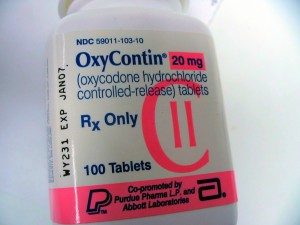
So what happens if you do NOT bring your child to a chiropractor first? This particular study looked at this question and the answers were disturbing enough to surprise even the researchers themselves. Narcotics are absolutely NOT the standard recommendation for any headache, let alone headaches in teenagers. While I think NSAIDs are almost as bad of an idea (because they don’t actually fix a darn thing as it relates to headaches), they are at least a better standard recommendation.

So when researchers looked at the insurance data from 8,373 13- to 17-year-olds who visited a clinician for headache (which is a common ailment in adolescents) researchers were sure that they would find that narcotic use was low. Instead, shocked researchers found:

• 46% of teens were given a prescription for a narcotic.
• 23% got two prescriptions.
• 29% got three or more prescriptions.

If the emergency room was involved, the likelihood of a narcotic being given were greater. Except in very limited situations, there is not a shred of evidence or any clinical practice guideline that suggests narcotics as the first line treatment for adolescent (or adult, for that matter) headaches.

So why and how does this happen? How can half of mainstream medicine be so distanced from the medical research as to give a child highly addictive pain medication for a condition that it should not be used for??

As a chiropractor treating these conditions without any drugs, I find that question even harder to answer.

Filed Under: Migraine, Raising Healthy Children Tagged With: chiropractic care for headaches, headaches, headaches in teens, teenage headaches

Car Accidents and Mild Traumatic Brain Injury; Is It Real?

March 27, 2014 by James Bogash

If you’re an insurance adjustor reading this, you KNOW that patients involved in a car accident are faking it.

Those of you out there who have actually been on the receiving end of a whiplash injury would beg to differ. Sure, maybe not at the scene of the accident, but by the next morning you’re feeling it. Owning a chiropractic office, we see patients who have been involved in car accidents all the time. Most recover on a very straightforward trajectory, especially when we apply soft tissue treatment along with manipulative therapy.

Some, however, refuse to heal at a rate that is expected. Damn patients. If only we handed out the pamphlets beforehand so these patients would know how fast they are supposed to heal. We are currently dealing with a case right now that continued FAR longer than we had thought originally (care extended beyond a year—NOT at all a usual length of treatment in our office). The insurance people who reviewed the case stated that she should’ve been all better by 12 weeks.

She definitely should’ve read the pamphlet.

The real world, however, does not always follow the guidelines we make for it. And sometimes, we later find out that the guidelines weren’t really all that representative of what happens when later research informs us. The problem here is that these guidelines change with the speed of a snail on 1,000 mg of gabapentin TID.

This particular study has so many interesting aspects to it that I’m not really sure where to begin. But, since the article really focuses on mild traumatic brain injury, maybe that’s a good place to start. For those of you unlucky ones who have never experienced MTBI follow head trauma, either in sports or in a car accident, let me enlighten you to just a few of the symptoms:

  • Fatigue
  • Irritability / behavioral changes
  • Inability to focus / fuzzy thinking
  • Headaches
  • Dizziness

In a nutshell, it sucks. Worse, if you are involved in a relationship, have a job or a life, it begins to disrupt all of these by frustrating those around you.

When this happens to my patients, the best answer I usually have for them is that it just takes time to recover. In some it’s weeks, in some up to a year. When symptoms are more severe, there are certain supplements that may help protect the brain and allow it to heal faster. These can include CoQ10, vitamin E and magnesium threonate.

In this research study of 7170 adult residents injured in car accidents from Saskatchewan, Canada (for those of you who ever wondered where Bigfoot is hiding out—it’s here), 1716 met the criteria for MTBI. For those of you good with math, that’s 24%. A pretty hefty number and far higher than I would ever have expected. Here are some details of the MTBI sufferers:

  • Most common in the 18- to 23-year-old group.
  • Most were not hospitalized (73%).
  • Loss of consciousness in 28% and 23% reported posttraumatic amnesia.
  • Average time to recovery was 100 days, or a little over 3 months.
  • 23% did not recover by 1 year.

Looking at what we have here, we can make a quick assessment that a very large chunk of people involved in car accidents end up with criteria for MTBI, yet a quick screen based on loss of consciousness or memory would’ve missed a huge chunk of those suffering MTBI. After seeing this information I KNOW I have missed patients over the years by not looking for MTBI because there was no overt signs of head trauma reported or a loss of consciousness or memory.

Now, before you walk away already amazed at the information in this study, there’s more (and it’s NOT free shipping). The researchers were able to identify factors associated with slower than expected recovery from MTBI:

  • Age above 50 years
  • Having less than a high school education
  • Having poor expectations for recovery
  • Depressive symptoms
  • Having arm numbness
  • Having hearing problems
  • Having headaches (good thing no one has a headache after a car accident)
  • Having low back pain
  • Having thoracic back pain
  • Surprisingly, loss of consciousness and posttraumatic amnesia were NOT associated with recovery.

After reading through this article and thinking back to the aforementioned patient, she absolutely, positively met many of the symptoms for MTBI as well as experienced 5 of the above factors associated with a delayed recovery. Is it possible that I could’ve done something different early on to change the outcome trajectory? It’s not exactly clear, but maybe I could’ve expected a more realistic outcome and burned the pamphlets.

Filed Under: Chiropractic Care, Migraine, Neck Pain, Whiplash Tagged With: auto accident, car accident MTBI, headache after car accident, mild traumatic brain injury

Can Diet Control the Worst Type of Seizures???

March 6, 2014 by James Bogash

There is no way that something as simple and uncomplicated as diet can manage the worst-case scenario of epileptic seizures. Not when we have so many powerful drugs to control seizures.

This would seem to be the attitude of most neurologists because diet is usually the absolute last thing they would ever mention, and that is only after every anti-epileptic drug on the planet has not worked. But here’s a scary statistic: In only about 30% of the time does the first anti-seizure medication work to control someone’s seizures. The more medications that are tried, the less likely the next one is going to work. Ultimately, the number of epileptics who do not respond fully to medications may be as high as 40%.

Not good.

Status epilepticus is a state of perpetual seizures that can be fatal and usually needs some type of emergency treatment to control the seizures. In the ER, treatment usually starts with sedatives like benzodiazepine (Valium, Xanax) or, if that doesn’t work, anesthetic agents like propofol (although recent studies suggest that this actually increases the risk of infections and death) are given via IV. But when a seizure cannot be controlled it is called refractory.

Putting this together makes refractory status epilepticus a very dangerous situation with no options. At least, not until someone thought of using diet to control this most dangerous type of seizure. Specifically, the ketogenic diet. The use of the very low carb diet for seizure control is not new and has been shown, in trial after trial after trial, to possess very potent anti-seizure effects. In the case of status epilepticus, after the patient is locked in the seizure state for a certain period of time, feeding usually switches to a feeding tube (enteral), so switching to a ketogenic-based formula is not a problem.

This particular study looked at the treatment of 10 patients who were locked in status epilepticus. Here are the details:

• 7 of the 10 had encephalitis (swelling of the brain due to the severity of the seizures).
• The average time that the patient was in seizure was 21.5 days.
• The average number of antiepileptic medications used before the diet was 7.
• In the 90% that achieved ketosis, seizures ceased in an average of 3 days.
• 3 had minor complications (transient acidosis, hypertriglyceridemia).
• 2 patients ultimately died of causes unrelated to the diet.

While this is a small group of patients, the outcomes achieved for such a safe intervention are more than impressive. They are lifesaving. So I will ask the same question I always ask: WHY is the ketogenic diet the last tool used when the research is so compelling and the safety is so high?

Filed Under: Seizures / Epilepsy Tagged With: intractible seizures, ketogenic diet, seizures / epilepsy, status epilepticus

2 Things Every Chronic Migraine Sufferer Should be Checked for

February 18, 2014 by James Bogash

This is one of those “I’m a chiropractor so this will be biased” articles. This bias is further accentuated by the fact that I’ve written a Migraines and Epilepsy book. This article describes that ONE thing that EVERY single headache sufferer needs to do, and yet rarely do.

I understand headaches very well. Migraines. Tension type headaches. Cervicogenic headaches. Sinus headaches. Unfortunately, many chronic headache sufferers actually experience many different types of headaches. Since most physicians have a single tool to use, they can only address a single type of headache at a time. This is why it seems like no treatment works—it’s rare that a single treatment that is going to help for more than one type of headache.

But there is a great place to start. It should absolutely begin in a chiropractor’s office. Why? (Other than my bias, of course…) Because the tension-type / cervicogenic headache is so extremely common and a chiropractor who also understands the soft tissues involved in these types of headaches is the ONLY type of provider who can address them.

In case you think I’m being a little biased, think for a second, what tools the typical primary care doctor, orthopedic doc or neurologist has to treat muscle problems. Note that I said “muscle problems” and not muscle spasms. True muscle spasms are pretty rare in these types of headaches. Injections do nothing to fix the problems and the medications may mask what’s really going on, but there just are not any medications that are designed to actually heal the soft tissue problems involved in these types of headaches.

One could argue that a well-qualified massage therapist can also address these soft tissue problems, and it is a strong argument. However, the other aspect that contributes to these headaches, improper movement of the joints at the very top of the neck, can only be addressed by a chiropractor.

So you can see that my bias does, in reality, have quite a bit of factual information to support it.

What does all of this have to do with this particular study? In this small study, researchers looked at 4 things in chronic migraine sufferers:

  1. Myofascial trigger points (MTrPs) in the SCM and upper trap muscles
  2. Forward head posture (FHP)
  3. Neck range of motion (ROM)
  4. Cervical facet joint stiffness

As I’ve mentioned, these aspects are all well within the range of conditions that soft-tissue oriented chriopractors can treat very effectively.

So what did they find when they compared this group of chronic migraine sufferers to a similar group that did not experience headaches?? They did not find any difference in the neck range of motion nor in forward head posture. They did, however, note:

  • There was increased stiffness of the cervical facet joints stiffness at Occiput-C1 (top of the spine and the skull joint) as well as at C1-C2.
  • There were more active and latent MTrPs in the right trapezius and SCM muscles.

So, with this study and others that have come before it, I would ask the perpetually unanswered question—why do we not see referrals from neurologists and PCPs to chiropractors at least for the evaluation of whether or not these 2 findings are present?

Filed Under: Chiropractic Care, Migraine Tagged With: chiropractic, Chronic Migraine Headache, chronic migraine relief, headache, migraine, trigger points

Melatonin Shines Again for the Most Dangerous Seizures

February 5, 2014 by James Bogash

Seizures are very, very bad for the brain. Status epilepticus is the term for uncontrolled, unstoppable seizures.

Very often, these patients end up in the emergency room pumped full of sedatives just to stop the seizures. The damage to the brain under status epilepticus is even worse than that which occurs with single seizures.

Not to belittle the ongoing damage to is occurring in the brain of epileptics during the interictal (in between seizures) period. Few epileptics are educated on this little tidbit. Most fear the dreaded SUDEP (sudden unexpected death in epilepsy), although the likelihood of any epileptic passing from SUDEP is very small.

The bottom line is that anything that can be done to protect the epileptic brain is a very good thing, whether having seizures or not. This is not to be confused with controlling seizures, since none of the anti-epileptic drugs actually work at protecting and improving brain health.
Which brings us to this particular study. While it is a mouse study, this is not the first time that research has demonstrated that melatonin can help to protect the brain.

In the study, researchers looked to see if melatonin could protect the brain during status epilepticus, arguably the worst-case scenario in an epileptic. Here’s what they found:

  • Melatonin use was able to reduce seizure activity
  • Melatonin reduced the brain cell damage in certain areas of the brain (CA1 area of the hippocampus and piriform cortex).
  • Melatonin decreased the hippocampal serotonin (5-HT) levels.

For something as simple as melatonin, these are some pretty important effects. As a brief primer, the pineal gland deep in the brain releases melatonin once sunlight stops hitting the eyes. Melatonin and serotonin are on the same metabolic pathway derived from the amino acid tryptophan. When sunlight is present, the pathway stops at serotonin. Once darkness arrives (and we are not exposed to blue light) the pathway continues to melatonin.

Interestingly, depression is closely associated with epilepsy. It would not be unreasonable to assume that the tryptophan to serotonin to melatonin pathway is somehow affected, making the supplementation of melatonin a very reasonable recommendation in any epileptic.

In our office, we start with .5 mg, a very small dose. Most patients mistakenly start themselves at much higher dosages.

Filed Under: Seizures / Epilepsy Tagged With: epilepsy, melatonin, seizures / epilepsy, status epilepticus

Natural Remedies for Seizures Includes this Part of the Body

January 20, 2014 by James Bogash

Medications and more medications.  Maybe an electrical device implanted in your neck.  In the end, surgery.  This pretty much describes the medical treatment of epilepsy and migraines.

And, as a whole, this treatment paradigm sucks.  It does nothing to protect the brain, which should be the number one goal.  I should consider clarifying this by noting that it should be the number one goal after the seizures are under control, but only 30% or so of epileptic patients are able to achieve control of his or her seizures quickly with the first medication used.

There was a lengthy discussion recent on a Facebook epilepsy group page about SUDEP, or sudden unexplained death in epilepsy.  This particular discussion generated one of the largest numbers of comments that I have seen on the epilepsy topic.  It was largely driven by fear of SUDEP, the fear that it can strike any epileptic without warning and the fear that there is nothing that can be done to protect against it (not true, BTW, which was addressed in a prior article that can be read by clicking here).

And yet the risk of SUDEP is very low (about 1 in 1,000).  What epileptics do not seem to understand, or are not educated on by his or her treating physician, is that the underlying process leading to the seizures is slowly destroying the brain.  In every epileptic.  As in 1 in every 1.

THAT is where the fear would be justified.  If seizure patients had more concern over this slow, progressive brain damage, maybe there would be a much stronger push for ideas and changes to protect the brain.  Which would be a good thing because there are a lot of things that you can (and should) do to protect your brain.

There are so many things that can be done that I wrote a book on the topic called Migraines and Epilepsy: How to find relief, live well and protect your brain (which can be found on Amazon by clicking here).

This particular article addresses another aspect of this puzzle that I had not considered before, although it does make sense.  It has been well established that inflammation and oxidative stress play a role in both the onset and the severity of seizures.  There are a few areas of the body well-known to contribute to chronic inflammation because these areas are pockets of localized infection that continually stimulate the immune system and inflammation.

The mouth, when not properly cared for with good oral hygiene, is just such a place.  A cesspool of partying bacteria thumbing their collective noses at the immune system, while the immune systems fights in vain to control this type of chronic infection.  This is the kind of scenario that sets the stage for chronic inflammation and, since we have already established that chronic inflammation has been linked to seizures, it makes sense that periodontal health should be linked to seizures.

Of course, this is the kind of information that will likely never get shared with seizure patients and society will continue to think that if seizure management is strictly limited to medications.  Here ar e the details of the study:

  • When compared to a group without seizures, seizure patients were more likely to have bad oral hygiene, gingivitis and periodontitis
  • Seizure frequency was worse with bad oral hygiene, gingivitis and periodontal disease.

I wouldn’t go so far as to say that brushing, flossing and tongue scraping can stop seizures, but clearly, based on this study, oral health is a must for all patients wanting better control of his or her seizures.

Filed Under: Seizures / Epilepsy Tagged With: chronic migraine headaches, epilepsy, oral health, Periodontal Disease, seizures / epilepsy

  • « Go to Previous Page
  • Page 1
  • Interim pages omitted …
  • Page 3
  • Page 4
  • Page 5
  • Page 6
  • Page 7
  • Interim pages omitted …
  • Page 18
  • Go to Next Page »

Primary Sidebar

Patient Quick Guide

Schedule An Appointment
Contact Our Office
Download Patient Forms

Categories

Chiropractic Mesa Arizona

Arthritis Chiropractor Mesa AZ
Graston Technique Mesa AZ
Back Pain Chiropractor Mesa AZ
Back Pain Doctor Mesa AZ
Wrist Pain Chiropractor Mesa AZ
Rotator Cuff Chiropractor Mesa AZ
Shoulder Pain Chiropractor Mesa AZ
Knee Pain chiropractor Mesa AZ
Manipulation Under Anesthesia In Mesa AZ
Headache Chiropractor Mesa AZ
Chiropractic Mesa AZ
Stem Cell Therapy Mesa AZ
Regenerative Medicine Mesa AZ
Massage Therapist Mesa AZ
Shoulder Pain Doctor Mesa AZ
PRP Therapy Mesa AZ
Chiropractic Mesa AZ
Who Is The Top Chiropractor In Mesa AZ?
Knee Injury Doctor Mesa AZ?

Footer

Resources

Site Map
Disclosure
Additional Resources

Best Massage Therapist Mesa AZ
Arthritis Doctor Mesa AZ
Chiropractic Mesa AZ
Back Pain Doctor Mesa AZ
Rotator Cuff Doctor Mesa AZ
Chiropractor Mesa AZ
Massage Therapist Mesa AZ
PRP Therapy Mesa AZ
Knee Pain Doctor Mesa AZ
Stem Cell Therapy Mesa AZ
Headache Doctor Mesa AZ
Shoulder Pain Doctor Mesa AZ

Office

Lifecare Chiropractic
1830 S. Alma School Rd, Ste 135
Mesa, AZ 85210
(480)-839-2273
Also Serving Tempe, AZ

Get Directions

  • Home
  • About
  • Common Conditions
  • Additional Services
  • Testimonials
  • Blog
  • E-Books
  • Contact

Copyright © 2026 · LifeCare Chiropractic · All Rights Reserved.