• Skip to main content
  • Skip to primary sidebar
  • Skip to footer

LifeCare Chiropractic

The Best Chiropractic Care in Mesa, Arizona

  • Home
  • About
    • Why Lifecare?
    • About Dr. Bogash
    • Team Members
  • Common Conditions
    • Wrist Pain/Carpal tunnel syndrome
    • Elbow Pain/Epicondylitis
    • Headaches
    • Knee Pain and Knee Injuries
    • Low Back Pain
    • Shoulder Pain and Rotator Cuff Problems
  • Additional Services
  • Testimonials
  • Blog
  • E-Books
  • Contact

heart attack

6 Reasons for Heart Attack: But What About Family History?

August 10, 2012 by James Bogash

Heart disease remains a #1 killer, despite the fact that it is preventable. What are the reasons for a heart attack & what role does family history play?

Almost everyone is aware that, if someone in his or her immediate family (brother, sister, mom, dad) has had a heart attack, they are at an increased risk of having a heart attack.  This risk is even greater if that family member had a heart attack before reaching 55 years of age.  50 seems to be a somewhat magical number because research has already shown that, if you have no signs of heart disease by age 50, your risk of dying of cardiovascular causes is much, much lower.

Anyone who has had conversations with me about family history of just about any disease knows that I do not believe strongly in family history over lifestyle.  Think about it–children are raised with many of the same habits that their parents had.  Dietary, exercise, stress, environmental chemical use.  If you put the same lifestyle on top of a similar genetic makeup, of course you’re going to get a similar outcome!  My contention is that the genetic makeup is heavily modifiable based on what we do to ourselves.

This particular article lends support to this concept.  Researchers looked at how much some basic lifestyle changes affected risk for heart disease.  These risk factors were:

  1. Maintain a healthy weight
  2. Regular exercise
  3. Moderate alcohol consumption
  4. Abstinence from smoking

As noted, these are VERY basic lifestyle changes that anyone can implement with just a little bit of effort.  In this study, those with at least 3 of these factors were considered “good.”

So what did the researchers find?  They looked at the risk of having a heart attack and then developing congestive heart disease (heart failure) when compared to those with good lifestyle choices and no early family history.

  • 1.52 greater risk of for those with poor lifestyle score and no parents with a heart attack before 55 (single whammy)
  • 3.21 greater risk for those with good lifestyle score and parents who had a heart attack before 55 (single whammy) 
  • 4.60 greater risk for those with poor lifestyle scores and parental histories of premature MI.  (double whammy)

In summary, if you have a parent who had a heart attack before age 55 and you choose poor lifestyle choices, you will probably get denied life insurance.

On the other hand, even if you had “good” lifestyle choices but a parent who had a heart attack before age 55, you were still at quite a bit of risk.

Since I’ve been putting the “good” lifestyle choices into quotation marks, I thought I’d ad some simple changes that have been shown to have a solid impact on lowering your risk of developing heart disease.

  1. Dark chocolate has been shown time and time again to protect against heart disease
  2. Consider meditation to manage stress and lower your risk of all chronic diseases
  3. Switch to red wine (goes nice with the aforementioned dark chocolate…)
  4. Get a pet
  5. Maintain good oral health (brushing, flossing, tongue scraping)
  6. Use short burst aerobic exercise rather than prolonged aerobic exercise

The list can go on and on because we understand so much of what contributes to heart disease, but we’ll cut it short before you fall asleep and crack your forehead on the monitor…

So, if you have had a parent experience a heart attack before age 55, did this convince you that you need to take even better care of yourself?
Filed Under: Heart Disease Tagged With: family history heart disease, heart attack, heart disease

Heart Disease Prevention With Sweets Instead of Lipitor

July 31, 2012 by James Bogash

prevent heart disease cholesterol drugHeart disease remains the #1 killer.  Prevention doesn’t take massive changes and does NOT require cholesterol lowering drugs like Lipitor or Crestor.

As a matter of fact, these drugs are likely to make your condition worse.  The latest numbers suggest that medicine needs to treat 1,000 for 5 years to prevent a measley 11 heart attacks.  For this society pays about $2400 / year per person in the US for Lipitor (yes, your copay may be less, but this is closer to the total costs).  I cannot begin to describe how incredibly inefficient this method is.

This particular study provides an interesting alternative.

Chocolate has already shown to be quite protective for the heart.  To review:

  1. 37% lower rates of heart disease, 29% lower risk of stroke
  2. 39% lower risk of heart attack and stroke with small reductions in blood pressure
  3. Makes blood less likely to clot and makes blood vessels healthier
  4. Lowers blood pressure
  5. Makes insulin work better and lowers blood pressure
  6. Cuts SECOND heart attack risk by 66% (that’s a VERY powerful response, by the way…)

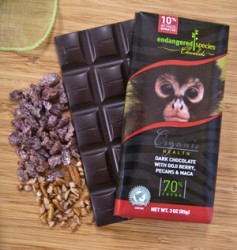
Clearly, these results relate to dark chocolate, NOT milk chocolate.  The darker the better.  For those of you who think dark chocolate is too bitter, consider finding chocolate with berries and / or nuts mixed in such as those made by Endangered Species.  You should be able to find one that is perfect for you.

Back to this study…

Researchers did some number crunching on how many heart attacks could be prevented by consuming 100 grams of dark chocolate per day.  First, 100 grams is a LOT of chocolate to consume in a day (ok…maybe not that hard to consume…).  I usually recommend a few squares per day coupled with some walnuts, pecans or almonds.

The conclusion?

8.5 less heart attacks per 1,000 patients treated (1.5 of which were deaths prevented).  Not too far off from the statins, and when you consider the estimated cost of $42 per year vs $2400, we begin to get a clearer answer.  And, given the demonstrated protective effects of dark chocolate on second heart attacks, the benefits may be stronger over the long haul.

In addition, other than enjoyment and possibly choking on a chocolate bar, I’m not sure I’ve come across any studies on the side effects of dark chocolate consumption.  And really…if your cardiologist looked you in the eye and said, “Now Ms. Jones, I’m going to need you to take your dark chocolate every day to protect your heart…” just how high would YOUR compliance be with dark chocolate vs medications?

So, settle in for some dark chocolate and a glass of red wine after dinner and know you’re protecting your heart in some powerful ways.

Please share in the comments how YOU prefer to eat your dark chocolate…

Filed Under: Heart Disease, Stroke Tagged With: chocolate, cholesterol drug, crestor, heart attack, heart disease, Lipitor, Zocor

INCREASED RISK OF DEATH OR REINFARCTION – (10-23-06)

July 30, 2012 by James Bogash

Risk of Death or Reinfarction Associated With the Use of Selective COX-2 Inhibitors and Nonselective NSAIDs After Acute Myocardial Infarction

Let’s just clear this up. You’ve had a heart attack. You’ve got some neck or LBP so you decide to pop some pain meds. Probably not a good choice.

All NSAIDs in this study were found to increase risk of death or second heart attack. So, all us chiropractors should soon see referrals pouring in from the cardiologists actually read medical journals and don’t want their patients to die off sooner….

Read entire article here

Filed Under: Heart Disease, NSAIDs Dangerous Tagged With: COX-2, heart attack, LBP, NSAIDs dangerous

INSULIN HELPS IN PROTECTION IN MIDST OF HEART ATTACK – (09-29-05)

July 22, 2012 by James Bogash

Insulin neuroprotection against oxidative stress in cortical neurons involvement of uric acid and glutathione antioxidant defenses

Lest you think that Mother Nature created a compound like insulin and all it does is nasty things (aka Metabolic Syndrome), remember that Mother Nature does everything with a purpose. Insulin is no different. While high levels are unquestionably horrendous to our long term health, their is much evidence supporting insulin in protecting patients in the midst of a heart attack and now, with potentially lowering oxidative stress in neurodegenerative disorders. Balance is the key word.

Read entire article here

Filed Under: Insulin, Oxidative Stress Tagged With: heart attack, insulin, neurodegenerative, oxidative stress, uric acid

METABOLIC SYNDROME EFFECTS THE HEART ATTACK CONSEQUENCES – (03-27-06)

July 1, 2012 by James Bogash

Benefits of Niacin in Patients With Versus Without the Metabolic Syndrome and Healed Myocardial Infarction (from the Coronary Drug Project)

So you’ve had a heart attack. The cardiologist must have lots of wonderful drugs they can chose from to keep you from having another heart attack, right? How about those highly prescribed and wonderfully advertised statin drugs? They ought to work wonders.

Unfortunately for the drug companies, in this moderately large study, only niacin was able to prevent second heart attacks. The catch? It was only in patients with metabolic syndrome. What a kicker, right? Few doctors recognize the importance of identification of metabolic syndrome, and yet this delineation could mean the difference between life and death if you’ve had a heart attack.

And, considering that some studies put the incidence of metabolic syndrome as high as 88% in CVD patients, you odds are very high…

Read entire article here

Filed Under: Heart Disease Tagged With: Coronary Drug, CVD, heart attack, metabolic syndrome, niacin

TRY OTHER WAYS TO LOWER YOUR RISK OF HEART ATTACK – (05-01-05)

May 6, 2012 by James Bogash

A Randomized Trial of Low-Dose Aspirin in the Primary Prevention of Cardiovascular Disease in Women

I guess it’s not the results of this study that should surprise everyone, but rather the thought process behind it.  This study did not show a benefit in women in preventing a first cardiovascular event with the use of aspirin.  What surprises me is this never ending quest to find a single agent to effect a single disease (statins, anyone?).  Many of these, “one cause, one cure” approaches affect only the disease looking to be improved, if that.

However, the other 20 recommendations to lower your risk of a heart attack like a low glycemic index diet, exercise, fish oils, lots of fruits and veggies, etc… will have a side effect of lowering your risk for just about every chronic disease.  So we focus on one single intervention like taking aspirin to lower our risk of heart attack, when we should educate the public about refined carbs and insulin resistance.

Read entire article here

Filed Under: Heart Disease Tagged With: CVD, exercise, fish oils, glycemic index diet, heart attack, insulin resistance, Low-Dose Aspirin

WAYS TO LOWER THE RISK OF CVD AND OTHER CHRONIC DISEASES – (05-01-05)

May 6, 2012 by James Bogash

Low-Dose Aspirin in the Primary Prevention of CVD in Women

Wow.  It’s been a bad time for dogma.  HRT, dairy, now aspirin to prevent a heart attack in women.  I have always contended that there are 20 other ways to lower your risk of CVD that will not only pose no risks, but have benefits in risk reduction in many other chronic diseases such as diabetes or cancer.  Funny, but I don’t recall this one getting alot of press, either, and this was in the NEJM…

Read entire article here

Filed Under: Heart Disease Tagged With: cancer, CVD risk, diabetes, heart attack, Low-Dose Aspirin

VITAMIN C CAN PROTECT FROM REPURFUSION INJURY – (05-23-05)

April 22, 2012 by James Bogash

Hypoxia–reoxygenation-induced mitochondrial damage and apoptosis in human endothelial cells are inhibited by vitamin C

Many people are unaware of this, but with a stroke or heart attack, the area that is initially deprived of oxygen is actually SMALLER than the area that ultimately dies off.  This is because when a cell is starved for oxygen and that oxygen gets rapidly brought back, the cell is not prepared and mitochondrial damage occurs that can result in further cell death.  So, patients in the middle of a heart attack or stroke are frequently given drugs like TPA in the hospital to dissolve out the clot that is blocking blood flow.

We know have much evidence in support of compounds like magnesium, CoQ10 and now vitamin C that can protect from repurfusion injury.  While I do not know personally, I do not believe that giving high doses of these compounds by IV prior to repurfusion is being done on a regular basis.  I’m just not sure if I would be in a position to convey my desire for these compounds prior to repurfusion should I ever end up in this situation.  I would be a nice thing to have tattooed to my forearm, though…

Read entire article here

Filed Under: Heart Disease, Stroke, Blood Pressure Tips, Stroke, Vitamin C Tagged With: apoptosis, CoQ10, heart attack, mitochondrial damage, repurfusion injury, stroke, TPA, vitamin C

  • « Go to Previous Page
  • Page 1
  • Interim pages omitted …
  • Page 3
  • Page 4
  • Page 5
  • Page 6
  • Go to Next Page »

Primary Sidebar

Patient Quick Guide

Schedule An Appointment
Contact Our Office
Download Patient Forms

Categories

Chiropractic Mesa Arizona

Arthritis Chiropractor Mesa AZ
Graston Technique Mesa AZ
Back Pain Chiropractor Mesa AZ
Back Pain Doctor Mesa AZ
Wrist Pain Chiropractor Mesa AZ
Rotator Cuff Chiropractor Mesa AZ
Shoulder Pain Chiropractor Mesa AZ
Knee Pain chiropractor Mesa AZ
Manipulation Under Anesthesia In Mesa AZ
Headache Chiropractor Mesa AZ
Chiropractic Mesa AZ
Stem Cell Therapy Mesa AZ
Regenerative Medicine Mesa AZ
Massage Therapist Mesa AZ
Shoulder Pain Doctor Mesa AZ
PRP Therapy Mesa AZ
Chiropractic Mesa AZ
Who Is The Top Chiropractor In Mesa AZ?
Knee Injury Doctor Mesa AZ?

Footer

Resources

Site Map
Disclosure
Additional Resources

Best Massage Therapist Mesa AZ
Arthritis Doctor Mesa AZ
Chiropractic Mesa AZ
Back Pain Doctor Mesa AZ
Rotator Cuff Doctor Mesa AZ
Chiropractor Mesa AZ
Massage Therapist Mesa AZ
PRP Therapy Mesa AZ
Knee Pain Doctor Mesa AZ
Stem Cell Therapy Mesa AZ
Headache Doctor Mesa AZ
Shoulder Pain Doctor Mesa AZ

Office

Lifecare Chiropractic
1830 S. Alma School Rd, Ste 135
Mesa, AZ 85210
(480)-839-2273
Also Serving Tempe, AZ

Get Directions

  • Home
  • About
  • Common Conditions
  • Additional Services
  • Testimonials
  • Blog
  • E-Books
  • Contact

Copyright © 2026 · LifeCare Chiropractic · All Rights Reserved.