• Skip to main content
  • Skip to primary sidebar
  • Skip to footer

LifeCare Chiropractic

The Best Chiropractic Care in Mesa, Arizona

  • Home
  • About
    • Why Lifecare?
    • About Dr. Bogash
    • Team Members
  • Common Conditions
    • Wrist Pain/Carpal tunnel syndrome
    • Elbow Pain/Epicondylitis
    • Headaches
    • Knee Pain and Knee Injuries
    • Low Back Pain
    • Shoulder Pain and Rotator Cuff Problems
  • Additional Services
  • Testimonials
  • Blog
  • E-Books
  • Contact

Vitamins

Long-term vitamins, carotenoids and cataracts – (02-27-02)

March 3, 2013 by James Bogash

Long-term vitamins, carotenoids and cataracts

This study shows a benefit of carotenoids (remember that beta-carotene is but one of hundreds of carotenoids that nature gives us) and Vit C on preventing cataracts. I would personally add bioflavenoids such as bilberry extract to this list. This is no great surprise, considering that many fruits and vegetables are heavily exposed to sunlight and have developed their own methods of preventing oxidative damage from UV exposure. When we eat these compounds, this confers that protective ability on our tissues as well.

AJCN — Abstracts: Taylor et al. 75 (3): 540
Read entire article here

Filed Under: Vitamins Tagged With: bioflavenoids, carotenoids, cataracts, vitamin C

Taking a Multivitamin for Men: Can it Lower Cancer Rates?

December 14, 2012 by James Bogash

taking a multivitamin for men
 
I am a lifestyle guy so supplements do NOT replace a good quality diet. But, given the problems with food quality, taking a multivitamin for men, may be a good idea.
 
When it comes to supplements, every recommendation I have has to take into account benefit, risk and cost.  There are some supplements that are very high value for the benefits.  Fish oils and vitamin D fall into this category.  For the money spent for these, the benefits cut across a very large range of chronic diseases.  Clearly, taking a multivitamin should be included
in this high-value group.
 
There has been research over the years supporting the benefits of taking a simple multivitamin.  I have reviewed these in detail in a prior blog post, but here’s a short list:
  1. May help with depressive symptoms in the elderly.
  2. May improve mood and behavior in adolescents.
  3. Taking a multivitamin may lower the risk of having a heart attack.
  4. Taking a multivitamin may lower the risk of disability in elderly women.
  5. Multivitamins can preserve telomere length–a strong marker of how long your cells may live.

All of this brings us to this particular article.  Researchers looked at male participants of the Physicians Health Study II who had taken the prescribed multivitamin for men in the trial.  They specifically looked at whether taking a multivitamin for men could lower the risk of cancer.  Here’s what they found:

  • Taking a multivitamin for men had a reduction in overall risk of cancer by 8%. (Tweet this)

 8%.  I’m sure no one is jumping up and down with joy at this number.  But before you toss out your multivitamin, you need to know a few things.

First, 8% is still a very real number.  It’s not like we’re talking about a massive overhaul of your lifestyle.  It’s a multivitamin.  That sounds like a pretty big payoff for spending maybe a mere 3 seconds several times per day.

Second, the multivitamin used in the study was the Centrum Silver (provided by the Pfizer drug company).  Drug companies should stick with medications designed to interfere with the way the body works.  Whenever they delve into lifestyle or supplementation they seem to screw it up.  Let’s review Centrum Silver compared to what I recommend in a good quality multivitamin:

  1. Centrum is a “one per day” multivitamin.  The entire “one a day” concept just doesn’t work.  How many meals do you need in a day?  One?  Of course not.  Why should this be any different with your multivitamin?
  2. You should avoid cheaper version of minerals like the oxides and carbonates.  That’s pretty much the only forms used in Centrum.
  3. Crospovidone is used.  AKA polyvinylpyrrolidone.  Seriously?  In a HEALTH related tablet?
  4. Do you really care what color your multivitamin is?  Drug companies are so used to adding coal tar dyes (the reason they are numbered is because they had to be approved by the FDA) so that grandma remembers to take the purple pill and the orange one.
  5. Sodium benzoate is a preservative, usually used in liquids.  Last I checked, this was a tablet.
  6. Contains hydrogenated palm oil.  While this is a small amount, there is no safe level of trans fats found in hydrogenated oils.
  7. The form of B12 used in cyanocobalamin.  This form should be avoided and the methyl and hydroxy forms should be used.
  8. Polyethylene Glycol, Polyvinyl Alcohol are present.  Sounds consistent with good health, right?

There are other reasons, but hopefully by now you should understand that this is NOT something we should really be willingly be putting into our bodies.  It is clearly loaded with chemicals we do not need.

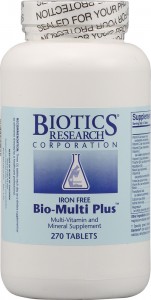
And yet, despite this, the taking a multivitamin for men that is of this low quality still managed a respectable 8% reduction in total cancer risk.  What kind of numbers do you think we might see with a higher quality multivitamin?  In our office we are proud to carry Biotic’s brand and Pure Encapsulations.

Given the results of this study, should doctors begin to more strongly recommend taking a multivitamin for men to patients?  (And female patients as well…?)


Filed Under: Tumors and General Cancer Tips, Vitamins Tagged With: Centrum, Lower Cancer, multivitamin, Multivitamin For Men, multivitamins, One A Day, Supplements, Taking A Multivitamin

Antioxidants and physical performance in elderly persons – (02-16-04)

November 24, 2012 by James Bogash

Antioxidants and physical performance in elderly persons

This results of this study are quite interesting. Basically, the better the antioxidant status (in this case measured by alpha and gamma tocopherol, beta carotene and Vitamin C) the stronger the patient’s knee extension. Whether this is a marker for overall better health habits (patients who take vitamins may be more active and prone to exercise) or whether these vitamins truly do have a direct impact on muscle strength has yet to be determined.

AJCN — Abstracts: Cesari et al. 79 (2): 289 –

Read entire article here

Filed Under: Vitamins Tagged With: Antioxidants, beta carotene, tocopherol, vitamin C

GENOTYPE AT HIGHER RISK DUE TO EXCESSIVE OMEGA-6 – (01-14-04)

November 3, 2012 by James Bogash

Arachidonate 5-Lipoxygenase Promoter Genotype, Dietary Arachidonic Acid, and Atherosclerosis

The whole idea that every patient can be treated with blanket recommendations and everyone has the same RDI for vitamins has become old hat. We now have identifed many genetic uniquenesses that correlate with risk of disease process.

This study found a specific genotype that was at greater risk of inflammation from too much omega-6 vs omega-3. What happens if we go back to the ideas of the old research studies in light of what we now know? Will those studies evaluating fat intake and chronic disease show a striking increase in risk if we stratify for these genetic uniquenesses?? I would believe strongly that this would be the case.

NEJM — Arachidonate 5-Lipoxygenase Promoter Genotype, Dietary Arachidonic Acid, and Atherosclerosis –

Read entire article here


Filed Under: Inflammation, Vitamins Tagged With: 5-Lipoxygenase, Arachidonate, Arachidonic Acid, atherosclerosis, Genotype, inflammation, vitamins

This Vitamin May Help Fight Fat

May 18, 2012 by James Bogash

Most of the press from the past few years has been focused on vitamin D and the integral role of its deficiency on human health and disease.  Much less focus has been given to any of the other fat soluble vitamins.

Vitamin A sits on the same nuclear receptor as vitamin D and, much like vitamin D, vitamin A acts more like a hormone than it does a vitamin.  For this reason, supplementation of vitamin A along with vitamin D is probably a very good idea.  Luckily, both are easily taken and very inexpensive.

Of course, levels of supplementation vary between D and A.  Supplementation of D usually starts around 2,000 IU per day, while vitamin A can be used at much higher dosages, sometimes up to 25,000 IU per day.

Vitamin A, much like vitamin D, has many functions in the body, although the first few to jump to mind are always vision, immune support and skin support.  It is not unusual to have patients who are unsuccessfully fighting off respiratory infections to do much better with the addition of both vitamins A and D.  Vitamin A is also essential for healthy skin, and has even shown some very strong benefits on lowering precancerous skin lesions in sun exposed area of the skin.

This particular study gives some new insight into some less well known benefits of vitamin A.  Researchers used mice to see what effect giving retinoic acid (a metabolite of vitamin A) had on the development of new fat cells.  They found that, in the presence of a high fat diet that would normally cause obesity in the mice, the retinoic acid was able to lower the production of new fat cells.  Pretty neat.

Good food sources of vitamin A are the usual players…broccoli, sweet potatoes, dandelion greens (ok…so maybe not usual for most…), spinach, kale and pumpkin.

Filed Under: Diabetes (Type 2), Obesity and Weight Loss, Prediabetes, Vitamins Tagged With: diabetes, obesity and weight loss, vitamin A

WHY SHOULD EVERYONE USE A GOOD QUALITY MULTIVITAMIN? (07-23-07)

April 6, 2012 by James Bogash

Low Micronutrient Levels as a Predictor of Incident Disability in Older Women

It seems almost too simple to be true, but this study finds that better micronutrient status (in this case Vit B6, B12 and selenium) leads to better functioning as women get older.

While this study did not evaluate multivitamin use, a good quality multi would supply adequate levels of these 3 nutrients, in addition to many more needed for healthy function. Of course, a nutrient dense, low calorie diet would also supply many of these same nutrients. Just another reason why a good quality multi needs to be on everyone’s list.

Read entire article here

Filed Under: Vitamin B12, Vitamins Tagged With: Low Micronutrient, multivitamins, Selenium, Vit B6, Vitamin B12

COULD YOUR MULTIVITAMIN GIVE YOU BREAST CANCER?

January 31, 2012 by James Bogash

COULD YOUR MULTIVITAMIN GIVE YOU BREAST CANCER?  Well, at first glance this study might suggest this.  The increased risk is small (19%) compared to other things, but is still real.  Probably the biggest concern I have with this study and most MVM studies is that there is a huge difference between MVMs on the market.  At one end you have the “one a day” types that are by far the most popular.  These are generally very low quality (for a variety of reasons too lengthy to go into here).

Of concern is that many contain artificial colors (really–does anyone CARE what darn color your MVM is anyway????) such as FD&C dyes.  These are coal tar based and are known to be carcinogens.  This would obviously be of concern in a study looking at cancer.  Then there’s always the folic acid concern that folic acid may promote cell growth in a cancer already present.

Bottom line?  Most of the research supports the use of a MVM for long term health, but it is NOT a patch on a poor lifestyle.  Rather, it is used in conjunction with a healthy lifestyle.

Read entire article here

Filed Under: Breast Cancer, Vitamins Tagged With: breast cancer, carcinogens, MVM

YOUR KIDS GET VITAMIN D…BUT ARE YOU ADDING THIS?

September 29, 2011 by James Bogash

I’m not going to drill the point home about taking vitamin D and how we should also be sharing this vitamin with our kids. If you haven’t picked this little gem up yet, you’re obviously not going to. But did you know that vitamin D plays very closely with another vitamin?

Both vitamin D and vitamin A are needed to bind together on the nuclear receptors of our cells’ DNA. Without enough of one or the other we may experience a relative deficiency. This is why combining supplementation of vitamin D with vitamin A is a very good idea, although not normally recommended.

One of the strong benefits of vitamin A is on immune function, and studies have clearly shown that supplementation can improve immune status, especially in children, and usually in third world countries. This article takes this much further and looks at the risk of morbidity and mortality and vitamin A supplementation.

They found an overall reduction of about 25% in a child’s risk of dying from any cause with vitamin A supplementation. This is far superior to what most vaccines deliver, and indeed, the risk of measles deaths also went down in the studies.

Interestingly, the researchers looked at how the supplementation was given. Either a single dose of 100,000 IU for (ages 6-11 months) / 200,000 IU (1-5 years), doses given every 4-6 months, or smaller more frequent doses.

They were all effective, but there was some indication that the more frequent doses may have been more protective. Based on this, it would seem that giving vitamin A along with the vitamin D you and your family are already taking is a smart idea. In line with this study, a dosage of around 10,000 IU would be recommended.

Filed Under: Healthy Kids, Strengthen Your Immune System, Vitamin D, Vitamins Tagged With: children, immune, mortality, vitamin A, Vitamin D

  • « Go to Previous Page
  • Page 1
  • Page 2
  • Page 3
  • Page 4
  • Go to Next Page »

Primary Sidebar

Patient Quick Guide

Schedule An Appointment
Contact Our Office
Download Patient Forms

Categories

Chiropractic Mesa Arizona

Arthritis Chiropractor Mesa AZ
Graston Technique Mesa AZ
Back Pain Chiropractor Mesa AZ
Back Pain Doctor Mesa AZ
Wrist Pain Chiropractor Mesa AZ
Rotator Cuff Chiropractor Mesa AZ
Shoulder Pain Chiropractor Mesa AZ
Knee Pain chiropractor Mesa AZ
Manipulation Under Anesthesia In Mesa AZ
Headache Chiropractor Mesa AZ
Chiropractic Mesa AZ
Stem Cell Therapy Mesa AZ
Regenerative Medicine Mesa AZ
Massage Therapist Mesa AZ
Shoulder Pain Doctor Mesa AZ
PRP Therapy Mesa AZ
Chiropractic Mesa AZ
Who Is The Top Chiropractor In Mesa AZ?
Knee Injury Doctor Mesa AZ?

Footer

Resources

Site Map
Disclosure
Additional Resources

Best Massage Therapist Mesa AZ
Arthritis Doctor Mesa AZ
Chiropractic Mesa AZ
Back Pain Doctor Mesa AZ
Rotator Cuff Doctor Mesa AZ
Chiropractor Mesa AZ
Massage Therapist Mesa AZ
PRP Therapy Mesa AZ
Knee Pain Doctor Mesa AZ
Stem Cell Therapy Mesa AZ
Headache Doctor Mesa AZ
Shoulder Pain Doctor Mesa AZ

Office

Lifecare Chiropractic
1830 S. Alma School Rd, Ste 135
Mesa, AZ 85210
(480)-839-2273
Also Serving Tempe, AZ

Get Directions

  • Home
  • About
  • Common Conditions
  • Additional Services
  • Testimonials
  • Blog
  • E-Books
  • Contact

Copyright © 2026 · LifeCare Chiropractic · All Rights Reserved.