WHAT YOU THINK ABOUT “VITAMIN E” MAY BE WRONG..When most people talk about Vit E (physicians included) most are referring to the alpha tocopherol version of Vit E. However, Vit E actually has 8 forms (4 tocopherols and 4 tocotrienols). Alpha tocopherol is what is present in almost all low quality Vit E supplements, and yet the gamma form of tocopherol is more common in nature and is a more potent antioxidant. The reason why the alpha form came to be used in all the supplements is that this was the compound that was found to allow rats to give live births (hence “tocos” meaning childbirth and “phero” meaning to bring). If rats were having more babies, alpha tocopherol must be…an aphrodisiac! Hence it was born… Ironically, giving higher levels of the alpha form lowers levels of the gamma form in the bloodstream, making this the likely mechanism by which we see small increases in heart attacks in large Vit E supplementation trials. Physicians who are unaware of how Vit E works have mistakenly told their patients to stop taking Vit E. This is strongly incorrect. The other forms of Vit E are potent antioxidants, and in this animal study with see that the other forms of Vit E are very protective of the brain in the case of seizures and migraines. So, do not avoid Vit E, but this is definitely a vitamin worth spending the extra money on.
Vitamins
Multivitamins and their Benefits
IF YOU’RE NOT TAKING A MULTIVITAMIN, WHY THE HECK NOT? Let’s first differentiate those “one per day” type of multivitamins and a real multivitamin. The problem is that you can only squeeze so many milligrams of vitamins and minerals into a tablet. And a good quality multi is going to pay little relevance to the RDA and instead, focus more on conditionally essential levels of nutrients. But this starts adding to the weight. The bottom line is that it’s going to take more than one tablet to cover the needs of most people. So those companies whose serving size is 1 tablet aren’t really cutting it. The benefits of multis cut across many disease risks, but are NOT a replacement for a good, healthy lifestyle. In this particular study, those who took a multi were 27% less likely to have a heart attack. Not bad for such a simple intervention. Read More…
Multivitamins and Their Benefits
CAN A SIMPLE MULTIVITAMIN HELP AVOID HERNIAS? It’s funny. Out of all the surgeries we do on humans, I have always said that the decision for hernia surgery is pretty cut and dry. Can’t exactly take this or that herb to heal the hernia. BUT, this article suggest that zinc or copper deficiencies may contribute to hernia occurrence. Does this mean that taking a simple, good quality (not the “one a day” types…) multivitamin may lower the risk of hernia or other soft tissue injuries? It is possible… Read More…
Vitamin B, PMS
GIRLFRIEND GETS A LITTLE CRANKY AROUND HER CYCLE? SLIP HER SOME OF THIS… When she’s not looking, replace her Wonder bread and Lucky Charms with some whole grain equivalents. In this particular study, researchers found that those with the highest intake of riboflavin and thiamin had a 35% lower risk of developing PMS. This sure beats using the birth control pill, which is far too often used to regulate a menstrual cycle that is off because of prediabetes. So, don’t fix the prediabetes, just take the pill which will, ironically, increase the risk of diabetes. Go figure. Read More…
Multivitamins: Waste of Money or Saving Lives in Breast Cancer?
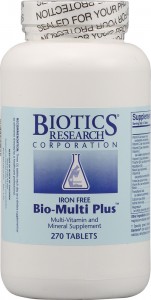
The saga continues. Studies showing no effect from vitamins get promoted, while the powerful ones get shoved aside.
First of all, nothing will ever replace a good quality diet and lifestyle. This is NOT the goal of a multivitamin. Consider instead that a multivitamin is an insurance policy to make sure you have enough of what you need when you need it. This does mean that, most of the time, your diet will be supplying what you need and the vitamins and minerals in the multivitamin will not be used. But those times when you need the extra backup it’s there.
The recent data on the use of multivitamins for preventing a second heart attack and protecting against cognitive decline did not show any benefit. In reality, though, the use of multivitamins to protect in these two situations is a losing battle. Expecting something as subtle as multivitamin use for not even 3 years to protect against a second heart attack (which assumes that the patient had already-compromised health) is treating a multivitamin like a pharmaceutical drug.
Before I belabor the point, let’s get to this particular article. In it, researchers looked at the data from the Women’s Health Initiative, a massive study looking at 7.728 women aged 50-79 who had been diagnosed with invasive breast cancer at some point while the study was ongoing. Here’s the details:
- 37.8% of women were multivitamin users at the beginning of the study period.
- For the entire group, 518 women died from breast cancer.
- For those in the group who were taking multivitamins, the risk of dying from breast cancer was 30% lower.
- This protection was on top of other factors like stage of breast cancer, estrogen-receptor and progestin-receptor status of the tumor, education, smoking status, body mass index (BMI), alcohol use, physical activity, self-reported health, and diabetes.
One thing I found a little disturbing was in the comments section on Medscape (one of the more popular medical sites geared towards doctors), mainly from oncologists. Comments such as “I think Is not true,” “There is no confirmation yet. it is still controversial ! Also, according to other studies, taking multivitamins daily, might decrease life span,” “The effect seen is so small or seems not worth following with an RCT to discover if the hypothesis generated is true. Patients should be told there is no reliable evidence supple ration is beneficial” and “I am concerned that you are airing this type of material. You need to screen your sources better and not rely on magical claims.”
There weren’t a lot of comments, but these were some of the ones labeled as oncologists. It just struck me as sad how, when faced with good evidence to show a benefit from something that is natural, doctors can cry foul and say there is no evidence but turn around and use the SAME process to make treatment decisions on patients. Until this attitude is no longer pervasive, medicine will remain were it is.
The Multivitamin Report You DIDN’T Hear About: 6 Important Facts
The news has been a blur with recent highlights from 2 studies looking at the benefits of multivitamin use. If you took the uneducated viewpoint, you’d throw out those bottles now.
Before I get into the gist of this article, let me point out the two articles from the Annals of Internal Medicine that were the summary of two different studies looking at the effect of multivitamin use on two different conditions. Specifically:
- Use of a high dose multivitamin for under 3 years to lower the risk of a SECOND heart attack.
- Use of a standard multivitamin to protect cognitive function in older male physicians over the course of 12 years.
The use of a multivitamin in these two situations is ridiculous and were designed to fail. Any physician who would look a patient who just had a heart attack in the eye and tell them they need to take a multivitamin to prevent a second heart attack does not understand nutrition and supplementation, especially in lieu of other lifestyle changes. The story is not much different for the cognitive trial. Protecting your brain is a lifetime’s task or making the right decisions, not a little over a decade of a simple, low quality multivitamin.
From these two studies, the world of medicine and the popular press have decided that multivitamins are a waste of money.
These groups however, seem unaware of this particular study. (Special thanks for DSD International for alerting me to this study) It was a study commissioned by the Committee on Responsible Nutrition and was designed to “examine the potential health care cost savings if people over the age of 55 use certain dietary supplements that have been shown to lower disease risks. Specifically, this report will examine evidence that demonstrates that the use of key dietary supplement ingredients can reduce illness-related hospital utilization costs associated with heart disease, age-related eye disease, diabetes, and bone disease in the United States.”
The 125 page report goes into detail about the relationship between specific supplements and specific diseases. Here’s a summary:
-
The use of omega-3 supplements to lower risk for those at higher risk of heart disease can save as much as $2.06 billion on average per year.
-
The use of folic acid, B6, and B12 to lower risk for those at higher risk of heart disease can save as much as $1.52 billion per year.
-
The use of phytosterol containing supplements in all U.S. adults over the age of 55 diagnosed with heart disease can save as much as $4.23 billion per year.
-
The use of lutein and zeaxanthin supplements in every person over the age of 55 with age-related eye disease (ARED like macular degeneration) can save $966.6 million per year.
-
The use of calcium and vitamin D by all U.S. women over the age of 55 diagnosed with osteoporosis can save $1.52 billion per year.
-
The use of magnesium in these same osteoporotic women can save $595.3 million per year.
These are some serious numbers AND take into account the cost of the supplementation, which is minute compared to the cost of drugs designed for these same conditions. Side effects, as well, are minimal, again especially when compared to the drugs used to treat these conditions.
The bottom line is that, before you run to the cabinet to throw out your supplements, you should consider what happens when we study conditions that supplements actually make sense to use against, instead of waste-of-money studies that don’t even make sense.
’5-a-day’ fruit and veggies or folic acid-fortified foods on plasma folate and homocysteine – (03-04-03)
’5-a-day’ fruit and veggies or folic acid-fortified foods on plasma folate and homocysteine.
This study is an important idea for the clinicians who have said that multivitamins were unnecessary because we get all the vitamins we need from our diets. First of all, these clinicians need to ask their patients if they are getting the minimum 8-10 servings of fruits and veggies. I highly doubt it. And, these study does highlight the fact that certain genetic polymorphism will require higher dosages of nutrients than a normal diet can provide.
Seniors Choose vitamins Over Healthy Diet for Cancer Prevention – (10-09-00)
Seniors Choose vitamins Over Healthy Diet for Cancer Prevention
Never forget that man will never rival nature. Whole foods are always the best route to go to protect our health. With a healthy diet, a minimum of a good quality multivitamin, extra vitamin C and E, calcium and an essential fatty acid is all that should be needed.
Results of a new survey suggest that older Americans prefer to take vitamin supplements rather than make dietary changes to reduce their risk of cancer. The findings are disturbing, according to researchers, since nutrients and vitamins in fruits, vegetables and whole grains are believed to significantly reduce cancer risk. In contrast, the effects of vitamin supplements on cancer risk are largely untested, according to the American Institute for Cancer research (AICR), the Washington, DC-based group that conducted the survey. “We’ve known for some time that usage of dietary supplements is on the rise, but we still don’t know a great deal about how, or if, these substances affect cancer risk,” Melanie Polk, director of nutrition education at AICR, commented in a statement. “The fact that so many Americans — especially older Americans — are seeking cancer protection in pills and powders is alarming.” “The emphasis on the importance of eating a mostly plant-based diet…for lower cancer risk should be an important part of disease prevention and health promotion efforts,” Polk said.