
• Skip to main content
  • Skip to primary sidebar
  • Skip to footer

LifeCare Chiropractic

The Best Chiropractic Care in Mesa, Arizona

  • Home
  • About
    • Why Lifecare?
    • About Dr. Bogash
    • Team Members
  • Common Conditions
    • Wrist Pain/Carpal tunnel syndrome
    • Elbow Pain/Epicondylitis
    • Headaches
    • Knee Pain and Knee Injuries
    • Low Back Pain
    • Shoulder Pain and Rotator Cuff Problems
  • Additional Services
  • Testimonials
  • Blog
  • E-Books
  • Contact

raising healthy kids

Do You Know What YOUR Child is Wearing? 5 Tips to Keep Them Safe

July 23, 2015 by James Bogash


flame retardants and children
Vojtech Soukup /Dollar Photo Club

Chemicals are everywhere in our world.  I’ve said before that we live in a toxic soup, and that absolutely includes our children.

Our kids have a particular susceptibility to toxins in our environment because their detoxification ability is not as strong as an adult’s.  To make this worse, we are particularly sensitive to the plight of children and the scary fear that their pajamas may burst into flames at any given moment.

Yes.  Spontaneous combustion.  The eternal fear of lawmaking officials.

The problem is that it requires chemicals to meet the standards that are required.  There are natural materials that a naturally flame-resistant, but industry doesn’t seem interested in using these fibers.

Still all of this would be OK if we are saving lives without the cost of toxic exposure to our children while trying to prevent the almost 200 burns due to clothing in the US per year.  The current standards require the materials to resist an actual flame for a certain period of time.  Clothing that fits close to the skin is far less likely to catch on fire and does not require the higher flame resistant standards.

California sets the standard for the rest of the country when it comes to flame resistance in household materials and the rest of the country just seems to follow suit.  Which would be just fine if any of the chemicals used in the process of making children’s clothes flame retardant underwent any type of safety testing.

In other words, the use of chemicals to meet flame resistant standards is mandated, but any safety testing for these same chemicals is not required.  Quite a catch-22.

(The following information is from a viewpoint article written by Dr. Eric Hecht, Dr. David Landy and Julien Thomas)

As a way of history to show just how backwards this is, the Consumer Product Safety Commission (CPSC-the government entity that oversees this type of thing), in 1977 banned the use of CFR 2,3-dibromyopropyl phosphate one year after it was introduced.  Unfortunately, it turns out that this compound was absorbed through the skin and had the potential to cause DNA mutations.

After this, the polybrominated diphenyl esters (PBDE) took over and became the most widely used flame retardant.  That was until 2004 when concerns again arose over the toxicity of certain PBDE and these were likewise removed from the market.  These concerns ranged from endocrine disruptions, neurodevelopmental disorders and cancer.

Just in case you thought this was the end the debacle, another PBDE called decabromodiphenyl ester was banned in several states in 2013 over the same concerns.

Overall, some billion pounds of flame retardants are used annually in the US, where the typical household contains several pounds in clothing, furniture, electronics and insulation.  As these materials break down, they attach to dust particles and can make it into ours and our children’s bodies by this route as well.  This results in children in the US having toxic levels of flame retardants that are some 10 TIMES higher than other countries.

And our pets?  That’s even worse since they are much closer to the sources of these chemicals.

All of this wouldn’t be an issue if these toxic chemicals were not linked in children to neurodevelopmental disorders, lower IQs, ADD and other behavioral problems.

The regulation of these compounds is slim, and a huge chunk were grandfathered in when the Toxic Substances Control Act was passed in 1976.  Overall, this is a scenario where you need to be proactive in protecting your children from toxic exposures rather than trusting in the manufacturers and the government to ensure that products used are safe for your family.

Here are some tips:

  1. For pajamas, use form fitting clothing that do not require the flame resistant standards of loose pajamas.
  2. Look for clothing and toys made with naturally-flame resistant materials (this article is a great resource).
  3. Consider the mattresses your family sleeps on.  Standards were changed in 2007 to include more toxic chemicals, but in my recent search for a new mattress, many of the larger manufacturers have move to naturally flame-resistant fibers to meet the standards.
  4. Throw out items that have been in use for too long.  Drapes, carpets, rugs, dog beds, furniture–as these age, the toxic chemicals in them leach out into your house.
  5. Purchase air filters for your home and dust, sweep and vacuum frequently to keep dust to a minimum.

For a long time, I considered the foundation to health to consist of diet, exercise and stress management.  Unfortunately, over the years which growing use of chemicals everywhere in our environment, I’ve had to add an environmental tab to this foundation.  The problem with this aspect is that is remains largely unknown to most of us, yet has a direct effect on health.

Everyone knows that the McDonald’s Big Mac they are going to eat is bad for them, but few consider the hidden danger of returning to a car after that fast food meal that has been baking in the sun for a 1/2 hour and breathing in the toxic phthalates that have been off-gassing in the heat.

Scary.
 

Filed Under: Environmental, Healthy Kids, Toxicity Tagged With: child health, flame retardants, raising healthy kids, toxic chemicals

Are You Giving Your Kids this Vitamin?

May 20, 2015 by James Bogash


vitamin D and children
Vitamin D as a child affects life as an adult

You take your vitamins religiously. You exercise and watch what you eat.  But your kids?  You send them to school with a Twinkie and fruit juice and don’t think twice about vitamins for them.

It’s not that you don’t care about your kids, it’s just that we don’t really think of them as having the problem.  We think of kids being more resilient and the choices that they make not having a long term impact.  But we just now that this isn’t true.  There is a long list of things that happen to children that have effects decades later as an adult.  These can include:

  • Childhood maltreatment (physical, emotional, nutritional, sexual)
  • Exposure to parents who smoke
  • Antibiotic exposure as an infant

The point is that things that happen in childhood DO matter.  These things can play a huge role in the health challenges your child will or will not have to deal with as an adult.

That’s a pretty strong responsibility as a parent.

Luckily some things are easier to implement.  Which brings us to this particular study looking at the relationship to vitamin D levels in children and the health of their blood vessels 27 years later (as measured by carotid artery intima media thickness, or IMT).  Here’s what they found:

  • Children with the lowest levels of 25-OH vitamin D (<40 nmol/L or 16 ng/ml–a very low number) were 70% more likely to have high-risk IMT.
  • These same low-level vitamin D kids were 80% more likely  to have risk factors for heart disease as an adult.

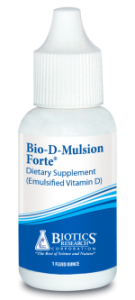
This is a very simple addition to your child’s routine.  With Keegan (9 years old), he gets 6,000 IU of vitamin D per week.  That’s only 3 drops per week of the Biotics Bio-D-mulsion Forte formula that I recommend here in the office.  I will usually add another drop of Biotics Bio-Ae-mulsion Forte as well (vitamin A 12,500 IU) to help support immune function.

This combination has seemed to keep his immune system humming at top efficiency and according to this study, may be protecting his blood vessels at this very moment…


Filed Under: Healthy Kids, Heart Disease, Vitamin D Tagged With: carotid intima media thickness, protect your heart, raising healthy kids, Vitamin D

Overmedicating Our Children; Just How Common is it?

January 21, 2015 by James Bogash

overmedicating our kids
Tony Northrup/Dollar Photo Club

The vast majority of doctors practice years behind the evidence, but pediatricians seem to be the worst of the lot.

And this is not based just on my opinion; there are multiple research studies supporting this stance.  Take the instance of antibiotics.  For well over a decade now, researchers have been almost screaming about stopping the overuse of antibiotics.  When the recommendations never seemed to reach the doctors, public health officials took the message directly to the patients.

Then there is the issue of using acid-blocking drugs in infants.  Research has found that almost none of the prescriptions written were evidence-based.

Most pediatricians are militant about vaccinations.  Yet, if you ask them about things like the Th2 cytokine shift, true effectiveness of vaccinations, duration of immune responses to specific vaccinations and whether or not we even need some vaccinations (hepatitis B in a newborn, for example) they are not aware of these concepts.

Interestingly enough, it seems like this disconnect with the medical literature only runs one way; many physicians seem very ready to adopt the information given by the drug companies while staying oblivious to the actual research on drugs and vaccinations.  The adoption of drugs for uses that are off-label is lightning fast when compared to how long it takes for physicians to stop using these same drugs when future evidence finds that the drugs were either unsafe or not effective.

This particular study just feeds the idea the prescribing practices in 2313 pediatric patients of 46 general practices in southwestern France.   Here’s what they found:

  • 85% (1960) were exposed to at least one prescribed drug.
  • Among children with prescriptions, 37.6% were given at least 1 off-label prescription.
  • 6.7% of the medicated kids were given at least 1 unlicensed drug.
  • The off-label prescribing involved an unapproved indication (56.4%), a lower dosage (26.5%) or higher dosage (19.5%) than specified, age not labeled (7.2%), incorrect route of administration (3.5%) and contraindication (0.3%).

I think the most shocking thing about this study is the very high percentages of kids that were given medications.  Are our kids really that sick that the bulk of them need to have a medication for what they were presenting for?  Are there so few situations where reassurances and simple recommendations are enough?

Beyond this concern, the off-label use was over a third.  Not being a physician who writes prescriptions (and therefore could be wrong), the only route I can see the idea of off-label uses getting promoted is via the drug companies themselves.  Since these uses are generally not in peer-reviewed medical literature, the information has to come from other sources.

If this is the case, then you are leaving your child’s health in the hands of the drug companies.  Not something I would be willing to do.


Filed Under: Healthy Kids Tagged With: off label prescribing, raising healthy kids

Psychotropic Practice Patterns for Youth–A 10-Year Perspective

December 3, 2014 by James Bogash

Psychotropic Practice Patterns for Youth–A 10-Year Perspective.
The idea that utilization of psychotropic meds for youth is closing in on adult levels that drops my jaw. Are our children that disturbed? And, even if they were (which I strongly doubt…) would anyone out there like to bet their right arm against the fact that these drugs in no way interfere with proper neurological development? Remember that the brain is plastic–it is constantly regenerating itself. The old adage that killing off brain cells in college never to be replaced is not true. Those new cells being produced are being bathed in meds that we have no true long term studies (unless you consider 3 years long in the life of a child) showing their safety.

Psychotropic Practice Patterns for Youth: A 10-Year Perspective – Click here for more information.

Filed Under: Anxiety, Depression, Healthy Kids Tagged With: anti-depressant, anxiety, depression, raising healthy kids

Insights into Dairy Allergy: Microenvironment Matters

November 25, 2014 by James Bogash

Insights into milk protein allergy: Microenvironment matters.
This is an interesting article that delves a little deeper into the immunology between cow’s milk allergy. Essentially, in milk allergic subjects, their T cells (a portion of the immune system known as cell-mediated immune) produce cytokines (chemical messengers that tell other cells what to do) consistent with a Th2 profile. In English, exposure to milk in suseptable individuals causes cells of their immune system to produce more cells that create allergic symptoms. Even with all this knowledge, food allergy still remains a very uncommon approach to addressing allergic and asthmatic patients. Avoidance of common allergens (cow’s milk, corn, wheat, soy) should be the first approach to any patient with allergies or asthma.
Gastroenterology Online – Click here for more information.

Filed Under: Allergies Tagged With: allergies, dairy, milk allergy, raising healthy kids

Bullying and the Brain—Is Diet Creating the Problem?

October 25, 2014 by James Bogash

Bullying: Does diet play a role?
Photo courtesy of https://www.flickr.com/photos/7815007@N07/

I’m pretty sure I’m going to catch heck for this one.  As parents we would NEVER want to think that the choices we make for our children can create a bully.

It’s much easier to place the blame externally at society, at socioeconomic status (although this IS closely tied to dietary choices) or the other parent or any number of other things.  And clearly, these factors play a role.

However, what is also abundantly clear is that we are doing an incredibly poor job of feeding our little ones’ brains with what they need.  Soda, hot Cheetos and Wonder bread do absolutely nothing positive for the brain.

And it does not matter whether we are talking about depression, anxiety, bipolar, ADHD, autism or aggressive behavior.  The treatment of ANY mental health abnormality in a child has to include dietary choices.  As a parent, if your child is exhibiting any of these behaviors and you just sent him or her off to 7th grade with a Jiffy and Smuckers sandwich on Wonder bread with a side of potato chips and a Sunny Delight to wash it down, you really need to re-evaluate what these choices do to the brain.

A diet that is loaded with the wrong types of fat (chips, conventionally grown beef and chicken) and very little of the right types of fat (olive oil, nuts, seeds, wild caught fish, fully grass-fed beef, avocados) will disrupt brain activity.  The cell membranes of our brain cells are made up principally of fat.  Take in the wrong types of fat and you get the wrong types of messages passed from one brain cell to another.  The opposite is true as well; take the right types of fats and the messages that get passed are more appropriate and solid.

As a parent, we HAVE to take this into consideration, even if your child is otherwise healthy.

This particular study drives this point home.  In it, researchers looked at 13,486 children and adolescents to see if  eating junk food was related to psychiatric distress and / or violent behaviors.  Specifically, junk food included sweets, sweetened beverages and salty snacks.  Here’s what they found:

  • Junk food consumption was related to overall psychiatric distress as well as violent behaviors.
  • In addition, daily consumption of sweetened beverages and snacks increased the likelihood of self-reported psychiatric distress.
  • Violent behavior, which including physical fighting, was 39% more likely in those who had daily consumption of salty snacks.
  • This same daily consumption increased the risk of a child being a victim by 19%.
  • The odds of a child bullying another child was a concerning 55% higher.

I know there are many out there who are going to jump on these conclusions and say that diet has nothing to do with these behaviors, that it all has to do with parenting and socioeconmomic status.  We just don’t know yet, but a very important thing to consider may be that there may be characteristics of patients whose children develop some of the problems noted in this study.  Take high stress, both parents working long hours, overall rushed meals.

It very well may be that the diets of these children, rather than being causative, are really a reflection of how hectic and less focused the home life is.  I guess time will tell.


Filed Under: Healthy Kids Tagged With: bullying, diet and anxiety, diet and depression, raising healthy kids

Psychological Problems in Children: Surprising Cause

May 23, 2014 by James Bogash

diet and behavioral problems in children
Photo courtesy of http://www.freeimages.com/profile/pixaio

There are few things as important to us parents as our children’s brains.  So why do we treat our children’s brains so poorly?

Our brains are very susceptible to the foods we eat, the chemicals we are exposed to and the stresses we experience.  That means that every molecule of food you eat can have a direct effect on the way your brain functions.  And this, of course, includes your child’s brain as well.

I cannot understand how a parent who has a child with a behavioral problem can feed his or her child Cheetos and yet think that there is no real help for his or her son or daughter.  These decisions absolutely affect the way brain cells function, from sending messages between cells to NOT sending messages between cells that are not supposed to fire.

Top of the list of nutrients that are essential for brain health are the fats.  Good fats like the omega 3 fatty acids and monounsaturated fats help to make up a more stable cells membrane in the neuron.  Poor quality fats, on the other hand, destabilize the brain cell membrane.  As you can imagine, destabilized brain cells are not something we want to support on the inside of our skull.

This particular study supports the relationship between our children’s behaviors and the foods that they eat.  While the term “junk food” may be subject to interpretation, I think we can all agree that, in this study, defining junk food as a high energy, low nutrient content just seems to cover it all.  In this study, it means sweets, sweetened beverages, fast foods and salty snacks.

13,486 children, aged 8-18 were evaluated for psychiatric distress (worry, depression, confusion, insomnia, anxiety, aggression and worthless) and violent behaviors (physical fight, victim and bully) and the presence of these factors was weighed against how much junk foods were regularly consumed.  Here’s what they found:

  • There was a relationship between violent behaviors and the intake of junk foods.
  • Daily consumption of sweetened beverages and snacks increased self-reported psychiatric distress.
  • Daily consumption of salty snacks increased the risk of violent behavior (physical fight 39%, victim 19% and bully 55%).

If you’ve ever tried to deny that the foods you are feeding your child will not have an impact on his or her behaviors, this study should put this notion to rest.  If you are a parent of a child with anything other than a perfectly psychologically and behavioraly normal child, and you child’s diet has  daily exposures to the foods listed in this study, it’s time to wake up.  There is not any other way to look at it.


Filed Under: Healthy Kids Tagged With: ADD, ADHD, behavioral problems in kids, raising healthy kids

Timing of MMR Vaccination; Could it Make Infections Worse?

March 14, 2014 by James Bogash

Vaccinations are always a hotly contested subject and usually argued on both sides with more emotion than fact. The “pro” people rely more on scare tactics than fact and the “anti” people use what seem like facts but tend to be more hype.

As an example, the pro-vaccination group love to hang everything on the concept of heard immunity. If you don’t get your child vaccinated with every vaccine currently known to man as well as the rhesus monkey, then your child is going to come down with Dengue fever and give MY child Dengue fever as well. This is selfish and bad parenting on the part of a granola-eating, flannel-wearing, anti-vaccination parenting group.

The anti-vaccination group throws about long lists of ingredients used in the manufacture of vaccines from mercury to anti-freeze that are known to be toxic to the human body when injected.

The answer, as always, lies somewhere in between. But one thing I can tell you is that the vaccination picture is ANYTHING but cut and dry. Anyone who states that vaccinations save lives and should be used to their fullest extent in all children is misinformed. And yes—this includes most pediatricians.

Just to show you how complicated the vaccination question is I present this particular study. In it, researchers looked at what effect adherence to vaccination schedules played a role in the development of illness in 495,987 children.

This study was done in Denmark, where the recommendations are as follows:

  • Diphtheria, tetanus, pertussis, polio, and Hib (DTaP-IPV-Hib) given at ages 3, 5, and 12 months
  • MMR at age 15 months.

From here, the researchers looked at the risk of hospitalization for any illness in the context of which of these vaccines the child last received. Overall, there were 56,889 hospital admissions in this group of children. Here’s what they found:

  1. For those children who were vaccinated following the recommended schedule and received MMR after the third dose of DTaP-IPV-Hib, there was a 14% lower risk of an admission for infection.
  2. For those receiving MMR after the second dose of DTaP-IPV-Hib, there was a 13% lower risk.
  3. However, in the children who got the third dose of DTaP-IPV-Hib after MMR, there was a 62% higher risk of a hospital admission for infection.

While the smallest group was the third group, you can see that, for some strange reason, the timing of immunization made a massive difference in the risk for a hospitalized infection. Maybe some vaccine-trained immunologist could explain why, but it’s a wee bit beyond my understanding.

Now consider this: The recommended schedule from birth to 6 years of age includes vaccines against 10 different infectious agents given at 31 different times. As can be seen from this study, the wrong combination can actually increase your child’s risk of a serious infection. The determination of when to give a vaccine, based on my knowledge (which could, potentially, be lacking), is based on a single vaccine.

While studies are done on the combination vaccines, studies are NOT done to see how the order of vaccines may effect (both negatively and positively) the child’s immune system. Basically, it’s a crap shoot.

Filed Under: Vaccination Tagged With: childhood immunizations, MMR, raising healthy kids, vaccination, Vaccine

  • Page 1
  • Page 2
  • Go to Next Page »

Primary Sidebar

Patient Quick Guide

Schedule An Appointment
Contact Our Office
Download Patient Forms

Categories

Chiropractic Mesa Arizona

Arthritis Chiropractor Mesa AZ
Graston Technique Mesa AZ
Back Pain Chiropractor Mesa AZ
Back Pain Doctor Mesa AZ
Wrist Pain Chiropractor Mesa AZ
Rotator Cuff Chiropractor Mesa AZ
Shoulder Pain Chiropractor Mesa AZ
Knee Pain chiropractor Mesa AZ
Manipulation Under Anesthesia In Mesa AZ
Headache Chiropractor Mesa AZ
Chiropractic Mesa AZ
Stem Cell Therapy Mesa AZ
Regenerative Medicine Mesa AZ
Massage Therapist Mesa AZ
Shoulder Pain Doctor Mesa AZ
PRP Therapy Mesa AZ
Chiropractic Mesa AZ
Who Is The Top Chiropractor In Mesa AZ?
Knee Injury Doctor Mesa AZ?

Footer

Resources

Site Map
Disclosure
Additional Resources

Best Massage Therapist Mesa AZ
Arthritis Doctor Mesa AZ
Chiropractic Mesa AZ
Back Pain Doctor Mesa AZ
Rotator Cuff Doctor Mesa AZ
Chiropractor Mesa AZ
Massage Therapist Mesa AZ
PRP Therapy Mesa AZ
Knee Pain Doctor Mesa AZ
Stem Cell Therapy Mesa AZ
Headache Doctor Mesa AZ
Shoulder Pain Doctor Mesa AZ

Office

Lifecare Chiropractic
1830 S. Alma School Rd, Ste 135
Mesa, AZ 85210
(480)-839-2273
Also Serving Tempe, AZ

Get Directions

  • Home
  • About
  • Common Conditions
  • Additional Services
  • Testimonials
  • Blog
  • E-Books
  • Contact

Copyright © 2026 · LifeCare Chiropractic · All Rights Reserved.