• Skip to main content
  • Skip to primary sidebar
  • Skip to footer

LifeCare Chiropractic

The Best Chiropractic Care in Mesa, Arizona

  • Home
  • About
    • Why Lifecare?
    • About Dr. Bogash
    • Team Members
  • Common Conditions
    • Wrist Pain/Carpal tunnel syndrome
    • Elbow Pain/Epicondylitis
    • Headaches
    • Knee Pain and Knee Injuries
    • Low Back Pain
    • Shoulder Pain and Rotator Cuff Problems
  • Additional Services
  • Testimonials
  • Blog
  • E-Books
  • Contact

Toxicity

Mesa AZ Back Pain Doctor Response to Medication Study

September 25, 2018 by James Bogash

Medication Is NOT The Way To Go

MEDICAL ERRORS KILLS A 747’S WORTH OF PASSENGER PER DAY?  To many, this data is not a surprise.  And keep in mind that 98,000 deaths and 1 million injuries per year is, by most estimates, a very, very conservative number because it only includes errors, and does not include deaths that result from properly performed surgeries and proper medications.  Medicine is, without a doubt, a dangerous game to play.  The problem we see in this study is that, since the IOM’s report came out in 1999, there has been no improvement in the error rate.  And, considering that our country’s prescription drug use is going nowhere but up, we can expect to see these numbers either stay the same or worsen.  It is times like this that I am truly glad that I am a chiropractor who does not have the responsibility of prescribing a drug because it is considered the “standard of care” and not because it is the best thing to do. Read More…


Filed Under: Drug Research, Environmental, Healthy Living in a Toxic World, Toxicity

Joint Pain Doctor Mesa AZ Provides Research

September 16, 2018 by James Bogash

Caution! Drugs May Be Deceiving!

DON’T ALWAYS BELIEVE WHAT YOU READ ON THAT LITTLE SLIP OF PAPER THAT CAME WITH YOUR DRUG…We’d like to believe that all the info that our doctors and we get when we get a prescription is truthful and not deceitful by omission.  But alas!!  The world of pharmaceuticals is fraught with half truths and bloated outcomes.  In this particular study, the authors looked for the printed incidence of cough associated with the use of ACE-inhibitors for high blood pressure that is given to the patient vs the actual incidence in clinical trials.  One drug’s actual incidence was 9X higher in the study than in the print, another was 31X higher.  Talk about deception! Read More…

Filed Under: Drug Research, Environmental, Healthy Living in a Toxic World, Toxicity

Are Your Cooking Pans Damaging Your Child’s Health?

January 1, 2016 by James Bogash

You know those wonderful, non-stick pans that you love so well?  I hope you realize that many of today’s “conveniences” like non-stick cookware come with a price beyond the initial purchase.

The wonderful Teflon that keeps all your foods from sticking to the pan is no exception.  The chemical compounds typically found in non-stick cookware include 25 cent words like perfluorooctanoic acid (PFOA) and perfluorooctanesulfonate (PFOS).  Toxic compounds like these have been found to affect thyroid function, cancer risk and heart disease.

In this particular study, researchers looked at the relationship between PFOA and PFOS levels and cholesterol levels in 12,476 children.  Here’s what they found:

  • PFOA was linked to higher total cholesterol and LDL-C
  • PFOS was linked to higher total cholesterol, HDL-C, and LDL-C

Even if these compounds were not linked to heart-disease-friendly changes in blood lipids, do we really want something called “perfluorooctanoic acid” in our children’s blood anyway when the word is too long to even fit on a Scrabble board??

Toss your non-stick cookware and buy stainless steel.

Filed Under: Cholesterol, Healthy Kids, Toxicity Tagged With: heart disease, non-stick cookware, perfluorooctanesulfonate, perfluorooctanoic acid, PFOA, PFOS, raising healthy children, Teflon, toxicity

Do You Know What YOUR Child is Wearing? 5 Tips to Keep Them Safe

July 23, 2015 by James Bogash


flame retardants and children
Vojtech Soukup /Dollar Photo Club

Chemicals are everywhere in our world.  I’ve said before that we live in a toxic soup, and that absolutely includes our children.

Our kids have a particular susceptibility to toxins in our environment because their detoxification ability is not as strong as an adult’s.  To make this worse, we are particularly sensitive to the plight of children and the scary fear that their pajamas may burst into flames at any given moment.

Yes.  Spontaneous combustion.  The eternal fear of lawmaking officials.

The problem is that it requires chemicals to meet the standards that are required.  There are natural materials that a naturally flame-resistant, but industry doesn’t seem interested in using these fibers.

Still all of this would be OK if we are saving lives without the cost of toxic exposure to our children while trying to prevent the almost 200 burns due to clothing in the US per year.  The current standards require the materials to resist an actual flame for a certain period of time.  Clothing that fits close to the skin is far less likely to catch on fire and does not require the higher flame resistant standards.

California sets the standard for the rest of the country when it comes to flame resistance in household materials and the rest of the country just seems to follow suit.  Which would be just fine if any of the chemicals used in the process of making children’s clothes flame retardant underwent any type of safety testing.

In other words, the use of chemicals to meet flame resistant standards is mandated, but any safety testing for these same chemicals is not required.  Quite a catch-22.

(The following information is from a viewpoint article written by Dr. Eric Hecht, Dr. David Landy and Julien Thomas)

As a way of history to show just how backwards this is, the Consumer Product Safety Commission (CPSC-the government entity that oversees this type of thing), in 1977 banned the use of CFR 2,3-dibromyopropyl phosphate one year after it was introduced.  Unfortunately, it turns out that this compound was absorbed through the skin and had the potential to cause DNA mutations.

After this, the polybrominated diphenyl esters (PBDE) took over and became the most widely used flame retardant.  That was until 2004 when concerns again arose over the toxicity of certain PBDE and these were likewise removed from the market.  These concerns ranged from endocrine disruptions, neurodevelopmental disorders and cancer.

Just in case you thought this was the end the debacle, another PBDE called decabromodiphenyl ester was banned in several states in 2013 over the same concerns.

Overall, some billion pounds of flame retardants are used annually in the US, where the typical household contains several pounds in clothing, furniture, electronics and insulation.  As these materials break down, they attach to dust particles and can make it into ours and our children’s bodies by this route as well.  This results in children in the US having toxic levels of flame retardants that are some 10 TIMES higher than other countries.

And our pets?  That’s even worse since they are much closer to the sources of these chemicals.

All of this wouldn’t be an issue if these toxic chemicals were not linked in children to neurodevelopmental disorders, lower IQs, ADD and other behavioral problems.

The regulation of these compounds is slim, and a huge chunk were grandfathered in when the Toxic Substances Control Act was passed in 1976.  Overall, this is a scenario where you need to be proactive in protecting your children from toxic exposures rather than trusting in the manufacturers and the government to ensure that products used are safe for your family.

Here are some tips:

  1. For pajamas, use form fitting clothing that do not require the flame resistant standards of loose pajamas.
  2. Look for clothing and toys made with naturally-flame resistant materials (this article is a great resource).
  3. Consider the mattresses your family sleeps on.  Standards were changed in 2007 to include more toxic chemicals, but in my recent search for a new mattress, many of the larger manufacturers have move to naturally flame-resistant fibers to meet the standards.
  4. Throw out items that have been in use for too long.  Drapes, carpets, rugs, dog beds, furniture–as these age, the toxic chemicals in them leach out into your house.
  5. Purchase air filters for your home and dust, sweep and vacuum frequently to keep dust to a minimum.

For a long time, I considered the foundation to health to consist of diet, exercise and stress management.  Unfortunately, over the years which growing use of chemicals everywhere in our environment, I’ve had to add an environmental tab to this foundation.  The problem with this aspect is that is remains largely unknown to most of us, yet has a direct effect on health.

Everyone knows that the McDonald’s Big Mac they are going to eat is bad for them, but few consider the hidden danger of returning to a car after that fast food meal that has been baking in the sun for a 1/2 hour and breathing in the toxic phthalates that have been off-gassing in the heat.

Scary.


Filed Under: Environmental, Healthy Kids, Toxicity Tagged With: child health, flame retardants, raising healthy kids, toxic chemicals

Have You Gone BPA-free? Does it Really Make a Difference?

July 17, 2015 by James Bogash

BPA free water bottles
Photo courtesy of https://www.flickr.com/photos/kevinmic/

For several years now, the BPA-free craze has been on the rise. The initial concern focused on baby’s products.

Keegan is 9 now, and I do not remember any BPA-free water bottles when he was an infant, so the public demand for these types of products began after this time. Now, I don’t think you can actually buy any products that contain BPA.

During this same timeframe, the use of BPA-free plastics has become common in other plastic products. However, BPA is present in many other commonly used items, including:

  • Thermal register receipts
  • The lining of aluminum cans (both drinks as well as foods)
  • Other plastic bottles

Overall, it seems like society has become aware of the BPA concerns in plastics and is a least driving the market for BPA-free containers. Unfortunately, it still seems like the health implications of BPA have not quite settled in.

Let me say this—the research on the links between BPA and breast cancer, obesity and diabetes is clear and consistent. This chemical compound has distinct hormonal effects on the human body. Despite this, you can’t go ten feet without seeing someone lugging around a plastic water bottle like their life depended on it. This just seems to represent a disconnect between the health effects of BPA and the reality of its continued usage.

For the rest of you that have moved to BPA-free plastics does it really make a difference? Are the BPA-free plastics that have replaced the BPA-loaded plastics really any better?

My gut feeling has also been to be leery of all plastics. My family moved to stainless steel and glass for containers and dishware our household for quite a while now. Unless there are no additional options, we do not drink out of plastic water bottles, regardless of whether or not the bottles are BPA-free or not.

Turns out that I may not be completely off my rocker on this one. In this particular study, researchers looked at the hormonal effects of the alternative plastics that have replaced BPA. Two of the common replacement plastics contain bisphenol S (BPS) and bisphenol F (BPF).

They looked across 32 studies (25 in vitro only, and 7 in vivo—meaning in actual patients). Here’s what they found:

  • The majority of these studies found the potency to be as potent as BPA.
  • These mechanisms included estrogenic, antiestrogenic, androgenic, and antiandrogenic.
  • BPS also has estradiol-like properties as they relate to cell proliferation, differentiation, and death.
  • BPS and BPF also showed other effects in vitro and in vivo, such as altered organ weights, reproductive end points, and enzyme expression.

In other words, the plastics that have been used by industry to replace BPA are likely no better for us than the plastics we are trying to avoid.

The bottom line is that you should be doing your best to avoid plastics for both you and your family. Switch to stainless steel and glass-based products when possible.


Filed Under: Environmental, Toxicity Tagged With: bisphenol A, bisphenol F, bisphenol S, BPA, plastics

Firmiculates Bacteria in the Gut and Pollutants in Your Diet

July 12, 2015 by James Bogash

microbiome and glutamine
abhijith3747 / Dollar Photo Club

Gut bacteria and your health.  The microbiome.  These strange bedfellows play a massive role in our health and yet we know so little about how to positively impact our microbiome using lifestyle and supplementation.

Luckily, it seems like weekly there are new studies published that help to fill in the major gaps in our understanding of this relationship.  One thing that remains clear is that the types of bacteria acting as King of the Hill makes a big difference in your long term health.  Firmicutes is a class of bacteria that is generally considered anti-diabetic, anti-obesity and an overall good guy.

Bacteroidetes, on the other hand, is on the other end of the scale, increased the risk of obesity and diabetes.  It is far more common in Westernized societies while Firmicutes is found in higher levels in hunter-gatherer populations.

This is where the solidity in understanding what goes on in our microbiome stops, although it does seem like we are getting a better and better idea of how to change this bacteria in our gut to a more friendly neighbor.  Diet, of course, plays a major role.  Avoidance of antibiotics in all except the most necessary of conditions is a major factor in destroying your microbiome.  Stress can change the character of your microbiome in a matter of minutes.

Other, less obvious factors can include certain amino acids.  A recent article on glutamine demonstrated just how powerful a single amino acid could be at making positive changes in your microbiome.  Another study found positive effects using cranberry extracts.  And I’m sure there’s a bunch more I’ve missed.

But while you’re busy positively affecting your microbiome with cranberry-flavored glutamine powder, you have to remain vigilant to the environment in which we live.  I have stated before that we live in a toxic soup that most of us blissfully swim through without being aware.  Or maybe you are one of the enlightened ones.  Maybe you stick to organics for the produce found on the Dirty Dozen list.  Maybe you didn’t buy a mattress after July 2007 due to the increase in flame resistance standards and the chemicals required to withstand a Bunsen burner.

Maybe you even ditched your non-stick cookware and you would never dream of drinking out of a plastic water bottle.

If this describes you, then you’re going to feel vindicated in front of all of those friends who called you a hippie and a health freak.  In this particular article, researchers looked at the effects of persistent organic pollutants (POPs) on the microbiome.  In this mouse study, researchers exposed the animals to a specific POP called 2,3,7,8-tetrachlorodibenzofuran (TCDF).  This compound is sometimes referred to as a dioxin (although it is better described as dioxin-ish) and we are typically exposed to it through the food we eat.

Most common exposures are through diet and, more specifically, animal products.  This is because, like heavy metals, animals cannot get rid of persistent organic pollutants so they just keep getting concentrated up the food chain.  This makes it very difficult to actually avoid exposure to POPs, although there are things you can do to reduce your exposure.  More on that in a bit.

In the study, mice were given a high dose of TCDF along with their food for five days.  The dose was 1,000 times the level that we are normally exposed to TCDF in our food supply, but the levels are in line with high dose occupational exposures.  Here’s what they found:

  • There was a shift in the gut microbiota Firmicutes to Bacteroidetes (not good).
  • There changes in bile acid metabolism.
  • The TCDF triggered inflammation and changed the way the liver was handling and storing both fat and glucose.

Granted, the levels of exposure were very high, but in a linked editorial, it was noted that further studies at dosages more in line with human exposures are showing the same types of negative changes in the gut microbiome.

So what can you do?  While you cannot avoid exposure completely, here are some tips:

  1. Considering that POPs are retained in animal tissues, living a vegetarian, vegan or plant-based lifestyle will lower your risk.
  2. If you do consume animal products, it would make sense that organic sources of  food would have lower levels of POPs.
  3. Lifestyle choices that promote growth of Firmicutes (as noted above) can counteract the chemical exposure-related changes.

For me, one of the scariest and most insightful things that I glean from studies like this is that so many of the negative consequences of our lifestyle choices are mediated through the gut bacteria.  Just how much of a role do these bacteria play?  In other words, it is well established that chemical compounds like POPs are associated with diabetes and obesity and certain cancers.  But is it the actual chemical compounds themselves causing problems internally, or is it that these chemicals are altering the gut microbiome and THIS is how these chronic conditions are created?

I’m sure it is a combination of the two, but what does this say about the importance of maintaining a good, solid, healthy microbiome?  Personally, I think it says everything.


Filed Under: Environmental, Probiotic, Toxicity Tagged With: microbiome, persistent organic pollutants, POPs, probiotic

Is That Prescription Giving You Breasts?

December 24, 2014 by James Bogash


phthalates in meds
fotorealis/Dollar Photo Club

Phthalates. Luckily, it took me less time to realize how bad they for our health then it did to learn how to spell the word.

It has been clear that phthalates play a role in infertility, preterm birth, birth defects (they have a feminizing effect on the developing baby), hormonal cancers like breast and endometrial, obesity and testosterone issues in men.  And I’m sure the list of damaging effects is much larger than we are aware of.  Any way you slice it, they are not good for you.

The scary part is that these chemicals are pretty much everywhere you turn.  In many studies every single person studied had phthalates present in his or her bloodstream.  But if you can’t avoid these chemicals entirely, at least you can be aware of where they are hiding and do your best to reduce your exposure.  The main reason they are found everywhere in today’s society is because they are used in the manufacture of so many products you use on a daily basis such as:

  • Anything with hat “new vinyl” smell
  • New cars (we keep the windows cracked while driving any new car in our family for months)
  • New flooring (vinyl tile and carpeting)
  • Food packaging
  • Latex adhesives
  • Nail polish
  • Even scarier, EWG.org identified phthalates in a large number of makeup products as well as fragrances (you know–that stuff found in EVERYTHING…).

Just in case this list is not comprehensive enough, I bring you this particular study.  In it, researchers looked at a not-too-often considered exposure to these chemcial compounds.

The polymer coating around many prescription drugs.

Yep.  Just in case the actual ingredients inside the capsule weren’t toxic enough, the drug companies have to wrap them up in phthalate-containing polymers just to make darn sure you don’t escape from any chronic disease you might otherwise avoid.  To see just how strong this exposure could be, researchers looked at the urinary concentrations of phthalate compounds in 7,999 patients who used certain drugs known to contain phthalates in the coating.  Here’s what they found:

  • Mesalamine formulations (used to treat ulcerative colitis; these drugs may contain dibutyl phthalate-DBP-to provide an extended release formula) users had urinary levels of phthalate compounds that were FIFTY times higher than non-users.
  • Didanosine (an HIV anti-viral medication) users had higher urine levels.
  • Omeprazole (that god-awful drug given to everyone who MIGHT have a stomach issue) had higher levels.
  • Theophylline products (used to treat asthma) also had higher levels.

Keep in mind that these drugs were the only ones tested.  There are likely other drugs that contain phthalate compounds in the polymer coating on the outside of the pill.  Regardless, even omeprazole itself was listed as the #6 most widely given prescriptions in 2010 at some 53.4 million prescriptions.  That is a LOT of potential exposures to a compound known to cause things like cancer and birth defects.

I, for one, did not really need any additional incentive to avoid medications, but not wanting to have order bras online from Victoria’s Secret as a man certainly adds to the reasons to use lifestyle to manage (or preferably avoid) chronic disease.


Filed Under: Toxicity Tagged With: phthalates, prescription drug capsule

Heavy Metals and Heart Disease: Your Hidden Exposures

December 17, 2014 by James Bogash


Heavy metals and heart disease
Copyright marcel/Dollar Photo Club

When I first saw this article, I was worried that my album collection from the 80’s had to go. But upon deeper reading I realized that the danger extends far beyond Tesla and Warrant.

While most of us are aware that heavy metals are not good for us, for the vast majority, our understanding of exposures is limited to playing with the old mercury-based thermometers and maybe not living next to a smelting plant.  Beyond that, however, the general public’s understanding of where heavy metal exposures come from is shallow.

If you’d like to stay in the dark, then stop reading right now.  If, however, the last time you had a good scare was watching Poltergeist and you’re ready for more, then I’d like to direct you to this particular study.  In it, researchers looked at four heavy metals (lead, cadmium, mercury and arsenic) to see how much they contributed to heart disease.  While the end results varied across the different studies that the researchers looked at, here is an overview of what they found:

  1. With lead, those with the highest levels were 252% more likely to die from any cause, 563% more likely to die of cardiovascular causes and a whopping 837% more likely to die from ischemic heart disease.
  2. With cadmium, every 2-fold increase is linked to a 28% higher risk of death from any cause, 21% higher risk of dying of heart disease.
  3. For mercury, there is a 69% higher risk of a heart attack, a 290% higher risk of having heart disease and a 230% higher risk of dying from any cause.  The authors also note that the effects may actually be even stronger, since much of our mercury exposure comes from fish, which has a protective effect, likely blunting some of the damaging effect of the mercury.
  4. Higher levels of arsenic are linked to a 71% higher risk of dying from coronary artery disease and a 303% higher risk of dying from a stroke.  These risks were generally higher for diabetics.

While the details of these association vary (based on the study looked at, what body tissues were used to check heavy metal levels, men versus women, etc…), it is very clear that heavy metals are NOT good for our vascular system and should be avoided as much as possible.

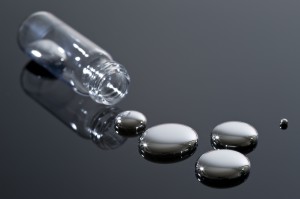
But this is the problem, isn’t it?  How can you avoid exposure if you really don’t know where those exposures are coming from?  The obvious ones like not smoking (cadmium), not camping outside of a smelting plant in a third-world country (lead and cadmium) and not using a straw to suck up the silvery stuff from the broken thermometer are easy.  It’s the hidden ones that will sneak up on you.

Luckily, this same study gives a great overview of common sources of exposure to these 4 heavy metals.  Here’s a summary from the article:

  • Lead: Food, water, air, gasoline additives, food-can soldering, lead-based paints, ceramic glazes, drinking water pipe systems, folk remedies.  In general, pretty much everywhere.  Another common source is from environmental dust.  Simply taking your shoes off at the door may lower your exposure.
  • Cadmium: Contaminated food (leafy vegetables, grains, organ meats, and crustaceans), drinking water, inhalation of polluted air, occupational exposure in industries, tobacco smoke.  For most non-smokers, exposure to cadmium is mostly from foods raised or grown on contaminated soil.  It is likely that organic products (meat as well as plants) will be lower in cadmium.
  • Mercury: Contaminated fish, meat and organ tissue of marine mammals or feral wildlife, dental amalgams, skin-lightening creams, antiseptic facial products, mercury-containing laxatives or diuretics, teething powders, latex paint.  These exposures are easier to identify but not necessarily avoid (i.e. you got amalgam fillings 20 years ago, you LOVE high-mercury fish like  yours truly…)
  • Arsenic: Contaminated fish, tobacco smoke, arsenic treated wood, ingestion of high-arsenic drinking water.  A big problem here is that much of the water used for organic farms may be contaminated with arsenic, so that even if all organic principles are followed, arsenic levels may be higher for this reason.

So, if you just avoid all these sources of heavy metal exposure listed above, you should be fine.  Cause you’ll be DEAD from not eating, drinking or breathing.

Your best bet is to minimize your exposures where ever you can on top of eating a high-quality diet loaded with lots of protective compounds that can help detoxify some of these heavy metals out of your system or at least mitigate some of the damage heavy metals cause.  And with the New Year right around the corner, it always makes sense to start out the year with some type of physician-oriented detox program to do the best you can clearing out some of the accumulated garbage from the prior year.


Filed Under: Environmental, Heart Disease, Toxicity

  • Page 1
  • Page 2
  • Page 3
  • Page 4
  • Go to Next Page »

Primary Sidebar

Patient Quick Guide

Schedule An Appointment
Contact Our Office
Download Patient Forms

Categories

Chiropractic Mesa Arizona

Arthritis Chiropractor Mesa AZ
Graston Technique Mesa AZ
Back Pain Chiropractor Mesa AZ
Back Pain Doctor Mesa AZ
Wrist Pain Chiropractor Mesa AZ
Rotator Cuff Chiropractor Mesa AZ
Shoulder Pain Chiropractor Mesa AZ
Knee Pain chiropractor Mesa AZ
Manipulation Under Anesthesia In Mesa AZ
Headache Chiropractor Mesa AZ
Chiropractic Mesa AZ
Stem Cell Therapy Mesa AZ
Regenerative Medicine Mesa AZ
Massage Therapist Mesa AZ
Shoulder Pain Doctor Mesa AZ
PRP Therapy Mesa AZ
Chiropractic Mesa AZ
Who Is The Top Chiropractor In Mesa AZ?
Knee Injury Doctor Mesa AZ?

Footer

Resources

Site Map
Disclosure
Additional Resources

Best Massage Therapist Mesa AZ
Arthritis Doctor Mesa AZ
Chiropractic Mesa AZ
Back Pain Doctor Mesa AZ
Rotator Cuff Doctor Mesa AZ
Chiropractor Mesa AZ
Massage Therapist Mesa AZ
PRP Therapy Mesa AZ
Knee Pain Doctor Mesa AZ
Stem Cell Therapy Mesa AZ
Headache Doctor Mesa AZ
Shoulder Pain Doctor Mesa AZ

Office

Lifecare Chiropractic
1830 S. Alma School Rd, Ste 135
Mesa, AZ 85210
(480)-839-2273
Also Serving Tempe, AZ

Get Directions

  • Home
  • About
  • Common Conditions
  • Additional Services
  • Testimonials
  • Blog
  • E-Books
  • Contact

Copyright © 2026 · LifeCare Chiropractic · All Rights Reserved.