
• Skip to main content
  • Skip to primary sidebar
  • Skip to footer

LifeCare Chiropractic

The Best Chiropractic Care in Mesa, Arizona

  • Home
  • About
    • Why Lifecare?
    • About Dr. Bogash
    • Team Members
  • Common Conditions
    • Wrist Pain/Carpal tunnel syndrome
    • Elbow Pain/Epicondylitis
    • Headaches
    • Knee Pain and Knee Injuries
    • Low Back Pain
    • Shoulder Pain and Rotator Cuff Problems
  • Additional Services
  • Testimonials
  • Blog
  • E-Books
  • Contact

Akkermansia

Want to Lose Weight?? Enlist the Help of a Friend

February 11, 2016 by James Bogash

Microbiome and brown fat
vlorzor / Dollar Photo Club

What if I told you that you could lose weight without doing a darn thing, so long as you had some help from a friend?

Sounds like an ad for the newest wonder supplement for weight loss.  Get this great new weight loss product for $3 (just pay $59.95 for shipping and handling) with a money back guarantee (not including the S & H).

But no.  This is something far more legit (and free, by the way…).

But first, we need to review the different types of body fat.  And not just the unwanted fat that hangs around your middle and organs and increases your risk of all those nasty chronic diseases.  There are three types of body fat:

  1. White fat–the bad stuff that does nothing but sit there and cause problems
  2. Brown fat–fat that burns calories like crazy to produce heat; as close to the answer for weight gain that the human body has
  3. Beige fat–an in-between state of fat as it transitions from useless white fat to the desirable brown fat

Until recently, scientists thought the brown fat was only present in babies and bats.  As humans age, they lose brown fat, never to get back those heat-generating, calorie-burning fat cells.

Or, at least that’s what we thought.  Turns out that we can actually “brown” our white fat cells, changing the makeup of the fat cell so that it begins to burn calories to generate heat.  On the flip side, certain lifestyle choices have been shown to lower the amount of brown fat.  Some of these are very simple to implement.  Most notable of these is the use of artificial sweeteners (just in case you’re STILL using them to lose weight, this little factoid should wake you up).  I’ve covered many of these factors in a previous article that can be read by clicking here.

The one factor that I need to review in the context of this blog article has to do with exposure to cooler temps.  In a small study, volunteers who were exposed to cooler temps (60 degrees F) for 6 hours per day increased his or her brown fat by a respectable 37% in 10 short days.

Pretty cool.  It certainly makes sense for our bodies to raise the internal thermostat (so to speak) when exposed to short term cold.  It’s about adaptation.  But how exactly does this happen?  This group of researchers turned to mice to get a better grip on how this happens.

And the results are pretty surprising.

In this particular study, researchers exposed mice to slowly colder temps over the course of a month and watched how the mice’s bodies responded.  But they ALSO kept an eye on the bacteria in the gut.  Here’s what they found:

  • The cold exposure led to a dramatic shift of the bacteria in the gut (microbiome).
  • The cold mice developed more brown and beige fat, lost weight and had lower diabetes markers.
  • Here’s the shocking part–transplantation of the cold mice microbiome into germ-free mice LED TO THESE SAME POSITIVE CHANGES.
  • But before all of you living in the frigid tundra of Minnesota, prolonged cold led to adaptive changes–the gut actually enlarged to make sure it could grab even more calories to support the brown fat burning calories (increasing intestinal, villi, and microvilli lengths).

To make this even more interesting, the researchers were able to pinpoint a particular bacteria, Akkermansia muciniphila, as having the most potent effect.  Which may not be surprising–I have covered this bacteria before in its ability to fight off diabetes and its relationship with well-trained athletes.

Back to my opening statement.  Yes, you can lose weight during next to nothing.  All you have to do is find a friend to freeze his or her butt off for 10 days and then do a fecal transplant from your cold-adapted friend.

Better be a pretty good friend….
Filed Under: Obesity and Weight Loss, Probiotic Tagged With: Akkermansia, brown fat, cold adaptation, microbiome, Obesity, probioitics, weight loss

Cranberry; And You Thought it was Just Good for UTIs

June 13, 2015 by James Bogash

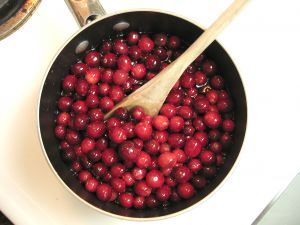
cranberries and the microbiome
Photo courtesy of http://www.freeimages.com/profile/Keira

It’s pretty much common knowledge that cranberry is good for urinary tract infections.  But, just like many other food items, the benefits extend far beyond this.

Let’s face it, though, the berries, as a group, have powerful benefits.  Blueberries, strawberries, lingonberries, cranberries.  Berries pack a pretty powerful phytonutrient (plant-based protective compound) punch.

And this benefit is across chronic conditions.  From cancer to diabetes to heart disease.  The studies are quite numerous and consistent.  And let’s face it—berries are not too painful to add into a healthy lifestyle.

Sometimes, though, with natural approaches, the way the approach is working may be far outside the realm of what we think it is doing.  As an example, when it comes to cranberries, I generally think about the antioxidant / protective compounds the are found in the berries and how they can protect against damage at the cellular level.

In addition, the sugar alcohol (d-mannose) found in cranberries is absorbed into your body but not used.  As a result, the d-mannose shows up in the urine where it helps to wash out bacteria present in the urinary tract to provide the well-known benefit for urinary tract infections.

But what if there is something more going on?  Something that may have to do with, say….the gut?

Regular readers of the blog know how much I revere any knowledge that can help me understand more about how the microbiome (gut bacterial population) affects health and how I can help patients positively affect their gut.

Which brings us to this particular study.  In it, researchers evaluated the effect of a cranberry extract on the gut bacterial flora in a group of mice who were fed a high-fat, high-sugar, pro-diabetic diet.  Here’s what they found:

  • The cranberry extract slowed down the expected weight gain and abdominal obesity.
  • Cranberry treatment, led to less triglyceride accumulation.
  • The extract protected against liver oxidative stress and inflammation (the liver weight was less).
  • Insulin action was improved (improved insulin tolerance, lower HOMA of insulin resistance and decreased glucose-induced hyperinsulinaemia during an oral glucose tolerance test).
  • There was less intestinal inflammation and oxidative stress.
  • But, despite all of this, the most interesting finding was that there was a marked increase in the bacterium Akkermansia.

Akkermansia?

Isn’t that just south of Istanbul?

Akkermansia muciniphila is a relatively newly-discovered bacteria present in the gut that has a unique ability to break down mucin.  Mucin is a mucous-like compound that lines the entire gastrointestinal tract.  Mucin can provide protection to the cells lining the gut, but it can also protect nasty bacteria in your gut that hide behind a layer of mucin from protection.

More importantly, as we see in this study, A. muciniphila seems to have a pretty potent anti-diabetic effect on the organism that it thrives in.  So, based on this study, it would seem that cranberry, as both the fruit and the extract, may give you the ability to fight off weight gain and diabetes.  Pretty cool.

One quick note:  If you choose to use real cranberries, absolutely avoid the sugared-up, sunflower coated variety.  See if you can find straight-up cranberries.  If this isn’t your speed, you can always check out what your local chiropractic-nutritionist or Amazon has to offer.

Filed Under: Probiotic Tagged With: Akkermansia, cranberry, microbiome, probiotic

Primary Sidebar

Patient Quick Guide

Schedule An Appointment
Contact Our Office
Download Patient Forms

Categories

Chiropractic Mesa Arizona

Arthritis Chiropractor Mesa AZ
Graston Technique Mesa AZ
Back Pain Chiropractor Mesa AZ
Back Pain Doctor Mesa AZ
Wrist Pain Chiropractor Mesa AZ
Rotator Cuff Chiropractor Mesa AZ
Shoulder Pain Chiropractor Mesa AZ
Knee Pain chiropractor Mesa AZ
Manipulation Under Anesthesia In Mesa AZ
Headache Chiropractor Mesa AZ
Chiropractic Mesa AZ
Stem Cell Therapy Mesa AZ
Regenerative Medicine Mesa AZ
Massage Therapist Mesa AZ
Shoulder Pain Doctor Mesa AZ
PRP Therapy Mesa AZ
Chiropractic Mesa AZ
Who Is The Top Chiropractor In Mesa AZ?
Knee Injury Doctor Mesa AZ?

Footer

Resources

Site Map
Disclosure
Additional Resources

Best Massage Therapist Mesa AZ
Arthritis Doctor Mesa AZ
Chiropractic Mesa AZ
Back Pain Doctor Mesa AZ
Rotator Cuff Doctor Mesa AZ
Chiropractor Mesa AZ
Massage Therapist Mesa AZ
PRP Therapy Mesa AZ
Knee Pain Doctor Mesa AZ
Stem Cell Therapy Mesa AZ
Headache Doctor Mesa AZ
Shoulder Pain Doctor Mesa AZ

Office

Lifecare Chiropractic
1830 S. Alma School Rd, Ste 135
Mesa, AZ 85210
(480)-839-2273
Also Serving Tempe, AZ

Get Directions

  • Home
  • About
  • Common Conditions
  • Additional Services
  • Testimonials
  • Blog
  • E-Books
  • Contact

Copyright © 2026 · LifeCare Chiropractic · All Rights Reserved.