
• Skip to main content
  • Skip to primary sidebar
  • Skip to footer

LifeCare Chiropractic

The Best Chiropractic Care in Mesa, Arizona

  • Home
  • About
    • Why Lifecare?
    • About Dr. Bogash
    • Team Members
  • Common Conditions
    • Wrist Pain/Carpal tunnel syndrome
    • Elbow Pain/Epicondylitis
    • Headaches
    • Knee Pain and Knee Injuries
    • Low Back Pain
    • Shoulder Pain and Rotator Cuff Problems
  • Additional Services
  • Testimonials
  • Blog
  • E-Books
  • Contact

irisin

What Kind of Exercise are YOU Doing to Lose Weight?

March 2, 2015 by James Bogash

irisin levels with exercise
eyetronic/Dollar Photo Club

You understand that, to lose weight or to maintain an ideal body composition, exercise is a key component.

I met an old friend in the store the other day and the short conversation steered towards his blood pressure, which had slowly crept up over the years.  Along with some extra padding around his middle.

In the few tips I quickly gave him, the subject of exercise was brought up by him.  He knew that exercise was an important component to good health.

But society has been led to believe that a consistent plan of walking around the block several times per week (carrying a BPA-laden plastic water bottle, I might add—like a walk around the block is going to put you at risk of drying up to a husk…).

If this was the answer, I think we’ve had far less problems with obesity and diabetes than we do.  But it’s not.

Not that I would discourage you from moving versus sitting on the couch—clearly movement is going to win out over sedentary behaviors.

But what about the cultures that have walking as part of the daily routine and obesity is much less of a concern?  Clearly there is some link between walking and health.

I think the difference here is quantity.  Ever taken your kids to Disney?  I’ve figured that, on an average day in Disney with my family, we put in some 10+ miles PER DAY.  Other cultures in other countries such as Peru (I only use this country of an example after a patient of mine went there to visit and was astonished at home much walking they do as part of daily life) put in miles and miles and miles per day.  The quantities we are talking about in cultures like this are far different than what you are going to put in by walking 3 times per week for 30 minutes.

So, if you ARE walking 10 miles per day, don’t worry about it.  If, however, this doesn’t quite fit your exercise profile, then it’s got to be short-burst aerobic.

I have written rather extensively about the benefits of short-burst aerobic activity over sustained aerobic activity for quite a few years now.  And the research continues to support the idea that this type of exercise is more in tune with what you were designed for.

And this particular study is no different.  In it, researchers looked at the relatively-newly-discovered hormone called irisin.  Irisin is released from muscles in response to exercise and may be responsible for a large chunk of the benefits of exercise (read more about how whole body vibration can increase irisin levels by clicking here).

One particular benefit that has been identified is the increase in the amount of brown fat in your body.  Brown fat is fat that literally burns calories in order to make heat.  Pretty cool concept.  More brown fat leads to a lower risk of obesity and diabetes.

In this study, researchers looked at the levels of irisin produced in response to 4 different exercise patterns that varied in intensity and duration.  Here’s what they found:

  • There were no variations in hormone levels during the day (diurnal variations).
  • Irisin levels were not affected by meals and levels decreased with age.
  • Levels were strongly related to the amount of lean body mass.
  • There was a clear and immediate increase in irisin levels after acute strenuous cycling.
  • Longer (six weeks) or chronic (one year) increases in physical activity did not affect irisin.

This is not to say that you should not plan on settling into an exercise routine for the long haul.  But this study just confirms that you can never give up on the idea that you NEED to be challenging yourself aerobically.  It is NOT AN OPTION.

Personally, I am always looking for the opportunity to RUN up the stairs or RUN for the car any chance I get.  And my aerobic exercise routine involves either an elliptical or treadmill in a short-burst fashion.  While MY short-burst may be different from YOUR short-burst, on the elliptical I do 10 sets of 30-second bursts on the highest resistance as fast as I can reasonably go.  On the treadmill, it’s a 10 degree incline on 8-10 miles / hour for the 30-second burst.

If you’re not already doing this type of routine, start TODAY.  There is no reason to consider a sustained 45 minute exercise routine in lieu of a short-burst one.
 

Filed Under: Obesity and Weight Loss Tagged With: exercise, irisin, obesity and weight loss, short burst aerobic, weight loss

Irisin: The New Longevity Hormone??

May 26, 2014 by James Bogash

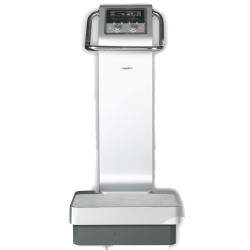
vibration plate exercises obesity
Vibration plate reviews on Amazon.com
For a hormone that, 3 months ago, I had never heard of it sure seems like irisin is all over.

A recent study on whole body vibration (that can be read by clicking here) was able to demonstrate an increase in the hormone irisin during a single session of use.  For those of you who missed that post, irisin is a hormone that is produced by skeletal muscle under the influence of exercise that may be, in a large part, responsible for the positive effects of exercise on overall health.

Based on this knowledge on the role of irisin on chronic disease, this particular study looked at the relationship between irisin levels of the risk of chronic disease in centenarians.

These healthy 100+ year olds had their irisin levels compared to young healthy adults and young adults who had developed heart disease earlier than they should have.  Here’s the levels they found:

  1. The highest levels of irisin were in disease-free centenarians (35.3 ng/mL).
  2. The next highest levels were in young healthy controls (20.7 ng/mL).
  3. The lowest levels were found in the young patients who had experienced a heart attack (15.1 ng/mL).

I’m not entirely sure what this means, but I will definitely keep my ears open for any future studies on irisin and how we many maintain or increase our irisin levels (beside, as previously mentioned, using a whole body vibration unit…).

Filed Under: Anti-Aging Tagged With: anti-aging, chronic disease, irisin, whole body vibration

Whole Body Vibration to Build Muscle: Can it be this Easy?

April 23, 2014 by James Bogash

vibration plate exercises obesity
Vibration plate reviews on Amazon.com

The research on vibration plate exercises continues to build. For those of you who have never used whole body vibration, it’s quite an experience.

In our office, the best way to describe vibration plate exercises is to have someone try the plate out for themselves. There really isn’t any adequate way to describe what happens. Either way, it’s unique.

The benefit of vibration exercise vary and some is more hype than reality. Fall prevention and muscle building (especially for the knees) top the list of benefits that have been demonstrated in the medical research. However, my personal belief has always been that vibration plate exercises were the most beneficial for those who were not active. That is why I have always considered it somewhat contradictory to have a whole body vibration unit in a health club.

This particular study, however, may expand my thoughts just a wee bit. Researchers looked at the hormone irisin and vibration plate exercises. Irisin, for those of you who did not know (and include myself as one of them), is a hormone released from muscle in response to exercise. It is believed that irisin then helps muscle rebuild stronger and fight off obesity and diabetes.

Irisin does this is by turning white fat (the lazy abdominal fat that contributes to diabetes, heart disease and cancer) into brown fat. Brown fat burns calories to produce heat. Generally a very good thing and it helps fight off diabetes and obesity.

Even more interesting relates to a blog post that I wrote a short while ago, relating the shivering response (basically keeping the room temperature at 60 degrees for 6 hours a day) to an increase in calorie burning from having more brown fat.

So what if the shivering response and vibration plate exercises produce the same response?? A very interesting line of thought and one that is supported by the research in this study.

In it, researchers put a group of healthy, untrained females through a 6-week program of whole-body vibration exercise training. Blood was checked before and right after a session of vibration plate exercises at the state of training and after 6 weeks. Here’s what they found:

  • Pre-exercise irisin levels were not different at the beginning of the study and after 6 weeks of training.
  • However, at the beginning of the study, after a vibration exercise session, irisin levels increased by 9.5%.
  • Even better, after 6 weeks of training, post-vibration exercise irisin levels increased 18.1%.

Much of this begins to make more sense. This brings together the research on vibration plate exercises and shivering / cold exposure and puts it under the umbrella of brown fat. Considering that most people would not want to expose themselves to shivering cold temperatures for weeks on end and that whole body vibration is a fun and easy therapy, it would seem that we have a better approach to management and prevention of obesity in vibration plate exercises.

Filed Under: Obesity and Weight Loss Tagged With: brown fat, irisin, vibration plate exercises, whole body vibration

Primary Sidebar

Patient Quick Guide

Schedule An Appointment
Contact Our Office
Download Patient Forms

Categories

Chiropractic Mesa Arizona

Arthritis Chiropractor Mesa AZ
Graston Technique Mesa AZ
Back Pain Chiropractor Mesa AZ
Back Pain Doctor Mesa AZ
Wrist Pain Chiropractor Mesa AZ
Rotator Cuff Chiropractor Mesa AZ
Shoulder Pain Chiropractor Mesa AZ
Knee Pain chiropractor Mesa AZ
Manipulation Under Anesthesia In Mesa AZ
Headache Chiropractor Mesa AZ
Chiropractic Mesa AZ
Stem Cell Therapy Mesa AZ
Regenerative Medicine Mesa AZ
Massage Therapist Mesa AZ
Shoulder Pain Doctor Mesa AZ
PRP Therapy Mesa AZ
Chiropractic Mesa AZ
Who Is The Top Chiropractor In Mesa AZ?
Knee Injury Doctor Mesa AZ?

Footer

Resources

Site Map
Disclosure
Additional Resources

Best Massage Therapist Mesa AZ
Arthritis Doctor Mesa AZ
Chiropractic Mesa AZ
Back Pain Doctor Mesa AZ
Rotator Cuff Doctor Mesa AZ
Chiropractor Mesa AZ
Massage Therapist Mesa AZ
PRP Therapy Mesa AZ
Knee Pain Doctor Mesa AZ
Stem Cell Therapy Mesa AZ
Headache Doctor Mesa AZ
Shoulder Pain Doctor Mesa AZ

Office

Lifecare Chiropractic
1830 S. Alma School Rd, Ste 135
Mesa, AZ 85210
(480)-839-2273
Also Serving Tempe, AZ

Get Directions

  • Home
  • About
  • Common Conditions
  • Additional Services
  • Testimonials
  • Blog
  • E-Books
  • Contact

Copyright © 2026 · LifeCare Chiropractic · All Rights Reserved.