• Skip to main content
  • Skip to primary sidebar
  • Skip to footer

LifeCare Chiropractic

The Best Chiropractic Care in Mesa, Arizona

  • Home
  • About
    • Why Lifecare?
    • About Dr. Bogash
    • Team Members
  • Common Conditions
    • Wrist Pain/Carpal tunnel syndrome
    • Elbow Pain/Epicondylitis
    • Headaches
    • Knee Pain and Knee Injuries
    • Low Back Pain
    • Shoulder Pain and Rotator Cuff Problems
  • Additional Services
  • Testimonials
  • Blog
  • E-Books
  • Contact

Healthy Living in a Toxic World

Is That Prescription Giving You Breasts?

December 24, 2014 by James Bogash


phthalates in meds
fotorealis/Dollar Photo Club

Phthalates. Luckily, it took me less time to realize how bad they for our health then it did to learn how to spell the word.

It has been clear that phthalates play a role in infertility, preterm birth, birth defects (they have a feminizing effect on the developing baby), hormonal cancers like breast and endometrial, obesity and testosterone issues in men.  And I’m sure the list of damaging effects is much larger than we are aware of.  Any way you slice it, they are not good for you.

The scary part is that these chemicals are pretty much everywhere you turn.  In many studies every single person studied had phthalates present in his or her bloodstream.  But if you can’t avoid these chemicals entirely, at least you can be aware of where they are hiding and do your best to reduce your exposure.  The main reason they are found everywhere in today’s society is because they are used in the manufacture of so many products you use on a daily basis such as:

  • Anything with hat “new vinyl” smell
  • New cars (we keep the windows cracked while driving any new car in our family for months)
  • New flooring (vinyl tile and carpeting)
  • Food packaging
  • Latex adhesives
  • Nail polish
  • Even scarier, EWG.org identified phthalates in a large number of makeup products as well as fragrances (you know–that stuff found in EVERYTHING…).

Just in case this list is not comprehensive enough, I bring you this particular study.  In it, researchers looked at a not-too-often considered exposure to these chemcial compounds.

The polymer coating around many prescription drugs.

Yep.  Just in case the actual ingredients inside the capsule weren’t toxic enough, the drug companies have to wrap them up in phthalate-containing polymers just to make darn sure you don’t escape from any chronic disease you might otherwise avoid.  To see just how strong this exposure could be, researchers looked at the urinary concentrations of phthalate compounds in 7,999 patients who used certain drugs known to contain phthalates in the coating.  Here’s what they found:

  • Mesalamine formulations (used to treat ulcerative colitis; these drugs may contain dibutyl phthalate-DBP-to provide an extended release formula) users had urinary levels of phthalate compounds that were FIFTY times higher than non-users.
  • Didanosine (an HIV anti-viral medication) users had higher urine levels.
  • Omeprazole (that god-awful drug given to everyone who MIGHT have a stomach issue) had higher levels.
  • Theophylline products (used to treat asthma) also had higher levels.

Keep in mind that these drugs were the only ones tested.  There are likely other drugs that contain phthalate compounds in the polymer coating on the outside of the pill.  Regardless, even omeprazole itself was listed as the #6 most widely given prescriptions in 2010 at some 53.4 million prescriptions.  That is a LOT of potential exposures to a compound known to cause things like cancer and birth defects.

I, for one, did not really need any additional incentive to avoid medications, but not wanting to have order bras online from Victoria’s Secret as a man certainly adds to the reasons to use lifestyle to manage (or preferably avoid) chronic disease.

 

Filed Under: Toxicity Tagged With: phthalates, prescription drug capsule

BPA in Plastic Water Bottles; Toxic as Ever

December 23, 2014 by James Bogash

IS PLASTIC REALLY THAT DANGEROUS TO OUR HEALTH??

The dangers of Bisphenol A (BPA) have been known for years, and the FDA recently came out and admitted that, well, maybe it’s not that good for us…You’ve also slowly seen the retail side of things slowly proclaim that their products are now BPA free.  Strong move in this direction in baby products (after decades of it’s use!!) and water bottles.  What we are NOT seeing is the education that many canned goods contain BPA as a lining to protect the metal.  So those canned green beans you’re planning on having for dinner?  Not only do they not have any nutritional value left, but they’re likely loaded with BPA.  Plastic water bottles remain the biggest likely exposure, though.  This is magnified by the concept that every needs to have instant access to bottled water every waking hour of the day.  See how much this has done for our health now that everyone lugs around plastic water bottles?

Read more


Filed Under: Environmental Tagged With: bisphenol A, BPA, breast cancer, diabetes, obesity and weight loss

Heavy Metals and Heart Disease: Your Hidden Exposures

December 17, 2014 by James Bogash


Heavy metals and heart disease
Copyright marcel/Dollar Photo Club

When I first saw this article, I was worried that my album collection from the 80’s had to go. But upon deeper reading I realized that the danger extends far beyond Tesla and Warrant.

While most of us are aware that heavy metals are not good for us, for the vast majority, our understanding of exposures is limited to playing with the old mercury-based thermometers and maybe not living next to a smelting plant.  Beyond that, however, the general public’s understanding of where heavy metal exposures come from is shallow.

If you’d like to stay in the dark, then stop reading right now.  If, however, the last time you had a good scare was watching Poltergeist and you’re ready for more, then I’d like to direct you to this particular study.  In it, researchers looked at four heavy metals (lead, cadmium, mercury and arsenic) to see how much they contributed to heart disease.  While the end results varied across the different studies that the researchers looked at, here is an overview of what they found:

  1. With lead, those with the highest levels were 252% more likely to die from any cause, 563% more likely to die of cardiovascular causes and a whopping 837% more likely to die from ischemic heart disease.
  2. With cadmium, every 2-fold increase is linked to a 28% higher risk of death from any cause, 21% higher risk of dying of heart disease.
  3. For mercury, there is a 69% higher risk of a heart attack, a 290% higher risk of having heart disease and a 230% higher risk of dying from any cause.  The authors also note that the effects may actually be even stronger, since much of our mercury exposure comes from fish, which has a protective effect, likely blunting some of the damaging effect of the mercury.
  4. Higher levels of arsenic are linked to a 71% higher risk of dying from coronary artery disease and a 303% higher risk of dying from a stroke.  These risks were generally higher for diabetics.

While the details of these association vary (based on the study looked at, what body tissues were used to check heavy metal levels, men versus women, etc…), it is very clear that heavy metals are NOT good for our vascular system and should be avoided as much as possible.

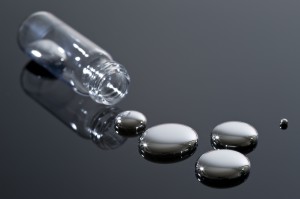
But this is the problem, isn’t it?  How can you avoid exposure if you really don’t know where those exposures are coming from?  The obvious ones like not smoking (cadmium), not camping outside of a smelting plant in a third-world country (lead and cadmium) and not using a straw to suck up the silvery stuff from the broken thermometer are easy.  It’s the hidden ones that will sneak up on you.

Luckily, this same study gives a great overview of common sources of exposure to these 4 heavy metals.  Here’s a summary from the article:

  • Lead: Food, water, air, gasoline additives, food-can soldering, lead-based paints, ceramic glazes, drinking water pipe systems, folk remedies.  In general, pretty much everywhere.  Another common source is from environmental dust.  Simply taking your shoes off at the door may lower your exposure.
  • Cadmium: Contaminated food (leafy vegetables, grains, organ meats, and crustaceans), drinking water, inhalation of polluted air, occupational exposure in industries, tobacco smoke.  For most non-smokers, exposure to cadmium is mostly from foods raised or grown on contaminated soil.  It is likely that organic products (meat as well as plants) will be lower in cadmium.
  • Mercury: Contaminated fish, meat and organ tissue of marine mammals or feral wildlife, dental amalgams, skin-lightening creams, antiseptic facial products, mercury-containing laxatives or diuretics, teething powders, latex paint.  These exposures are easier to identify but not necessarily avoid (i.e. you got amalgam fillings 20 years ago, you LOVE high-mercury fish like  yours truly…)
  • Arsenic: Contaminated fish, tobacco smoke, arsenic treated wood, ingestion of high-arsenic drinking water.  A big problem here is that much of the water used for organic farms may be contaminated with arsenic, so that even if all organic principles are followed, arsenic levels may be higher for this reason.

So, if you just avoid all these sources of heavy metal exposure listed above, you should be fine.  Cause you’ll be DEAD from not eating, drinking or breathing.

Your best bet is to minimize your exposures where ever you can on top of eating a high-quality diet loaded with lots of protective compounds that can help detoxify some of these heavy metals out of your system or at least mitigate some of the damage heavy metals cause.  And with the New Year right around the corner, it always makes sense to start out the year with some type of physician-oriented detox program to do the best you can clearing out some of the accumulated garbage from the prior year.


Filed Under: Environmental, Heart Disease, Toxicity

The 21st Century View on Antibiotics, aka Fleming Turning in His Grave

October 22, 2014 by James Bogash

There is a time and a place for everything in medicine.  Even, I would (very) begrudgingly admit, statins. But too often we are using meds without a full understand of the dark side of medicine.

And that dark side can be as devastating to your health as any diseases we’re trying to conquer with drugs.  Antibiotics are on this list.

When you would ask the average doctor what the principle danger of antibiotics is, it is almost assured that you will get antibiotic resistance as the answer.  And antibiotic resistance is a community issue.  As the prescribing physician, it’s easy to think that the risk of antibiotic resistance has little to do with the patient standing in front of you with an upper respiratory infection.  After all, antibiotic resistance is a community” thing, not an “individual” thing.

In other words, if there is little harm of antibiotic resistance from unneeded antibiotic use to the patient staring you in the face, the potential benefit, however small, is worth the risk.  So that prescription will be given on the off chance that it may help the upper respiratory infection.

The first peer reviewed published article on probiotics was published in 1908.  Now, 106 years later (as of the writing of this article) very few doctors grasp even the basics of the relationship between us and the bacteria in our gut.  This is despite literally thousands of studies documented the benefits of probiotics.

But even this concept is reversed.

It’s not about the benefits of probiotics.  Rather, it’s about the devastating health consequences of destroying the beneficial bacteria seeking refuge in your body:

  • Disrupted immune balance, leaving you susceptible to allergies, asthma and autoimmune conditions
  • Inability to fight off infections from disease-causing bacteria, viruses and parasites
  • Inability to detoxify toxic chemicals from the environment
  • Alteration of the hormone balance in the body, leading to depression, obesity and anxiety

The list is far longer, but I think you get the idea.

The group who does NOT get the idea, however, is the one continuing to write prescriptions for antibiotics in all but the most severe cases.  Ear infections.  H. pylori in the stomach.  Upper respiratory tract infections.  Pharyngitis (sore throat).  Before dental work.  After every surgery.  Sinus infections.  As a preventative just in case a bacterial infection MIGHT happen during a viral illness.  The list is quite long.  And all of this in spite of mounds of research screaming to NOT use antibiotics.

Until prescribing providers truly, deeply and passionately understand just how important it is to have a normal bacterial flora living and thriving within us, our society will be plagued with chronic diseases.

This particular article drives this home.  Even further, most of this entire Journal of Clinical Investigation is devoted to the topic of just how integrated bacterial populations are integrated into every part of our health.

The authors highlight the emerging viewpoint that we need to view ourselves and the bacteria within us as an ecological community.  One where wanton destruction of its inhabitants have long-term damaging consequences to our health.

It takes no convincing for society to look with horror on the killing of Siberian tigers for the pelts, elephants for their tusks, the overfishing of certain fish populations to near extinction or the loss of the rainforests killing the abundant life that lives within.

It is through this lens that we need to view the bacteria within us.  We need to focus our efforts on supporting solid growth and diversity in our newborns and infants through vaginal birth, breastfeeding and NO antibiotics in the first few years of life.  As we age we need to focus on diets that support the growth of bacteria rich in soluble fibers and without processed junk.  We need to do everything in our power to avoid drugs that block acid production in the stomach (unless a bleeding ulcer is present).  And we need to change the way we raise livestock in an antibiotic soup.

Until we can make these changes, both in understanding and in behaviors, the modern, antiseptic life is going to rob us of health.


Filed Under: Drug Research, Probiotic Tagged With: antibiotic overuse, antibiotic resistance, probiotics, side effects of antibiotics

Important Reason You Need to Improve Thyroid Function During Pregnancy

August 8, 2014 by James Bogash

Improve thyroid function
Photo courtesy of https://www.flickr.com/photos/tobanblack/

It seems like everyone’s got thyroid problems these days. Luckily, there’s a prescription for that and you don’t need to worry your pretty little head over something as minor as a major organ going kaput in your twenties.

While I am, of course, being facetious, the attitude exists in medicine today that we can easily treat thyroid problems with thyroid replacement hormone like Synthroid or levothyroxine is completely backwards.  If it was your heart or kidneys or lungs that just stopped working at 25 the medical establishment would run thousands of dollars in tests to determine why.  For some reason the thyroid gland is treated completely different.

Maybe it’s because we have medications that seem to do a great job replacing the lost or diminished hormone levels.  The scary thing is that the reasons for thyroid hypofunction or failure can be very serious and if your doctor does not spend the time to dig for answers (or worse–is not even aware there are answers…) your health can be at risk.

I have heard Dr. Jeffrey Bland refer to the thyroid as the “yellow canary of the human body” when it comes to environmental toxicity.  This means that, when you are exposed to toxic chemicals, whether from heavy metals, flame retardants, stress, food allergies or pesticides in your water supply, your thyroid is the gland screaming out to you that something is wrong first.  It’s your early warning to clean up your body and restart your thyroid.

But alas, we ignore that and medicate.  Even worse, we treat labs values and not the patient themselves.  How often have you heard from friends or family members that his or her doctor said the lab numbers (usually only TSH is checked) were good and so there was no reason to adjust thyroid hormone levels?  Yet the patient is constipated, depressed and dragging his or her feet every hour of the day.  Doesn’t seem to make sense.

The studies linking environmental toxins and thyroid dysfunction are quite common (you can read about many of them in previous blog articles that can be read by clicking here).  But of particular concern is the compound ammonium perchlorate in drinking water.  It is used in the manufacture of rocket fuel, ammunition and fireworks and has been discarded in large quantities in Nevada since the 1950s.  This has led to contamination of the Colorado River as it picks up perchlorate from the soil.  From there, it can last in water for long periods of time.

Unfortunately, perchlorate is known to block the action of thyroid hormone.  This obviously creates a problem and has been shown to create thyroid problems.  Luckily, you can just take your Synthroid and ignore the fact that a known environmental toxins continues to run through your bloodstream and body tissues.

Just to demonstrate that the approach that most physician take for thyroid problems is dead wrong, I present this particular study.  In it, researchers looked at the pregnancies of 21,846 women.  Of these, 487 were hypothyroid during pregnancy.  In these 487 women, first trimester perchlorate levels were evaluated.  In those who showed the highest 10% of perchloarate levels, the children’s IQ was assesses at 3 years of age.  Here’s what they found:

  • Perchlorate was detectable in all women and iodine levels were low.
  • Those moms in the highest 10% of perchlorate levels had a 314% higher risk of having her child’s IQ being in the lowest 10%.
  • Here is the important point:  thyroid hormone therapy did not have an impact of perchlorate on offspring IQ.

This article is not about the IQ levels of the children.  This article illustrates that merely medicating the lab findings of an altered TSH does nothing to fix the problem.  With the thyroid, there is a very high likelihood that something is wrong.  Whether it’s prediabetes, stress, nutritional deficiencies or exposure to common toxic chemicals, it needs to be identified and addressed.

Maybe you can’t manage to get all the flame retardants out of your life (besides–who wants to risk bursting into flames at work?), but paying attention to where your exposures are and doing your darnedest to reduce these exposures is still going to pay off.  This is the only way to address it.

So, the next time your doctor tells you that you have thyroid problems and you ask him or her for what environmental exposures might be causing the problem and all you get is a blank stare, it might be time to find a new doctor.

Filed Under: Environmental, Thyroid Tagged With: hypothyroidism, Perchlorate, thyroid function

Soda Stream Reviews: Why You Need to Get One

August 5, 2014 by James Bogash

SodaStream Reviews
SodaStream Crystal review

For years now I have written about the health dangers of chemicals in plastics such as BPA.  It is clear that plastics are not good for your health.

Here is how it went in my household…

Being a very strong advocate for tea, we had been drinking tea for years (you can read how we prepare tea in a prior blog post that can be read by clicking here).  Our preferred brands were Republic of Tea and Teavana and we went through a lot of tea.

I think, in the back of my mind, if I had taken the time to think of it, I would have known that the pesticide levels in tea are among the highest you can find.  Coffee and tea, to be specific.  The coffee part we already had covered—we only buy organic coffee for the home and office.

But it took a blog post by Vani Hari (aka the Food Babe) to wake me up to the fact that pesticide levels in tea were a grave concern.  In a review of certain brands of tea, some 98% of Teavana samples had pesticides detected.  I posted this concern on Teavana’s Facebook page and, while they did answer, you could hear the tap dancing in the background as they avoided answering the actual question.

So this led to a shift to only organic teas, which became a problem because the flavors available were not nearly as good.  Tazo has a few that are fantastic, but the selection is limited.  Luckily, I recently found ESP teas with a very large selection of organic teas (white, black, herbal and rooibos) in great flavors.

Prior to the discovery of ESP, as an alternative, we added in sparkling water. LaCroix, Seagrams, Perrier, Safeway brand.  The concept is great.  No calories, no artificial sweeteners (although you DO have to be careful not to be tricked into buying the ones with artificial sweeteners) and still provides that exciting fizz.

This is the way it went for the next 2 years or so until the next epiphany.

My son, who is currently 8, was looking for ways to generate some additional revenue besides his salary for feeding the dogs and vacuuming, s0 we discussed saving aluminum cans.  This was when I realized just how many cans we were actually going through in any given week.

And started to realize just how high the potential BPA exposure was from this consumption.  You see, many cans, both aluminum and steel, are coated with BPA on the inside to create a lining between the food product and the can itself.

In a blog post I did a little while back on BPA exposure from credit card transaction receipts (which can be read by clicking here), one of the participants in the study had to be excluded because his BPA level was over 27 TIMES higher than everyone else’s after drinking 4 cans of beverages.

This is obviously a concern and created quite a conundrum in our family.

Luckily, this problem was solved by the Soda Stream Crystal.  I am wary of all plastics, so the typical Soda Stream containers were not a good option.  But the Soda Stream Crystal is all glass, alleviating this concern.

So last week we became the proud owners of our new Soda Stream Crystal.  And that’s when the fun began.  We bought extra glass bottles to hold the sparkling water we made (the Soda Stream glass replacement bottles are quite pricey) and continue to find creative ways to add flavors.

Here’s a few ideas:

  • Soda Stream sells My Essence, which are raspberry, orange and lemon-lime flavored essences.
  • Organic vanilla extract
  • Orange extract can also be purchased separately.
  • Coconut extract
  • We have yet to add pulverized fruits into the drink, but this can be done quite easily, so long as you limit it to just a small amount of the fruit for flavor only.

I’m sure in time I’ll have some more ideas.  Overall, though, it’s been a fun experience, very inexpensive once the initial Soda Stream equipment is bought and most importantly, BPA-free.

Patients ask me all the time how to go about reducing exposure to toxic chemicals in their environment.  The first step is identifying these exposures.  The next step is doing something about it.  Moving to the Soda Stream Crystal in addition to your organic tea consumption is a fantastic step in protecting your long-term health.

Filed Under: Environmental Tagged With: BPA, plastic, Sodastream, Sodastream flavors, Sodastream reviews

Drugs and Medical Treatment: How Powerful is the Placebo Effect?

July 20, 2014 by James Bogash

placebo and nocebo response
Photo courtesy of https://flic.kr/ps/q5KAv

You have heard of the placebo response and have a general idea of how it works. The reality is that few of us know just how powerful it is.

This wouldn’t be a problem except that most drugs, when studied in clinical trials, are compared to placebo.  This means that patient beliefs during treatment may have much stronger effects than the drug itself.  Many drugs are studied under double-blind placebo controlled studies in the attempt to control for the placebo response.  In these studies, neither the reviewer (many times this is the treating physician) nor the patient knows who is taking the placebo and who is taking the active drug.  But if the patient even thinks he or she is on the active drug, it can completely throw off the results of the study.

In single-blind studies, the reviewer knows whether or not the patient is on the placebo or drug.  This requires the reviewer to maintain an absolutely neutral attitude towards the patient lest he or she gives a hint as to what arm of the study the patient is in.

In non-blinded studies, all bets are off.

Although I don’t have the reference I remember coming across a study on blood pressure medications.  The sneaky design of the study had participants believing that the study was designed to compare the drug to the placebo.  In the study, the placebo had a pretty powerful response and the drug response was only a little bit stronger.  However, when researchers teased apart those who were most compliant with taking the pills, whether drug or placebo, had the strongest blood pressure response.  From compliance, we can conjecture that those who took the pills as prescribed had a much deeper belief that it was going to help them.  This belief trumped all as far as a treatment response.

With that being said about the power of placebo, the opposite can also be true.  This is called the nocebo response and deals with patients who have negative expectations for treatment or side effects.  In other words, if you hear from your doctor that Drug A has some pretty nasty side effects, you are actually more likely to experience said side effects.

This particular study will completely destroy your faith in the ability to truly study the benefit of any drug in any study.

In it, researchers took 66 chronic migraine sufferers and followed them from an initial migraine attack through the next 6 attacks.  In each of the attacks (after the initial attack for which no treatment was given, which served as the control), participants were given either a placebo or Maxalt (10-mg rizatriptan) over the course of the next 459 attacks.

(Editor’s note: due to the nature of this article, I will not go into the correct approach to the management and elimination of migraines.  Feel free to check out my Migraines and Epilepsy eBook for that…)

What made this trial different was what was communicated to the migraine sufferer.  The treatment was given under three different information conditions:

  1. Negative—they were given and told they were given a placebo
  2. Neutral—they were given and told they were given Maxalt
  3. Positive—they were given placebo but told it was Maxalt.

Pretty clever (but sneaky) if you ask me.  Here’s what the researchers found out:

  • Response to Maxalt was stronger than placebo (not unexpected).
  • The placebo response was stronger than no treatment (not unexpected either).
  • The placebo, even when the patients were told it was a placebo, had a stronger response then no treatment (a wee bit of a surprise here…)
  • When participants were given placebo labeled as (i) placebo, (ii) Maxalt or placebo, and (iii) Maxalt, the overall placebo effect increased.
  • Maxalt had a similar progressive boost when labeled with these three labels.
  • The response to Maxalt labeled as a placebo and placebo labeled as Maxalt were similar.
  • Compared to no treatment, the placebo, under each information condition, resulted in more than 50% of the drug effect.

This is really interesting stuff.  Basically, the more “positive” information the patient got, the stronger the response, regardless of whether it was a drug or placebo. The reverse was also true—if the patients did not believe they were given the drug the response was not as strong.

This says a few things about society and can help me as a physician.  First, a note on society.  And it’s a sad note.  This study found that, even if patients were told they were given a placebo that we all know is “just a sugar pill” our programming that drugs “fix things” runs so incredibly deep that merely taking a pill has the potential to help EVEN when we know it can’t possibly help.

More importantly, I know that, as a physician, my beliefs and reassurances about the treatments I offer have a strong impact on the outcomes of these same treatments.  My assurance to a patient that a treatment for his or her condition can be very effective can be as powerful as the treatment itself.  Ironically, with experience and seeing thousands of patients over the years benefit, I become more confident in the treatment I provide.  This confidence can, in turn, improve the outcomes of my patients.  Pretty cool.

Filed Under: Drug Research Tagged With: drug research, nocebo, placebo, positive thinking

Buying BPA Free Water Bottles? Critical Fact to Know

July 10, 2014 by James Bogash

BPA free water bottles
Photo courtesy of https://www.flickr.com/photos/kevinmic/

We live in a toxic soup.  In an attempt to avoid at least SOME of the pollutants, many have become dilligent about avoiding Bisphenol A (BPA) in plastics.

I first wrote about BPA in canned goods as early as 2001 and have been a vocal advocate for avoiding its use as much as possible.  It took some time and pressure from consumers, but the plastics community responded by coming out with everything in a BPA-free version.  It’s now widely accepted (by everyone EXCEPT the EPA) that BPA is bad for our health and you will see no labels on the front of baby bottles proudly proclaiming that they still load their plastics with BPA.
[Read more…] about Buying BPA Free Water Bottles? Critical Fact to Know

Filed Under: Environmental Tagged With: acrylic, bisphenol A, BPA free water bottles, plastics, polyethersulfone, polystyrene, Tritan

  • « Go to Previous Page
  • Page 1
  • Page 2
  • Page 3
  • Page 4
  • Page 5
  • Interim pages omitted …
  • Page 24
  • Go to Next Page »

Primary Sidebar

Patient Quick Guide

Schedule An Appointment
Contact Our Office
Download Patient Forms

Categories

Chiropractic Mesa Arizona

Arthritis Chiropractor Mesa AZ
Graston Technique Mesa AZ
Back Pain Chiropractor Mesa AZ
Back Pain Doctor Mesa AZ
Wrist Pain Chiropractor Mesa AZ
Rotator Cuff Chiropractor Mesa AZ
Shoulder Pain Chiropractor Mesa AZ
Knee Pain chiropractor Mesa AZ
Manipulation Under Anesthesia In Mesa AZ
Headache Chiropractor Mesa AZ
Chiropractic Mesa AZ
Stem Cell Therapy Mesa AZ
Regenerative Medicine Mesa AZ
Massage Therapist Mesa AZ
Shoulder Pain Doctor Mesa AZ
PRP Therapy Mesa AZ
Chiropractic Mesa AZ
Who Is The Top Chiropractor In Mesa AZ?
Knee Injury Doctor Mesa AZ?

Footer

Resources

Site Map
Disclosure
Additional Resources

Best Massage Therapist Mesa AZ
Arthritis Doctor Mesa AZ
Chiropractic Mesa AZ
Back Pain Doctor Mesa AZ
Rotator Cuff Doctor Mesa AZ
Chiropractor Mesa AZ
Massage Therapist Mesa AZ
PRP Therapy Mesa AZ
Knee Pain Doctor Mesa AZ
Stem Cell Therapy Mesa AZ
Headache Doctor Mesa AZ
Shoulder Pain Doctor Mesa AZ

Office

Lifecare Chiropractic
1830 S. Alma School Rd, Ste 135
Mesa, AZ 85210
(480)-839-2273
Also Serving Tempe, AZ

Get Directions

  • Home
  • About
  • Common Conditions
  • Additional Services
  • Testimonials
  • Blog
  • E-Books
  • Contact

Copyright © 2026 · LifeCare Chiropractic · All Rights Reserved.