• Skip to main content
  • Skip to primary sidebar
  • Skip to footer

LifeCare Chiropractic

The Best Chiropractic Care in Mesa, Arizona

  • Home
  • About
    • Why Lifecare?
    • About Dr. Bogash
    • Team Members
  • Common Conditions
    • Wrist Pain/Carpal tunnel syndrome
    • Elbow Pain/Epicondylitis
    • Headaches
    • Knee Pain and Knee Injuries
    • Low Back Pain
    • Shoulder Pain and Rotator Cuff Problems
  • Additional Services
  • Testimonials
  • Blog
  • E-Books
  • Contact

shoulder pain

Steroids and Your Tendons: Shocking Research

June 24, 2014 by James Bogash

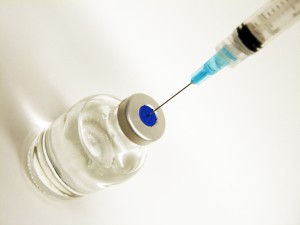
Dangers of steroid injections
Photo courtesy of http://www.freeimages.com/profile/zeathiel

Most are aware that steroids are not good for us.  Steroids are bad for bones.  Bad for diabetes.  Bad for tendons.  But just HOW bad?

The standard recommendation for steroid injections into a tendon, such as the shoulder, elbow or Achilles tendon is no more than 3.  Anything past that and you increase the risk of a tendon rupture.  Basically, it is well accepted that steroids weaken tendons.  Which, considering that the idea of any type of therapy is to improve the situation, this seems odd to me.  Giving a therapy to provide temporary relief that will only increase the risk of future damage just doesn’t make sense to me.

I can honestly say that there have been very, very few situations in my years of practice that I have felt a steroid injection was a necessity.  And don’t think you’re safe if you have a local injection directly into an area such as the shoulder.  Research has shown that the injection site doesn’t matter; an injection into the buttocks is just as effective as a direct shot into the supraspinatous tendon.  This means that the steroid is spreading throughout your body, effecting every single tissue in your body.

The same holds true for oral steroids taken for any reason; respiratory, pain, inflammation.

But it’s just once, right?  Can’t really hurt anything, can it, so long as I keep the injections to the recommended 3 doses…?

Nope.  The results of this particular study should be a massive eye-opener to everyone.  In this study, researchers looked at the cellular effect of the steroid dexamethasone on hamstring tendons.  They found that steroids trigger a process called cell senescence.  Senescence means to “grow old” and basically indicates that an organism is coming to the end of its lifespan.  Cellular senescence has a similar meaning, indicating that a cell has ceased to function fully, has stopped dividing and is basically nearing the end of its life.

Interestingly, dosage would not likely make a difference.  Steroids work by acting on a receptor at the surface of a cell and there are only a certain amount of receptors available.  For this reason, a low steroid dose can be powerful enough to fill up all the receptors.  A high dose is not necessary.

Some would argue that this was a “test-tube” (in vitro) study, it is not likely to happen when oral steroids are used to treat something like shoulder pain.  The researchers took this into account and looked at actual tissue biopsied from shoulder surgery and found the same cell signals that trigger this cell senescence.  In other words, it’s real.

Worse, it’s irreversible.  As in permanent.

I have stated time and time again that I am certain that the way we are treating musculoskeletal injuries and pain in medicine today is completely setting us up for problems in the future.  Anti-inflammatories and steroids have consistently shown in the research that they damage the very tissues we are trying to protect.

Personally, despite many injuries over the past 20 years (ripped off extensor tendon of left 4th digit, left radial head dislocation, shoulder pain, neck pains, low back pain, episodes of knee pain) I have never even considered anything other than natural approaches.  Most often, this involves advanced soft tissue techniques like Graston combined with chiropractic adjusting.  And it has served me well over all this time.  And maybe this approach is why I don’t deal with any chronic problems despite many severe acute injuries.

While this may seem entirely self-serving, do not let any ache or pain go and definitely do not try to “suppress” it with any type of anti-inflammatory, steroidal or not.  Avoid the couch after most injuries–maintaining movement to the best of your ability is almost always your best option and ensures that scar tissue is less likely to form.


Filed Under: Chiropractic Care, Elbow Pain, Knee Pain, Shoulder Pain Tagged With: Achilles tendon, shoulder pain, steroid injection, tendonitis

Had a Rotator Cuff MRI? 4 Things to Know Before Surgery

August 23, 2013 by James Bogash

There are times when I wish MRI and CT scans were never invented.  I can’t tell you how many times I’ve had to explain to patients that what was found on the MRI that his or her PCP ordered has absolutely nothing to do with the pain currently experienced.

Low back, knees and shoulder seem to be the worst.  I certainly have ranted in the past about the massive overuse of technology and medical imaging in medicine today.  As strange as it may be, the pathway is very clear:  Having a MRI makes that person more likely to undergo  epidurals and surgery.  Having an epidural leads to surgery as well.  So, unless you’re willing to go under the knife, don’t even consider an MRI.  The ONLY time to order advanced imaging is when your provider thinks that there is a high likelihood that the information obtain will make an important change in your treatment plan.

Imaging is not used just to confirm what a physician has already determined.  It’s really not that hard to determine if someone has a disc problem or if someone with advanced arthritis is dealing with spinal stenosis.  If signs point to a disc problem, why on Earth would you waste the time and resources to order an MRI at that point?  Just treat the condition as if it’s a disc (which, in our office, would involve flexion / distraction technique).

Now, if you don’t respond within expected timeframes (30 days is a safe bet) or if your condition worsens while getting treatment, then imaging becomes more important to see if some underlying factor is affecting your response to treatment.  Our office is pretty conservative when it comes to ordering advanced imaging.  I’d say that I personally order an MRI less than a handful of times per year.  However, it seems like at least this same number of times each month we’re requesting the results of an MRI or CT scan that was ordered by another provider and probably shouldn’t have been.

This is when I have to battle against the perception that a MRI or CT scan is exact and answers all questions.  Far too often, a MRI comes back with some type of disc bulge, and yet the patient has absolutely no signs that a disc is involved in his or her condition.  Only rarely does an MRI ordered by another provider come back with valuable information that changes the treatment we’re doing in the office.

All this would be fine if MRIs and CTs didn’t come with significant problems beyond the cost.  CT scans, despite still being handed out like candy (had a patient in yesterday whose son was given a head CT recently in the ER when an MRI would have been a better choice to look at the brain) have a tremendous amount of radiation exposure associated with them and have been linked to some 14,500 cancer deaths per YEAR.  MRIs, as mentioned, begin the dangerous pathway towards more invasive treatment measures and surgery.

All of this brings us back to this particular study.  Researchers looked at a group of postmenopausal women with NO shoulder pain and compared them with premenopausal women with no shoulder pain to see what there rotator cuffs looked like in an MRI.  Here’s what they found:

  1. 8.9% had full-thickness tears (mainly localized in the supraspinatus tendon of the dominant side) in the postmenopausal group.
  2. Non-painful, full thickness tears in the premenopausal group was 3.1%.
  3. Women with tears were more likely to have higher BMI, higher fasting glucose and lower HDL cholesterol.
  4. Overall, higher BMI and lower levels of HDL cholesterol increased the risk of having a tear.

Wow!  Quite a few take home messages.  First, we need to see that a decent size chunk of females, both pre and postmenopausal, have complete thickness rotator cuff tears that are painless.  I can’t tell you how important that little factoid is.  Just because you see a tear on a MRI does NOT mean that this is the problem.

Second, lifestyle choices (as evidenced by cholesterol and BMI relationships) played a large role in the tendon damage.  This isn’t really hard to envision since tissue healing and inflammation are going to be effected by the choices we make.

So, just because you have shoulder pain does NOT mean that you need to have an MRI (and X-rays are just short of worthless for shoulders anyway…) unless you have failed a course of conservative care, which, in my clearly biased opinion, would involve a chiropractor who does advanced soft tissue techniques…

Filed Under: Cholesterol, Shoulder Pain Tagged With: rotator cuff MRI, rotator cuff surgery, rotator cuff tear, shoulder MRI, shoulder pain

Chiropractic And Wellness Center for Frozen Shoulder Symptoms

August 21, 2012 by James Bogash

Shoulder pain sucks. Work, sports and even sleeping are affected. But is visiting a chiropractic and wellness center for frozen shoulder symptoms a good idea?

Before we answer that question, we need a little overview.

The human shoulder is capable of a wide degree of movement. Unfortunately, this comes with a price– the shoulder is very prone to injury. Couple this with poor posture, prolonged periods of time sitting in front of a computer and sedentary lifestyles and you begin to understand why shoulder problems are so common.

At the far end of the spectrum of shoulder problems is a condition referred to as frozen shoulder, aka adhesive capsulitis.  Frozen shoulder occurs from avoiding motion in a painful shoulder.  Shoulders love to move.  Less moving = less movement.  Ultimately, you realize that you’ve lost a large chunk of the movement your shoulder used to be able to perform.

At this point, procedures such as manipulation under anesthesia may be a good option.

Before patients develop frozen shoulder, they are often given a diagnosis of tendonitis and / or bursitis.  The “itis” component means that inflammation is present and creating the pain.  But, when looked at under a microscope, inflammation is not often present.

So what gives?

“Tendonosis” is the description that more likely fits your shoulder condition.  This is NOT an inflammatory condition, and so anti-inflammatories and most prescriptions will have little effect.  As a matter of fact, using anti-inflammatories at this point may very likely make things worse.

The “osis” in tendonosis is a Latin word for pathology (in other words, something is just not normal).  So, tendosis refers to the presence of scar tissue within the tendons of the shoulder.

When we suffer any type of injury, there is inflammation created.  This can occur easily:

  • As a result of a sports injury
  • An injury that occurs every so often from home improvement projects
  • As a repetitive stress that occurs on a daily basis such as computer work.

What about other things that you do on a daily basis that you may not factor in to your shoulder problem?  Like sleep..

This particular study looked at sleeping side of people who had one sided shoulder pain.  Researchers found that the side that was bothering the patient was more likely to be the affected side.  Leads to a potentially very simple therapy–switch sides of the bed…

So what happens after this injury?

  • As the body heals from an injury, it will not heal at 100%
  • Scar tissue forms
  • Scar tissue is more prone to re-injury, recycling the process and depositing more and more scar tissue as time goes on
  • Given enough time, tearing of weakened scar tissue portion of the rotator cuff tendons becomes much more likely, and even quite common.

As a matter of fact, a large percentage of women over 50 have rotator cuff tears that they aren’t even aware of (meaning they are pain-free rotator cuff tears).

For this reason, just because an MRI shows a tear does not mean that it wasn’t already present before you painted that ceiling last weekend.  That means that it is likely that a rotator cuff tear may have been present even before an injury, and that an injury just worsened what had been present for a long time.

If tendonosis with scar tissue is present, no amount of rehab stretching and strengthening, ultrasound, massage or interferential will change that.  Unless the scar tissue is addressed the shoulder isn’t really fixed. Tendonosis requires a different soft tissue approach.

So what can be done?  Luckily, there are many things that can be done to help with your shoulder pain.

  1. Studies have should that chiropractic manipulation can speed along recovery.
  2. Advanced soft tissue techniques like Graston technique can help address the scar tissue.
  3. Facial Manipulation
  4. Prolotherapy
  5. And, as mentioned early, try switching the side of the bed you sleep on to reduce chronic stress on the affected shoulder.

So what did you do that helped your shoulder pain the most?

Filed Under: Chiropractic Care, Shoulder Pain Tagged With: adhesive capsulitis, chiropractor, frozen shoulder, Graston, shoulder pain

WHAT ELSE CAN I DO TO HELP WITH MY SHOULDER PAIN?

January 15, 2012 by James Bogash

WHAT ELSE CAN I DO TO HELP WITH MY SHOULDER PAIN?  It’s still the prevailing opinion that chiropractic care is for patients with low back pain.  However, there is much research suggesting that manipulation is effective for a variety of other conditions.

This particular study found that the addition of manipulation to a standard course of care for shoulder pain was more effective.  In my office, the addition of unique soft tissue approaches like NMR and Graston to more completely effect the soft tissues (fascia, muscles, ligaments, tendons) means that shoulder pain will be a thing of the past for most patients.  And we rarely need to use anything beyond some simple elastic tubing home exercises for recovery.

Read entire article here

Filed Under: Chiropractic Care, Low Back Pain Tagged With: chiropractic care, Graston technique, low back pain, manipulative therapy, shoulder pain

Primary Sidebar

Patient Quick Guide

Schedule An Appointment
Contact Our Office
Download Patient Forms

Categories

Chiropractic Mesa Arizona

Arthritis Chiropractor Mesa AZ
Graston Technique Mesa AZ
Back Pain Chiropractor Mesa AZ
Back Pain Doctor Mesa AZ
Wrist Pain Chiropractor Mesa AZ
Rotator Cuff Chiropractor Mesa AZ
Shoulder Pain Chiropractor Mesa AZ
Knee Pain chiropractor Mesa AZ
Manipulation Under Anesthesia In Mesa AZ
Headache Chiropractor Mesa AZ
Chiropractic Mesa AZ
Stem Cell Therapy Mesa AZ
Regenerative Medicine Mesa AZ
Massage Therapist Mesa AZ
Shoulder Pain Doctor Mesa AZ
PRP Therapy Mesa AZ
Chiropractic Mesa AZ
Who Is The Top Chiropractor In Mesa AZ?
Knee Injury Doctor Mesa AZ?

Footer

Resources

Site Map
Disclosure
Additional Resources

Best Massage Therapist Mesa AZ
Arthritis Doctor Mesa AZ
Chiropractic Mesa AZ
Back Pain Doctor Mesa AZ
Rotator Cuff Doctor Mesa AZ
Chiropractor Mesa AZ
Massage Therapist Mesa AZ
PRP Therapy Mesa AZ
Knee Pain Doctor Mesa AZ
Stem Cell Therapy Mesa AZ
Headache Doctor Mesa AZ
Shoulder Pain Doctor Mesa AZ

Office

Lifecare Chiropractic
1830 S. Alma School Rd, Ste 135
Mesa, AZ 85210
(480)-839-2273
Also Serving Tempe, AZ

Get Directions

  • Home
  • About
  • Common Conditions
  • Additional Services
  • Testimonials
  • Blog
  • E-Books
  • Contact

Copyright © 2026 · LifeCare Chiropractic · All Rights Reserved.