• Skip to main content
  • Skip to primary sidebar
  • Skip to footer

LifeCare Chiropractic

The Best Chiropractic Care in Mesa, Arizona

  • Home
  • About
    • Why Lifecare?
    • About Dr. Bogash
    • Team Members
  • Common Conditions
    • Wrist Pain/Carpal tunnel syndrome
    • Elbow Pain/Epicondylitis
    • Headaches
    • Knee Pain and Knee Injuries
    • Low Back Pain
    • Shoulder Pain and Rotator Cuff Problems
  • Additional Services
  • Testimonials
  • Blog
  • E-Books
  • Contact

Graston

Have a Muscle Injury? Don’t Neglect This Therapy

October 26, 2013 by James Bogash


massage for sports injuries
Advanced soft tissue techniques important after sports injuries

You decide that, after a decade of watching all 600 UFC fights from the couch, to start Krav Maga. While it sounded like a good idea, the following day you call into work because you can’t move.

The first home remedies to cross your mind include rest (which is what got you into this mess in the first place), ice and half a bottle of ibuprofen.  While this may be what everyone thinks we should do, I would suggest that none of the choices are part of the best way to handle most injuries.  I have addressed how bad of an idea the anti-inflammatory approach is many times in the past (all of which can be summarized in my eBook on NSAID dangers, which can be found by clicking here).

But, rather than pointing out what you should NOT do, this article is focused on what you should do.  And while it may seem a little self-serving, I do have this particular article to back up what I have to say and give it some validity.  Basically, the authors discuss the path of muscle injury and repair.  Specifically, they mention two hormones produced by our bodies: transforming growth factor (TGF)-β1 amd vascular endothelial growth factor (VEGF).

These two hormones may play a role in increasing blood flow to injured muscles and lowering the risk of scar tissue (fibrosis) from developing after an injury, and the authors suggest that massage may benefit muscle injuries by increasing the levels of these repair hormones.

Since our office combines advanced soft tissue techniques with manipulation, my self-serving advice would be that, after any type of muscle injury the standard approach of rest, ice and ibuprofen should be scrapped and you should make an appointment with your local chiropractor.

But, of course, my opinion is extremely biased.


Filed Under: Chiropractic Care, Massage Tagged With: Graston, massage, muscle injury, soft tissue injury, sports injury

Fascia: 8 Things You Always Wanted to Know (But Couldn’t Spell It)

August 5, 2013 by James Bogash

In addition to doing blog posts into the wee hours of the morning, I have a chiropractic office in Mesa, AZ.  I have always hung my hat on the fact that we’re different.

Different from many of my colleagues who rely on just the adjustment.  Different from the physical therapists who use electric stim and exercises.  Different from the primary care docs who blindly give anti-inflammatories.  Different from the pain management clinics who inject steroids into the spine.

For me, I think the journey started was back in school when I took a weekend seminar based on Trigger Point Therapy from Dr. Ray Nimmo.  Later in practice I took Dr. Peter Levy’s Neuromuscular Re-education course.  Then Graston Technique came along to completely change the breadth of what I could treat.  My soft tissue techniques were further refined by FAKTR-PM training with Dr. Greg Doerr and Dr. Tom Hyde.

Shortly after this training, the 1st International Fascial Conference happened at the Harvard Medical School in October of 2007 that has changed the world as we know it as it relates to the treatment of structural problems.  Research brain trusts and clinicians from across the globe came together to share ideas and further our understanding of the vastly important but little understood tissue, the fascia.

A few years ago I begun the foray into Dr. Luigi Stecoo’s work on Fascial Manipulation.  His books have reminded me of how critical an understanding of the fascia is as well as how incredibly complex this tissue system is.

While the learning is lifetime, I have developed a strong appreciation for how much the soft tissues of the human body play a role in what brings patients into our office.  unfortunately, it’s difficult for me to explain to patients what this tissue known as fascia is.  It is incredibly complex and does not have any good analogies to the world around us that I can use to explain.

Luckily, this particular article does a fantastic job of summing it all up from the viewpoint of Dr. A.T. Still (the founder of osteopathy).  I’ve boiled it down to 5 easy bullet points:

  1. Fascia surrounds and connects every muscle and ALL organs in your body, interconnecting everything.  It includes aponeuroses, joint capsules and the muscular envelopes that surround your muscle fibers.
  2. In regards to movement, the fascia is intricately tied in with every muscle in order to move a joint, which involves the contracting muscle, the opposing muscle as well as the bone.  This means that when we look at a problem with a joint, we can not just look at a problem in a muscle or muscle group (such as the quadriceps), but we have to look at almost the entire region to see why the knee may be hurting.
  3. Injured the lateral collateral ligament of the knee?  What if I told you there is no such thing?  That ligaments and tendons were actually the condensing and continuation of the fascia surrounding an area rather than a distinct structure?
  4. The fascia is heavily imbedded with receptors feeding up to and back down from the brain.  This system is what gives us our incredible agility and allows us to find tune every movement or every joint either singly or during whole body movements.
  5. The cells of the fascia are dynamic, able to change chemically because of stresses placed upon it (the basis for treatment with Graston or Fascial Manipulation) as well as electrically, capable of passing along electrical signals as well.
  6. Different layers of fascia allow muscle fibers, muscles and organs to slide along one another with near-frictionless movement.  Injuries and the use of anti-inflammatories can turn a frictionless surface into stuck layers of gunk (my technical term).
  7. The fascia contains and controls the vast majority of interstitial (not inside of the cell) fluid in your body.  After an injury, fluid flow can increase 100 fold due to the fascia.
  8. The fascia is also heavily embedded with nerve and pain fibers.  Because of this, problems in the fascia can lead to movement problems as well as pain.

While this list may be a little technical, just understand that the fascia is critical to you feeling on top of your game.  If you have a problem that is not responding to the “normal” channels, maybe it’s time to try someting different.  Ask your doctor or therapist about the fascia.  If he or she mentions that they just painted the trim on the house this weekend, maybe you’re not in the right place…


Filed Under: Chiropractic Care Tagged With: fascia, fascial manipulation, Graston, injury, pain

REDUCTION IN PAIN BY INTRA-ARTICULAR STEROID INJECTION – (10-04-04)

October 14, 2012 by James Bogash

Intra-articular steroid injection of the carpometacarpal joint of the thumb in OA

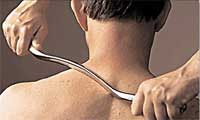
This is an interestng one. Reading the title may lead one to believe that the steroid injections were not effective. However, there was a 20% reduction in pain in both the placebo injection and the steroid. “So what?” you say. There is evidence accumulating that in is not the fluid being injected that does the fixing, but rather THE NEEDLE. One of the soft tissue techniques I use in my office is called Graston technique, and it uses patented stainless steel instruments to essentially damage ligaments, tendons, etc… through microtrauma.

This microtrauma then brings new blood flow/nutrients to fibrotic tissue than can begin to produce healthy ground substance and heal the scar tissue. So, might the needle and Graston technique share the same mechanism of healing? I think the research is leaning this way. So how much will doctors get paid just to stick the needle in?

A randomised controlled trial of intra-articular corticosteroid injection of the carpometacarpal joint of the thumb in osteoarthritis.. –

Read entire article here

Filed Under: Arthritis Tagged With: carpometacarpal, fibrotic tissue, Graston, microtrauma, OA, steroid injection

Chiropractic And Wellness Center for Frozen Shoulder Symptoms

August 21, 2012 by James Bogash

Shoulder pain sucks. Work, sports and even sleeping are affected. But is visiting a chiropractic and wellness center for frozen shoulder symptoms a good idea?

Before we answer that question, we need a little overview.

The human shoulder is capable of a wide degree of movement. Unfortunately, this comes with a price– the shoulder is very prone to injury. Couple this with poor posture, prolonged periods of time sitting in front of a computer and sedentary lifestyles and you begin to understand why shoulder problems are so common.

At the far end of the spectrum of shoulder problems is a condition referred to as frozen shoulder, aka adhesive capsulitis.  Frozen shoulder occurs from avoiding motion in a painful shoulder.  Shoulders love to move.  Less moving = less movement.  Ultimately, you realize that you’ve lost a large chunk of the movement your shoulder used to be able to perform.

At this point, procedures such as manipulation under anesthesia may be a good option.

Before patients develop frozen shoulder, they are often given a diagnosis of tendonitis and / or bursitis.  The “itis” component means that inflammation is present and creating the pain.  But, when looked at under a microscope, inflammation is not often present.

So what gives?

“Tendonosis” is the description that more likely fits your shoulder condition.  This is NOT an inflammatory condition, and so anti-inflammatories and most prescriptions will have little effect.  As a matter of fact, using anti-inflammatories at this point may very likely make things worse.

The “osis” in tendonosis is a Latin word for pathology (in other words, something is just not normal).  So, tendosis refers to the presence of scar tissue within the tendons of the shoulder.

When we suffer any type of injury, there is inflammation created.  This can occur easily:

  • As a result of a sports injury
  • An injury that occurs every so often from home improvement projects
  • As a repetitive stress that occurs on a daily basis such as computer work.

What about other things that you do on a daily basis that you may not factor in to your shoulder problem?  Like sleep..

This particular study looked at sleeping side of people who had one sided shoulder pain.  Researchers found that the side that was bothering the patient was more likely to be the affected side.  Leads to a potentially very simple therapy–switch sides of the bed…

So what happens after this injury?

  • As the body heals from an injury, it will not heal at 100%
  • Scar tissue forms
  • Scar tissue is more prone to re-injury, recycling the process and depositing more and more scar tissue as time goes on
  • Given enough time, tearing of weakened scar tissue portion of the rotator cuff tendons becomes much more likely, and even quite common.

As a matter of fact, a large percentage of women over 50 have rotator cuff tears that they aren’t even aware of (meaning they are pain-free rotator cuff tears).

For this reason, just because an MRI shows a tear does not mean that it wasn’t already present before you painted that ceiling last weekend.  That means that it is likely that a rotator cuff tear may have been present even before an injury, and that an injury just worsened what had been present for a long time.

If tendonosis with scar tissue is present, no amount of rehab stretching and strengthening, ultrasound, massage or interferential will change that.  Unless the scar tissue is addressed the shoulder isn’t really fixed. Tendonosis requires a different soft tissue approach.

So what can be done?  Luckily, there are many things that can be done to help with your shoulder pain.

  1. Studies have should that chiropractic manipulation can speed along recovery.
  2. Advanced soft tissue techniques like Graston technique can help address the scar tissue.
  3. Facial Manipulation
  4. Prolotherapy
  5. And, as mentioned early, try switching the side of the bed you sleep on to reduce chronic stress on the affected shoulder.

So what did you do that helped your shoulder pain the most?

Filed Under: Chiropractic Care, Shoulder Pain Tagged With: adhesive capsulitis, chiropractor, frozen shoulder, Graston, shoulder pain

EFFECTIVE ELBOW PAIN TREATMENT FOR COMPUTER USERS

April 20, 2012 by James Bogash

There is no doubt that our bodies were designed with a brilliance that defies description.  However, I’m pretty sure that, when it comes to the development of the computer, the powers that be are slapping their foreheads saying, “I didn’t see THAT coming…”  Prolonged times spent on the computer are clearly detrimental to our physical being.

Regardless of how good your ergonomic setup is, you were not designed for this.  Headaches, neck pain, shoulder pain, elbow pain and wrist pain seem to come along in the box right next to the mouse and keyboard (in the box labeled “Do NOT open,” but you open anyway out of curiosity..).

 Elbow pain, whether on the outside (lateral epicondylosis or tennis elbow) or the inside (medial epicondylosis or golfers’ / little leaguers’ elbow) can be a real bummer.  Personally, I consider carpal tunnel as the opposite end of the same problem.  Important to notice here is that I did not use the suffix “itis.”  This is because this condition, like many others we deal with, are not actually a problem with inflamed tissues.  Rather, it is a problem with the scar tissue that built up following an injury or overuse.  Hence the suffix “osis,” meaning pathology of.

Luckily, there are a variety of ways that can effectively treat this condition.

  1. First and foremost is making sure your ergonomic setup is as close to ideal as possible.
  2. Soft tissue techniques like Graston or Fascial Manipulation can help greatly.
  3. Rehabilitation exercises with a Therabar called the Tyler twist.

Treatment in our office consists of a variety of techniques to treat this condition (check out our YouTube video here).

This particular study finds that soft tissue techniques used to treat elbow pain in computer users were effective at reducing pain (almost 80% improvement in 4 weeks), very much in line with what our office has experienced.


Filed Under: Elbow Pain, Work Injuries Tagged With: elbow pain, epicondylitis, Graston

CONSIDERING SURGERY FOR YOUR KNEE PAIN?

December 28, 2011 by James Bogash

Knee pain is something we see commonly in our office. Unfortunately, I think these are many more cases because patients have been told that their knee pain is arthritis and there is nothing that can be done. This could not be further from the truth.

From a treatment viewpoint, the knee is really not a complex joint. Basically it is referred to as a ginglymus (“hinge”) joint with a slight degree of rotation. There are ligaments, meniscus, muscles, the joint itself and….most importantly…the fascia!

While it is difficult to describe, I generally refer to the fascia as the sheath that our joints and muscles are encased in. It is far more complicated than that, but it seems to get the point across. Many patients come in concerned that they may have torn a ligament in their knee and may even have an MRI to back up the idea.  However, current theories are actually debunking the idea that ligaments truly exist.

Rather, they are thickenings of the fascia along areas of a joint that provide increased stability. We have called them ligaments and have seen them on cadavers because anatomists have dissected out what they were looking for. In other words, they were looking for a ligament so, as they dissected out a region they actually created the ligament from the fascia surrounding that area. So, this thickening of tissue exists, but it is actually the continuation of the fascia from the area above and below it.

So what does this mean?

It means that the fascia surrounding a joint may be the most critical tissue that needs to be addressed for joint pain. This can be addressed with fascial manipulation, Graston technique or Rolfing. Laser, chiropractic adjusting, ultrasound, strengthening exercises and any number of other techniques are not going to address the problems that occur in the fascia and may not be as effective for relieving knee pain.

The fascia is also a major source of pain in the knee. Because of this, patients develop knee pain, their primary care doctors orders X-rays (or worse-an MRI) done before any treatment, and they are told they have arthritis. They try some pain meds, maybe a short course of physical therapy, but don’t notice much of a difference. At this point they are resigned to wait until the pain gets debilitating enough for a knee replacement. Sounds like a great plan, huh?

It is common for this patient to come into my office, only to leave 2 or 3 visits later with much less pain in their knees. Did the arthritis suddenly get fixed?  Of course not. Rather, the pain was not coming from the joint itself, but rather from the fascia surrounding the knee.

So what does all of this have to do with this particular study?

Because of the marked increase in the number of knee replacements being done in the US, researchers look to confirm that this increase was due to the increased obesity and the increasing age of the population. This was not what they found.  Rather, knee pain increased independently of age and BMI.

Of extreme importance is what they did NOT find.

They did NOT find an increase in arthritis of the knee. So, our country is performing more and more knee replacements. This is not due to obesity (obesity did play a role, but it was a smaller one) or age. And there was not more arthritis found. So basically, we are replacing perfecting good knee joints because of problems likely due to fascia surrounding the joint that was never effectively treated.

The bottom line is that anyone with knee pain should first be evaluated by a chiropractor that specializes in the treatment of the soft tissues that surround a joint (in this case, the knee). If pain persists after several visits, then an evaluation by a surgeon may be warranted, but certainly not before.

Filed Under: Arthritis, Knee Pain Tagged With: fascia, Graston, knee pain, osteoarthritis

Primary Sidebar

Patient Quick Guide

Schedule An Appointment
Contact Our Office
Download Patient Forms

Categories

Chiropractic Mesa Arizona

Arthritis Chiropractor Mesa AZ
Graston Technique Mesa AZ
Back Pain Chiropractor Mesa AZ
Back Pain Doctor Mesa AZ
Wrist Pain Chiropractor Mesa AZ
Rotator Cuff Chiropractor Mesa AZ
Shoulder Pain Chiropractor Mesa AZ
Knee Pain chiropractor Mesa AZ
Manipulation Under Anesthesia In Mesa AZ
Headache Chiropractor Mesa AZ
Chiropractic Mesa AZ
Stem Cell Therapy Mesa AZ
Regenerative Medicine Mesa AZ
Massage Therapist Mesa AZ
Shoulder Pain Doctor Mesa AZ
PRP Therapy Mesa AZ
Chiropractic Mesa AZ
Who Is The Top Chiropractor In Mesa AZ?
Knee Injury Doctor Mesa AZ?

Footer

Resources

Site Map
Disclosure
Additional Resources

Best Massage Therapist Mesa AZ
Arthritis Doctor Mesa AZ
Chiropractic Mesa AZ
Back Pain Doctor Mesa AZ
Rotator Cuff Doctor Mesa AZ
Chiropractor Mesa AZ
Massage Therapist Mesa AZ
PRP Therapy Mesa AZ
Knee Pain Doctor Mesa AZ
Stem Cell Therapy Mesa AZ
Headache Doctor Mesa AZ
Shoulder Pain Doctor Mesa AZ

Office

Lifecare Chiropractic
1830 S. Alma School Rd, Ste 135
Mesa, AZ 85210
(480)-839-2273
Also Serving Tempe, AZ

Get Directions

  • Home
  • About
  • Common Conditions
  • Additional Services
  • Testimonials
  • Blog
  • E-Books
  • Contact

Copyright © 2026 · LifeCare Chiropractic · All Rights Reserved.