• Skip to main content
  • Skip to primary sidebar
  • Skip to footer

LifeCare Chiropractic

The Best Chiropractic Care in Mesa, Arizona

  • Home
  • About
    • Why Lifecare?
    • About Dr. Bogash
    • Team Members
  • Common Conditions
    • Wrist Pain/Carpal tunnel syndrome
    • Elbow Pain/Epicondylitis
    • Headaches
    • Knee Pain and Knee Injuries
    • Low Back Pain
    • Shoulder Pain and Rotator Cuff Problems
  • Additional Services
  • Testimonials
  • Blog
  • E-Books
  • Contact

knee pain

Shockwave Therapy in Mesa: Your Complete Guide to Pain-Free Living

December 6, 2025 by James Bogash

Pain shouldn’t be a normal part of your day — but for many people, it slowly becomes one. You adjust how you walk, sit, bend, or reach just to avoid that familiar ache. Maybe it’s your heel screaming at you every morning… or your shoulder protesting every time you try to grab something.

And honestly? You’re tired — not just physically, but mentally too.

If you’ve tried “every treatment” and nothing has delivered lasting relief, there’s something you should know:

Thousands of patients at LifeCare Chiropractic in Mesa are finally finding real, long-lasting relief with Shockwave Therapy.

This guide breaks everything down clearly so you understand what it is, how it works, who it helps, and what you can expect.


What Is Shockwave Therapy? (Explained Simply)

Shockwave therapy uses high-energy acoustic sound waves — not the kind you can hear — to stimulate deep healing inside your muscles, tendons, and ligaments.

In simple terms, it gives your body’s natural repair system a wake-up call.

Here’s what happens when those waves reach damaged tissue:

  •  Increased blood flow

  •  Reduced inflammation

  •  Formation of new blood vessels

  •  Breakdown of scar tissue

  •  Activation of cellular repair

This isn’t about masking pain.
This is about healing the root cause. That’s why results last.


Who Can Benefit From Shockwave Therapy?

Shockwave therapy is effective for a wide range of stubborn, long-term pain conditions — even when nothing else has worked.

Common conditions we treat at LifeCare Chiropractic:

1. Plantar Fasciitis

That sharp heel pain when you take your first steps in the morning?
Shockwave therapy has one of the best success rates for this condition.

2. Tennis Elbow & Golfer’s Elbow

Whether caused by sports, work, or daily activities — this stubborn elbow pain often responds quickly.

3. Shoulder Pain

Including:

  • Rotator cuff injuries

  • Frozen shoulder

  • Calcific tendonitis

  • Chronic shoulder inflammation

4. Achilles Tendon Pain

A common issue for runners, walkers, and anyone on their feet all day.

5. Knee Pain

Especially:

  • Patellar tendinitis (jumper’s knee)

  • Chronic soft-tissue irritation

6. Hip & Lower Back Pain

Shockwave works well when pain comes from soft tissue restrictions, trigger points, or muscle tightness.

If your pain hasn’t responded to standard treatments, shockwave therapy may be the missing piece.


What to Expect During Your Appointment

No surprises. No complicated medical talk.

Your First Visit

We’ll start with:

  • A detailed discussion about your pain

  • A full physical examination

  • A personalized recommendation

If shockwave therapy isn’t the best option for you, we’ll tell you — honestly.

During the Treatment

  • A gel is applied to the treatment area

  • A handheld device sends acoustic waves into the tissue

  • You’ll feel tapping or pulsing

  • Some areas may feel tender (this is normal and means we’re hitting the right spot)

Treatment time: 15–30 minutes
No needles. No anesthesia. No downtime.

After the Session

You can:

  • Drive yourself home

  • Return to work

  • Continue daily activities

We may recommend simple exercises, but there’s zero recovery period.


How Many Sessions Do You Need?

Most patients need 3–6 sessions, spaced one week apart.

Here’s what’s realistic:

  • Some people feel relief after the first treatment

  • Most see major improvement within a few weeks

  • Healing continues even after completing treatment

This isn’t pain management —
it’s tissue repair.


Why Choose LifeCare Chiropractic in Mesa?

Sure, we have advanced equipment and years of experience — but that’s not what makes the biggest difference.

Here’s what truly sets us apart:

We actually listen

We learn your story, your pain pattern, your lifestyle — not just your symptoms.

No cookie-cutter treatment plans

Your body and your pain are unique. Your care should be too.

Experience you can trust

We’ve treated hundreds of patients using shockwave therapy and understand what works best for each condition.

Whole-body approach

Pain rarely happens in isolation.
We assess movement, posture, work habits, and old injuries to create a long-term solution — not a temporary fix.


Realistic Results: What You Can Expect

Shockwave therapy is backed by clinical research and real-world results.

Most patients report:

  • Pain dropping from an 8/10 to a 2/10

  • Increased mobility

  • Ability to return to activities they had given up

  • Better sleep due to reduced pain

Side effects are minimal — maybe mild redness or soreness for a day.
Compared to surgery or long-term medications, it’s an incredibly low-risk solution.


FAQs: Shockwave Therapy in Mesa (LifeCare Chiropractic)

Is shockwave therapy painful?

Most people find it very tolerable. You’ll feel pulsing or tapping, and some areas may be tender — but it’s manageable.

How quickly will I see results?

Some feel relief after one session. Most notice major improvement within 3–6 sessions.

Are there side effects?

Mild soreness or redness for a day or two. No downtime.

Is it safe?

Yes — Shockwave therapy is FDA-cleared and widely used for chronic pain conditions.

Can shockwave therapy replace surgery?

For many conditions like plantar fasciitis or tendon pain — yes, it can prevent or delay the need for surgery.

Will the results last?

Yes. Since it stimulates healing, improvements are long-term.


Ready to Live Pain-Free Again?

If you’re tired of adjusting your life around pain — it’s time for a solution that actually targets the root cause.

LifeCare Chiropractic in Mesa is here to help.

📞 Call today to schedule your consultation
👉 Get answers, get clarity, and find out whether shockwave therapy is right for you.

You don’t have to live with pain.
Let’s get you back to feeling like yourself again.


Filed Under: Chiropractic Care, Elbow Pain, Knee Pain, Low Back Pain, Natural Pain Relief, Neck Pain, Shoulder Pain Tagged With: acute low back pain, arthritis, knee pain, Plantar Fasciitis, shockwave therapy

Knee Surgery for Torn Meniscus – Best to Leave it Alone?

March 12, 2016 by James Bogash

Natural Treatments for arthritis

There are a few things that have managed to make it into “everyday thinking” despite the fact that it is more dogma than reality. Knee injuries are one of these things.

If you injure your knee and tear something, whether one of the supporting ligaments or one of the two meniscus (or is it menisci??), you’re going to have to have surgery.

I was personally one of these back in 1987 when I tore the medial meniscus of my right knee and had a portion of it removed surgically. If only I had known then what I know now…

The problem with evaluating whether or not surgery for a particular condition works is that we just don’t do placebo surgeries—it’s an ethical problem. Kind of like a placebo-controlled trial on whether parachutes are safer while skydiving. We just don’t do placebo surgeries.  Or at least we didn’t until 2002 when the Houston VA medical center decided to do a placebo-controlled surgical trial of patients with knee pain who went under the knife for “debridement,” or a clean-out to get rid of damaged tissue hanging around in the knee joint.

Turns out there was no difference between those who had the full surgery and those who had the placebo surgery.  Truly ground shaking outcomes considering that this type of procedure is done some 800,000 times per year in the US alone.

But I really don’t think that many surgeons truly changed based on the evidence of this study over a decade ago. From an insurance standpoint, it was pretty easy for the surgeon to just say he was going in to fix a meniscal tear.  And this sounded like a good idea because the back part of the medial meniscus (posterior horn) is commonly torn and it does not have a very good blood supply so healing just isn’t going to happen without surgical intervention to go in and remove the torn meniscus.

There are a couple of problems with this thinking.

The first problem is a biggie and has to do with how we determine whether or not there is any damage to the knee using MRI. Many people mistakenly believe that MRI is an exact science and that, if something is “found” on MRI, it’s the thing that is causing the problem.

Study and after has concluded that there is very little correlation to what is found on MRI and a patient’s symptoms. That’s not to say that that torn medial meniscus on your MRI is not causing you pain, it’s just that we can’t know for sure. And I can tell you, from treating hundreds of knees over the years, that a huge chunk of knee pain comes from the soft tissues surrounding the knees (muscles, ligaments, fascia) and not from what is going on inside the knee.

Fix these tissues and the knee pain goes away, regardless of whether or not the meniscus is affected by the treatment. But very few knee pain patients manage to find their way into physician’s offices that are truly competent with addressing these tissues. Part of this may be because they aren’t aware that these types of treatments even exist—It’s the surgeon’s office to MRI to physical therapy and back to the surgeon to schedule the procedure. Kind of circular.

The second problem has to do with this particular study. In it, researchers looked to answer the question about whether surgery to repair a degenerative meniscus tear (as opposed to one that happens from trauma) actually does squat. Specifically, they were interested in whether self-reported locking or catching would be improved by partial meniscectomy (since it is increasingly well-established that doing the surgery for pain alone is not beneficial).

Seventy patients underwent the real surgery to remove a portion of the medial meniscus and 76 had a sham surgery done. Here’s what they found:

  • Thirty-two patients (46%) in the true surgery group reported catching or locking before surgery; after surgery that number was 49%.
  • Of the fake surgery group, 37 (49%) reported catching or locking before surgery; after “surgery” the number was 43%.

In other words, some $50,000 later, risk of injection and time off and pain for rehab, there was pretty much no difference between the groups.

Studies like these and the other ones mentioned in this article are blowing open the doors of the dogma that surrounds knees injuries, findings on MRI and the value of arthroscopic surgery.  This is not to say that there is not value to the surgical options, but you better damn well be sure you see someone who truly understands how to assess and treat the soft tissues surrounding the knee before you go under the knife.

Filed Under: Knee Pain Tagged With: Arthroscopic Surgery, knee arthritis symptoms, knee osteoarthritis symptoms, knee pain, knee surgery, meniscal injury, meniscal tear, meniscus surgery

Is Surgery Necessary for ACL Tears? The Answer Will Surprise You

August 24, 2015 by James Bogash

I personally had my right knee scoped when I was 18 for a torn medial meniscus.  I now have arthritis on the inside part of my knee, which I keep solidly pain free with soft tissue work and exercise.

Knowing what I know now, I never would’ve had that surgery done.  While this particular article looks at 121 young active adults with ACL tears (a more complex injury than a meniscal tear), it again raises questions about the dogma that exists on the need for surgery for many knee conditions.  Basically, delaying surgery and trying non-surgical management first (which, in this office would include aggressive soft tissue techniques like Graston as well as whole body vibration to stabilize the joint) seems to be the better option.

Here’s the specifics:

  • 62 were put in rehab and had early ACL reconstruction, with 59 assigned to rehab plus optional delayed ACL reconstruction
  • Of the 59 who initially did not have surgery, 23 (39%) underwent delayed ACL reconstruction.
  • Based on the Knee Injury and Osteoarthritis Outcome Score (KOOS, which asks about pain, symptoms, function in sports and recreation, and knee-related quality of life), there was NO difference in any of the treatment approaches.

In other words, just because you have an ACL tear does NOT mean that you have to have surgery.  It makes complete sense to go into rehab after an injury like this with the expectation that you will not need surgery, but keeping an open mind about the topic if you do not respond to the rehab itself.


Filed Under: Knee Pain Tagged With: ACL tear, knee injury, knee pain, knee surgery

Common Knee Osteoarthritis Symptom Treatment Fails Again

July 11, 2015 by James Bogash

knee osteoarthritis symptoms
Knee arthritis and steroid injections


Knee osteoarthritis symptoms. For some, it seems like the diagnosis is pretty much the same as saying that surgery is inevitable.

There are times when I think that more information is a bad thing.  There have been countless times in my practice where someone gets hooked on imaging findings (whether they are MRI, CT scans or X-rays) and focuses on what damage is present rather then what is reality.

Whether it’s a shoulder, low back, neck or knee imaging study, there have been multiple studies pointing out two very important problems.  First, there is very little correlation between imaging findings and symptoms.  In other words, if someone has “stuff” wrong on a MRI, it does NOT mean this person is going to have pain.  You cannot look at a MRI and state that this patient will or will not have pain.

This misconception then leads to the second problem.  There is a large chunk of the surgical field that is devoted to doing procedures based on stuff we find on imaging.  Got a disc bulge?  Cut it out.  Have knee osteoarthritis?  Replace the knee.  Torn rotator cuff?  Surgical repair of the shoulder.

This particular study highlights just how wrong this approach is.  In yet another study on the relationship between arthroscopic surgery of the knee for arthritis found on imaging and beneficial outcomes of the surgery, researchers looked at the results across 9 different medical trials.  Specifically, these middle aged and older patients with knee pain and degenerative knee disease underwent knee arthroscopic surgery.  Here’s what they found after an average of 2 years had passed after the surgeries:

  • There was a very small benefit to surgery in patients’ pain levels (basically, a benefit of 2.4 mm on a 0-100 mm scale).
  • There was no significant benefit on physical function.
  • Harms included symptomatic deep venous thrombosis, pulmonary embolism, infection, and death.

The bottom line is that, going in for surgery just to “clean out” the knee has virtually no benefit but a list of risks.  This is a procedure that, frankly, should no longer be done except in rare cases (and I don’t know exactly what these cases might look like…).

So what can you do instead of surgery?

  1. Move.  Not exercising is one of the worst possible things you can do for knee arthritis.  Hiking, swimming, weights, stationary bike, whole body vibration–there are lots of things you can do to strengthen your knees.
  2. Find a chiropractic who can competently treat the soft tissues of the knees–look for those that do Graston, ART, NMR, fascial manipulation.
  3. Consider a TENS unit to control the pain in the short run.
  4. Consider a joint support formula with glucosamine in it.
  5. Add vitamin D to your supplement list.
  6. Get down to your ideal body weight.

By using these tools to help manage your knee osteoarthritis symptoms, you won’t ever need to worry about whether or not the risks of surgery outweigh the miniscule benefits.


Filed Under: Knee Pain Tagged With: knee arthritis, knee arthroscopic, knee osteoarthritis, knee osteoarthritis symptoms, knee pain

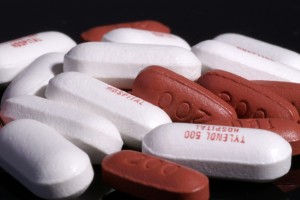
Tylenol for Your Pain; Surprising Finding on How Well it Works

May 5, 2015 by James Bogash

Tylenol for back pain
Radosław Brzozo / Dollar Photo Club

Society would never consider going without over the counter pain meds. Doesn’t matter what’s it’s for; headaches, knee pain, shoulder pain, back pain.   We don’t seem to care where the pain is; that magical little pill hones in with radar precision to zap the pain and give you relief.

Or at least this is what the advertising messages would have you believe.

For starters, there is no magical honing; all drugs reach all areas of the body.  This is one of the reasons why so many side effects occur in organ systems that have nothing to do with the reason for taking a drug in the first place.

Personally, I haven’t taken any over the counter or prescriptive medications for at least 20 years (it may have been longer—I just can’t actually remember…) despite my share of martial arts injuries over the years.  But I certainly have my share of patients who take them on a regular basis.  We’ve become somewhat immune to the idea that every drug has a risk / benefit ratio.  There is not a drug out there that does not have side effects; since every single drug interferes with the way your body functions to some degree or another this is inevitable.

Paracetamol, the active ingredient found in Tylenol and generic acetaminophen, has a long list of side effects.  Just some of these include:

  • Liver damage (overdosing, intentional or accidental, can kill by shutting down the liver)
  • Kidney damage
  • Behavioral problems in children when used during pregnancy
  • Asthma (either worsening existing cases or creating new ones)
  • Blood cancers

But, as mentioned, sometimes the side effects are worth the risk (although anyone on the liver or kidney transplant waiting lists may disagree…) so long as there are benefits.

But what if what you’ve been taking your Tylenol for really doesn’t work?  I can tell you that it certainly seems like many of my patients who are in pain and take many of the OTC pain medications aren’t jumping up and down for joy over how well they work (because, after all, they are in a chiropractor’s office looking for additional pain relief.

At the most, they seem to help “take the edge off” or help for a few hours at the most.  This particular study seems to agree with what I’ve experienced in my office.  In it, researchers looked across 13 different clinical trials looking at the use of paracetamol for back pain, knee or hip arthritis pain.  In the review, the researchers looked for the quality of the studies to see what the outcomes were.  Here’s what they found:

  • High quality results from the studies found that paracetamol is ineffective for reducing pain intensity and disability or improving quality of life in the short term in people with low back pain.
  • High quality results from the studies found that paracetamol used for hip or knee osteoarthritis for that any short-term improvement on pain and disability was not clinically important.
  • High quality results showed that those taking paracetamol were nearly four times more likely to have abnormal liver function tests.

When it comes to research, there are no absolutes and no single study can determine whether something works or not. To make it a little more complicated, there are good quality and bad quality studies.  But when you have multiple high quality studies pointing to the same outcome, you can be far more confident that the results from that study may apply to you.

That’s what we have here.  Could you be one of the few for whom Tylenol is going to work for back, knee or hip pain?  Possibly.  But it should not be your first choice given that there is a long list of side effects associated with the use of Tylenol and this review strongly suggests that it is not going to work.

Of course, being somewhat biased towards chiropractic care for these conditions, I would strongly suggest that chiropractic care should be your first choice for treatment of these conditions.

Filed Under: Knee Pain, Low Back Pain, NSAIDs Dangerous, Osteoarthritis Tagged With: back pain, Hip Pain, knee pain, Paracetamol, Tylenol

Knee Osteoarthritis Symptoms: To Use Steroid Injections or Not?

May 2, 2015 by James Bogash

knee osteoarthritis symptoms
Knee arthritis and steroid injections

Somewhere along the line steroid injections became the knee-jerk (pun intended) reaction for pain anywhere.

Shoulder pain?  Shoot it with some steroids.  Elbow pain?  Wrist pain?  Knee pain?  Scoot right on up and we’ll stick some corticosteroids directly into the joint.  Low back pain?  Despite the fact that there is very little evidence to support it, let’s go ahead and inject steroids into the sanctity of the spinal canal and see what happens.

When given orally, most would shudder at the random use of steroids given the risks of bone damage, obesity, diabetes and brain damage.  But given that it’s just a local injection it doesn’t affect the rest of the body.

At least, that’s what most people (doctor’s included) think.  Then why, in a prior blog article I did several years ago, did researchers find that it didn’t matter whether the injection was given directly into the shoulder or whether it was given in the buttock?  Because it does not matter.  Steroids, whether given orally, inhaled or injected anywhere, have an effect everywhere else in the body.

Because of this, we need to be darned sure that every use of steroids is going to have a positive effect on whatever condition it is being used for.  This definitely includes steroids being used for pain.  Which is why I bring you this particular article.

In it, researchers looked at whether the use of a cortisone injection for knee pain 2 weeks prior to a 12 week supervised exercise program helped in the long run or not.  All participants had arthritis of the knee on X-ray, clinical signs of localized inflammation in the knee as well as knee pain during walking (score >4 on a scale of 0 to 10).

The participants were evaluated using the Pain subscale of the Knee Injury and Osteoarthritis Outcome Score (KOOS) questionnaire (range, 0-100, where higher scores indicate greater improvement).  Half of 100 knee pain patients ended up in the steroid injection group and the other half in the placebo-injection group.  Here’s what they found:

  • After 14 weeks, those in the steroid group had a change of 13.6 on the KOOS score and those in the placebo group changed by 14.8 points.

Basically, the use of steroids led to a difference of 1.2 points (out of 100).  In addition, there were no differences in physical function, markers of inflammation or additional KOOS pain scores.

In other words, there were increased costs and increased risk of systemic damage from the steroids but no actual benefit.  Just to thrown a further wrench into the use of steroid injections for knee pain, it is entirely possible that the injection itself may have some benefits by disrupting blood vessels and bringing new nutrients and blood flow to the joint.  In other words, the benefits of the steroids may be even less (or worse-creating WORSE outcomes) because the injection portion of both treatments may have therapeutic benefits.

In case this STILL isn’t enough for you, it is very clear that any anti-inflammatory treatment damages the joint surface itself, preventing the cells from healing from future damage.  This means that, not only does the use of steroid injections for knee osteoarthritis symptoms not actually help, but you are damaging your knees for the future.

If you are wondering what else you can do to help your knee pain, feel free to check out my Knee Pain eBook on Amazon by clicking here.


Filed Under: Knee Pain Tagged With: knee osteoarthritis pain, knee pain, steroid injections for knee pain

The Latest on Glucosamine / Chondroitin for Knee Osteoarthritis Symptoms

March 21, 2015 by James Bogash

knee osteoarthritis symptoms
Knee arthritis and vitamin D

The idea of using natural approaches for knee pain has been around for quite some time.  Glucosamine began to hit the scenes when I was still in school.

Yes indeed.  The first clinical trial, while I was in chiropractic school, was on a brontosaurus.  Sure, weight loss would’ve helped and the vegetarian diet was definitely anti-inflammatory, but the real problem was getting them into the MRI scanner for the imaging.

(And, for the paleontology geeks out there, I am aware that the brontosaurus was actually an apotosaurus…)

Ok…so maybe the research hasn’t been around quite THAT long, but there are times when it sure seems like it.  And quite frankly, the research over the years has been a blend of “OK” and negative (as in not helping at all).  Personally, I think this has happened for several reasons:

  1. Many patients put into trials do not have knee pain caused by arthritis.  Just because you have arthritis on imaging does NOT, I repeat–does NOT, mean that arthritis is causing your problems.  In many cases, the soft tissues surrounding the knee are the problem.  Glucosamine is not going to help a shred if this is the case.
  2. There are definitely issues of the quality of the supplements used.  You get what you pay for.
  3. The study length was not sufficient.  While there is some anti-inflammatory action of glucosamine, this is not likely its strong point.  Following up for 6 months is not likely to show much of a difference versus a study that lasts years.

All of this brings us to this particular study.  In it, researchers set up the details in a slightly different manner than previous studies.  Specifically, they followed 600 patients with knee osteoarthritis for 6 years and determined whether or not they were taking prescriptions (anti-inflammatory drugs, analgesics) and/or a glucosamine/chondroitin supplement.  They then looked at structural changes of the knee (loss of joint space width and cartilage volume).  Here’s what they found:

  • In the group NOT taking analgesic/NSAIDs, those who were taking the glucosamine / chondrotin lost less cartilage volume after 2 years (over the medial central plateau).
  • This protective effect of Glu/CS occurred in participants with more severe osteoarthritis.
  • In the group who were taking the analgesic/NSAIDs, those taking Glu/CS also lost less cartilage volume (global plateau at 12 months and the central plateau at 24 months.

Overall, this study did NOT look at how much knee pain the participants had, but rather looked objectively at how the knee joint itself was responding to the glucosamine and chondroitin.  And the results are very heartening.

Even more so when you consider that the drugs used to treat knee osteoarthritis symptoms are well-known to actually destroy the lining of the joint you are trying to prevent.  Despite this underlying damage from the medications, this natural approach to joint health was powerful enough to protect.


Filed Under: Knee Pain Tagged With: arthritis of the knee, chondroitin, glucosamine, knee osteoarthritis symptoms, knee pain

Knee Osteoarthritis Symptoms: It’s Not Too Late to Add This Vitamin

December 13, 2014 by James Bogash

knee osteoarthritis symptoms
Knee arthritis and vitamin D

Considering that exercise and mobility are key aspects to keeping us young with age, knee osteoarthritis symptoms can be deadly.

Despite the fact that exercise is one of the most powerful tools for managing the pain of osteoarthritis, it is, paradoxically, the first thing most people with knee pain avoid first.

Of course, long before you should worry about developing knee arthritis pain in the first place, an anti-diabetic and anti-cardiovascular diet (which are pretty much the same thing) have been shown to lower your risk of developing arthritis in the first place.  That means obvious things like maintaining an ideal body weight, not smoking and eating more fruits and vegetables.

But if the 60’s, 70’s and 80’s have already done you in and you have been diagnosed with knee osteoarthritis, there is a long list of things that you can do to help maintain your mobility.

As I’ve already mentioned, exercise is the top of the list.  (Since it’s beyond the scope of this article to discuss all the ways to improve osteoarthritis symptoms, if you’d like to read more, you can download my eBook Knee Pain Answers by clicking here)

If you’d like a simple solution that you can add today to delay any further progression of your knee arthritis, then look no further than this particular study.  In it, researchers looked at 418 participants who had at least one knee with both symptomatic and radiographic osteoarthritis.  Vitamin D and parathyroid hormone (PTH) blood levels were checked at a baseline and then evaluted 2 and 4 years later in those participants who had progression of his or her knee osteoarthritis (defined as any increase in the radiographic joint space narrowing score).  

As a quick refresher, PTH is designed to keep calcium levels stable in the bloodstream.  This means that if vitamin D levels are low (vitamin D helps your body absorb more calcium from your diet) the body has to respond by raising PTH to break down bone to keep calcium stable in the blood.  So low vitamin D and high PTH indicates something is really off kilter in your body.  Now back to the study.

Here’s what they found:

  • As has been seen in almost every other study on vitamin D, the blood values were at the very low end of normal (26.2 μg/L) and a good chunk of the participants were deficient (16% were below 15 μg/L).
  • Those with vitamin D levels below 15 had double the risk of knee osteoarthritis progression.
  • Even worse, those participants who had both low vitamin D and high PTH had a 320% higher risk of arthritis progression.

Now.  This does not mean that you can start sipping on liquid vitamin D at 10,000 IU per day and sit on your duff watching football, confident that your knee pain is going away by tomorrow.

But this does add vitamin D to the list of things that you can do to either slow or halt the worsening of your knee osteoarthritis symptoms.


Filed Under: Knee Pain, Vitamin D Tagged With: knee osteoarthritis symptoms, knee pain, Vitamin D

  • Page 1
  • Page 2
  • Page 3
  • Go to Next Page »

Primary Sidebar

Patient Quick Guide

Schedule An Appointment
Contact Our Office
Download Patient Forms

Categories

Chiropractic Mesa Arizona

Arthritis Chiropractor Mesa AZ
Graston Technique Mesa AZ
Back Pain Chiropractor Mesa AZ
Back Pain Doctor Mesa AZ
Wrist Pain Chiropractor Mesa AZ
Rotator Cuff Chiropractor Mesa AZ
Shoulder Pain Chiropractor Mesa AZ
Knee Pain chiropractor Mesa AZ
Manipulation Under Anesthesia In Mesa AZ
Headache Chiropractor Mesa AZ
Chiropractic Mesa AZ
Stem Cell Therapy Mesa AZ
Regenerative Medicine Mesa AZ
Massage Therapist Mesa AZ
Shoulder Pain Doctor Mesa AZ
PRP Therapy Mesa AZ
Chiropractic Mesa AZ
Who Is The Top Chiropractor In Mesa AZ?
Knee Injury Doctor Mesa AZ?

Footer

Resources

Site Map
Disclosure
Additional Resources

Best Massage Therapist Mesa AZ
Arthritis Doctor Mesa AZ
Chiropractic Mesa AZ
Back Pain Doctor Mesa AZ
Rotator Cuff Doctor Mesa AZ
Chiropractor Mesa AZ
Massage Therapist Mesa AZ
PRP Therapy Mesa AZ
Knee Pain Doctor Mesa AZ
Stem Cell Therapy Mesa AZ
Headache Doctor Mesa AZ
Shoulder Pain Doctor Mesa AZ

Office

Lifecare Chiropractic
1830 S. Alma School Rd, Ste 135
Mesa, AZ 85210
(480)-839-2273
Also Serving Tempe, AZ

Get Directions

  • Home
  • About
  • Common Conditions
  • Additional Services
  • Testimonials
  • Blog
  • E-Books
  • Contact

Copyright © 2026 · LifeCare Chiropractic · All Rights Reserved.