• Skip to main content
  • Skip to primary sidebar
  • Skip to footer

LifeCare Chiropractic

The Best Chiropractic Care in Mesa, Arizona

  • Home
  • About
    • Why Lifecare?
    • About Dr. Bogash
    • Team Members
  • Common Conditions
    • Wrist Pain/Carpal tunnel syndrome
    • Elbow Pain/Epicondylitis
    • Headaches
    • Knee Pain and Knee Injuries
    • Low Back Pain
    • Shoulder Pain and Rotator Cuff Problems
  • Additional Services
  • Testimonials
  • Blog
  • E-Books
  • Contact

heart attack

Very Effective Emotional Technique for Quitting Smoking

January 19, 2015 by James Bogash

IF YOU ONLY READ ONE OF MY POSTS, READ THIS ONE.

Sometimes, being considered an “expert” in a particular field can be most difficult when it comes to those closest to you.  For me, it’s disease prevention through healthy lifestyles.  Unfortunately, my father was a family member who shrugged off my continual advice.  In nune of 2010 my father passed away from terminal lung cancer.  That coincided with this study, that took photos of smokers and their families and created a video showing the smoker having a heart attack.  I think if my father would have truly been able to picture himself with myself, my sister and my mother at his bedside, hooked up to oxygen and struggling to take his last few breaths, it might have made a difference.  If only he had fought so hard for life when it would’ve made a difference.  To those of you who smile and joke and think nothing of your poor lifestyle, how do YOU want to be seen at the end by those who care about you?  How will those you left behind reconcile with the lost years they will never have with you?

Read More


Filed Under: Miscellaneous Tagged With: heart attack, quitting smoking, smoking cessation

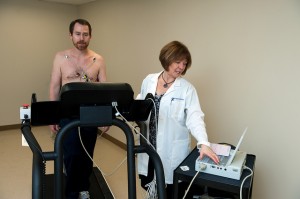
Preventing Heart Disease: Do Cardiologists Help?

January 18, 2015 by James Bogash

cardiologists and heart disease
pixdesign123/Dollar Photo Club

Don’t get me wrong. I don’t inherently have a problem with cardiologists. But, for heart disease to be almost entirely preventable and remain the #1 killer in the industrialized world, we’ve absolutely dropped the ball.

I just don’t see any excuse for a clearly preventable disease to be the #1 killer.

And I cannot accept the fact that medicine is doing better at preventing cardiac deaths (largely due to technology saving lives when the fecal matter hits the fan).  We are doing absolutely awful at preventing cardiovascular disease.

This is in the face of a truly massive amount of evidence on how to prevent cardiovascular disease using lifestyle.  Maybe cardiologists are really spending the time needed to educate their patients about the best lifestyles to drastically lower the risk of having a heart attack or stroke and patients just aren’t listening.  Or maybe mainstream medicine is so caught up in procedures and prescriptions that they have let lifestyle advice to patients fall to the wayside.

The answer likely lies somewhere in between.  I think society is just as heavily to blame because we have created an illusion where medicine actually fixes things.  You do not need to exercise or change your diet because the drug you are taking has lowered your blood pressure, stopped your irregular heartbeat or lowered your cholesterol.  And when that doesn’t work you can go in for a quick in-and-out Roto-rooter procedure and you’re good to go.

If society really knew just how little these approaches really help things might change.  And I think that the foundation for this perceptual change needs to begin with the cardiologists.  It is a profession that needs to stand up and work as hard as possible to destroy itself.

While destroying itself sounds a wee bit, well…self-destructive, this is the way our office functions when it comes to chiropractic care.  I tell patients that it is our job to destroy the practice by pushing for patients to become more active, eat right, treat injuries appropriately and engage in positive musculoskeletal behaviors like yoga.

While it don’t think it will ever happen, it’s still the attitude that we maintain every day.

Cardiologists need to hop on board with this attitude and take a good hard look at what kind of information they are giving their patients.  It would be hard for any professional to look at a client, customer or patient and tell them straight on that he or she has little to offer.

Certainly cardiologists have procedures they can offer to patients.  And, at the end of it all, there is absolutely no doubt that cardiologists are amazing at saving lives.  But they just seem to have a hard time diverting current patients from needing that end-of-the-line lifesaving procedure.

I thought all of this would be a good primer for this particular study.  In it, researchers looked at cardiac outcomes during 2 large, national cardiology conferences over the course of 9 years.  They then compared these same outcomes to 3 weeks before and 3 weeks after the conferences to see how rates compared.

One would think that, with hospital cardiologists being out of town during these big conferences, it would spell trouble for patients who have heart disease during these time periods.

But here’s what they found:

  • In teaching hospitals, risk of high risk patients dying from heart failure during the meeting times was lower (17.5%  vs 24.8%).
  • Deaths from cardiac arrest were also lower during meeting times (59.1% vs 69.4% ).
  • Rates of percutaneous coronary intervention (PCI–the procedure used to put stents in blocked arteries) were, as expected, lower during meetings (20.8% vs 28.2%;).  However, lower rates of PCI did not affect a high-risk heart attack patient’s chance of dying (39.2%  vs 38.5%–in other words, despite not having cardiologists to do these procedures, no one was dying any faster).
  • On the flipside, in nonteaching hospitals, there was no difference in the risk of dying or having a procedure (both high- and low-risk patients ).
  • There was also no higher risk of dying in teaching hospitals for low-risk patients.

Wow.

Not sure that there’s any other way to look at this other than saying that there is a chance that teaching hospitals may be doing slightly more harm than good when it comes to the cardiovascular departments.

As an example, it is estimated that half of the non-emergency cardiac stenting procedures are unnecessary.  Considering that these procedures have risks associated with them, it would not be a surprise to see less procedures leading to less deaths.

In an area that has several teaching hospitals, I can assure you that the perception of these teaching hospitals by patients is very high and many will bend over backwards trying to get into them for their problems.

That just may not always be the best idea.  The bottom line is that, even in prestigous teaching hospitals, your cardiovascular health may be better off where it has always been–inside you.


Filed Under: Heart Disease, Uncategorized Tagged With: cardiac stenting, cardiologist, heart attack, heart disease, PCI, prevent heart disease

Have Arthritis? Then You’re Likely at Risk for This Disease

December 31, 2014 by James Bogash

arthritis and heart disease
7activestudio/Dollar Photo Club

As a chiropractor, I deal with patients who have arthritis pretty much every day.  Some want answers, some want reasons.  In most cases, we can provide both of these.

Many seem to think that past trauma is a factor in developing arthritis.  While this is definitely the case, it’s not the cause of most patients’ arthritis.  Rather, the bigger cause of arthritis is something that most of us are not aware of but way too many of us in society today are at a high risk for.

But first, a quick overview on the structure of your joints.  The surface of all your joints are covered with cartilage that acts as a type of shock absorber to cushion the impact of bone and bone when you move.  Cartilage is made up of about 5% chondrocytes (these are the cells that make cartilage), 65-85% water, 15-25% Type II collagen and 2-10% proteoglycans (sugar-protein molecules that bind with water to form a shock-absorbing gel). Since the cartilage-making chondrocytes are sitting inside this cartilage-gel layer, it does not have its own blood supply and needs to get nutrition in and waste products out by diffusion.  I describe the situation as a sponge sitting in a puddle.  You can stare at it all day long and it’s not going to do any tricks.  It’s not until you start stepping on and off of the sponge that you get fluid exchange into the sponge.

This is exactly why exercise is so good for your joints–it keeps the fluid pumping so the chondrocytes have new nutrients to work with.  So long as you give your joints good nutrition and combine it with exercise the cartilage in your joints can turn over, although this is a very slow process.  On the flip side, give your joints poor nutrition and clog up the arteries that deliver blood flow near the cartilage and it can and will break down faster.

With this understanding of how you can damage your joints, can you think of what other chronic diseases may develop with poor nutrition and a sedentary lifestyle?  While the list is quite long, heart disease is way up at the top.  Which brings us to this particular study.

In it, researchers looked at the relationship between osteoarthritis of the hand (which included arthritis in more than a single joint in the hand) and heart disease.  Specifically, they looked at 1348 patients with an average age of 62 and asked about painful and stiff joints of the hand backed up by osteoarthritis on X-ray as well arthritis of the hand but with no pain.  These patients were then evaluated for their risk of dying as well as vascular events (coronary heart disease, congestive heart failure and/or ischemic stroke).  Here’s what they found:

  • There was no link between death and arthritis of the hand.
  • There was no link between arthritis on X-ray (without pain) and heart disease.
  • However, in those who had painful arthritis had a 226% higher risk of having heart disease (as measured by a heart attack or coronary insufficiency syndrome).

These numbers are not anything to downplay.  Why there was an association only with painful arthritis of the hand may have to do with the amount of inflammation present, but for now the researchers were not able to pinpoint the reason.

It is far more likely that the lifestyle that leads to heart disease is also a lifestyle that will destroy the cartilage of your joints than the reverse.  Because of this, if you are worried about developing arthritis in your future, rather than focusing on your joints, you should start with protecting your heart.


Filed Under: Arthritis, Heart Disease, Stroke Tagged With: arthritis, heart attack, heart disease, joint degeneration, myocardial infarction, osteoarthritis, stroke

At Risk for Heart Disease? Just Look for this in the Mirror

December 6, 2014 by James Bogash

There is a medical obsession with determining who is at risk for a disease.  Cancer, heart disease, osteoporosis and stroke are examples.

Arguably, none of us sign up for chronic disease.  It’s not like you fill out a form when you’re 18 and check off that you’d like to have open heart surgery at 55 because the scar from the sternotomy seems like a great way to pick up chicks.

And yet, from a bird’s eye view, it may seem like we really are making a conscious choice for chronic disease.  Fast food, sedentary lifestyles, drinking out of plastic water bottles, avoiding berries and vegetables like taxes on April 15 and using artificial sweeteners are all choices that clearly increase the risk of chronic diseases.

As a society we continue to choose these behaviors.  Medicine’s answer to this is to look for markers in the blood or on some type of diagnostic device (MRI, CT, EKG, etc…) to try to predict whether or not someone is going to have a chronic disease event like a fracture, heart attack, stroke or cancer diagnosis.  Then, if we find these markers, we can use drugs to try to stem the likelihood of having one of these events.

It’s really pretty screwed up if you think about it.

Consider this.  You KNOW you need oil in your car, but it’s just such a hassle to go to the shop, wait while you have the service done and on top of all that, you have to pay for it.  Instead of changing the oil you just keep your mechanic’s phone number on speed dial.  Check engine light on?  Just cover it up with an ASPCA sticker.  Car beginning to smoke?  Just don’t run it in a closed garage.  Starting to overheat?  Just move to Minnesota.  All of this in an attempt to put off the inevitable point at which the engine blows.

Luckily, at this point we can replace the engine and begin the process all over again.  Even better, we can get your insurance company or even the government to pay for the new engine.  It’s a good day.

But seriously–does this just not sound like the most stupid approach you could think of?

Somehow, though, when it comes to our health we take this exact approach.  Don’t make the simple fixes early on–just cover up symptoms as they arise until the inevitable happens.  Then we address the inevitable and continue back on the same approach that put us there in the first place.

So long as medicine continues to follow this model, identifying those at risk gives us the advantage of being able to tell who we should medicate.  If that sounds a little cynical and simplistic, that’s because it is.  Untold BILLIONS of research dollars are spent trying to decide if we should medicate Joe when his cholesterol is at 235 or wait until it climbs to 245.  Billions.  And it’s all because we have to decide when the side effects of a treatment are outweighed by the benfits.

For me personally, when I’m talking to patients about improving their lifestyles, all that research doesn’t mean squat.  That’s because there is no downside to exercise, cleaning up the diet and stressing less.  None.  So it doesn’t matter if a patient starts these changes at 245, 235 or even at a cholesterol of 165.  It’s a completely different philosophy.

Either way, all of this Ranting brings me to this particular article.  In it, researchers looked at how much the presence of a diagonal ear crease increased the risk of heart disease prediction using the Diamond-Forrester classification.

The DF classification has been around for decades and uses age, sex and symptoms along with four diagnostic tests (stress EKG, cardiokymography, thallium scintigraphy and cardiac fluoroscopy) to predict someone’s risk of having a heart attack.  Just like every other scoring system, it misses cases that are there and misdiagnoses cases that aren’t.  For this reason, anything that can be done to improve the accuracy of this classification is helpful.

Enter the diagonal earlobe crease. I have written about the strange link between the presence of a diagonal earlobe crease and heart disease in a previous article that can be read by clicking here.

Researchers looked at 199 patients with chest pain and evaluated how effective the DF classifcation, the diagonal earlobe crease and the mixture of the two at determining who had greater than 50% blockage of the coronary blood vessel on CT scanning.  Here’s what they found:

  • Those who had a diagonal earlobe crease were a striking 360% more likely to have advanced plaquing in their coronary blood vessels.
  • However, when they added the DF classification to the earlobe crease, this group jumped up to a 560% higher risk.

In other words, merely looking at the patient was able to much more strongly predict whether or not a patient was really at risk of having advanced heart disease.

Before you go running off to look in the mirror, consider this.  Just because you have an earlobe crease does NOT mean you are doomed to a heart attack.  But what it may mean is that you need to be that much more diligent with making the right choices for your lifestyle.


Filed Under: Heart Disease Tagged With: cardiac disease, earlobe crease, heart attack, heart disease

Critical Aspect of Heart Disease: It’s NOT Black or White

July 8, 2014 by James Bogash

Risk factors for heart disease
Photo courtesy of https://www.flickr.com/photos/79023754@N04/

Medicine has created an imaginary divide between sickness and health.  We described health as merely the absence of an identified disease.

In other words, you have heart disease or you don’t.  You have cancer or you don’t.  You have celiac disease or you don’t.  Admittedly, over the years we’ve gotten better by identifying “pre” states.  Pre-hypertension.  Pre-diabetes.  Pre-osteoporosis.  Pre-cancerous.

These “pre” states were created less to educate you about needing to make better choices and more to identify the point at which the benefits of medicating a condition outweighs the risk of side effects.  Just in case you think this sounds cynical, read up on the history of osteopenia (“pre” osteoporosis).  It’s a little scary to see how much we all are duped by the drug companies when it comes to our health (NPR has a great overview of the process that went into building a drug market for osteopenia).

There is nothing wrong with using the label of “pre” when it comes to chronic disease.  I use it all too frequently with prediabetic patients in my office.  But to me, the “pre” is a warning sign that you need to get your act together because you are well on your way to any number of chronic diseases.  We should NEVER rely on drugs for any type of “pre” condition.  Never.  Lifestyle changes are the only recommendation that should be on the table at this point.  It is up to you to make the right choices.

One condition that we do not generally tack the “pre” label on is heart disease.  Sure, we love to tell patients they are at risk because they have high cholesterol or high blood pressure or not exactly optimal body weight.  But again, I think patients view this as an “off or on” situation.  Just because you have high cholesterol does not reaaallly mean that you have heart disease.  It only means that you are at a greater risk of having a heart attack.

This is an outright misunderstanding of the way heart disease works in our body.  Having a heart attack or stroke is merely the end process of decades of abuse on your blood vessels.  Almost the proverbial straw on the camel’s back.  Would you make needed changes if you knew you were a single straw away from the end of your life?

Some still would not, thinking that they would be lucky enough to escape this outcome.

With that in mind, I would like to bring your attention to this particular study.  In it, researchers looked at  405 men and 813 women with three important factors:

  1. They had, for some reason, suspected coronary artery disease.
  2. They had NO previous history of coronary artery disease.
  3. They had no evidence of coronary artery disease on cardiac stress testing.

You may very well match this group of participants.  These patients would essentially have been given a clean cardiac bill of health after the tests were negative.  But the researchers didn’t stop there.  They looked at how well the blood flow moved through the coronary arteries using more specialized testing.  Here’s what they found as they followed this group of patients over the next 1.3 years:

  •  51% of men and 54% of women demonstrated some type of damage to their coronary arteries.
  • For every 10% increase in coronary flow reserve (basically healthier blood flow to the heart muscles) there was a 20% drop in the risk of major cardiac events.
  • In a small group who were evaluated in more depth (307 women and 97 men) who had no hardening of the heart arteries on CT scanning 44% of men and 48% of women still had damage to the heart vessels.

In other words, these patients, who had normal cardiac testing, were well on their way to having a heart attack.  And this was a large chunk of the patients in the study.  I’m sure that these patients thought that “everything was ok” and continued to go about their merry little life thinking everything was peachy-keen.

We need to understand, as a society, that a very large chunk of us are already on the “pre” heart disease pathway and that damage to the very blood vessels supplying the critical nutrients and oxygen to the muscles of our heart is already occurring.  Until we change our attitude towards heart disease and understand that it is a spectrum heart disease will continue to be this country’s #1 killer.

Filed Under: Heart Disease Tagged With: cardiac stress test, heart attack, heart disease

Critical Aspect of Heart Disease: It’s NOT Black or White

July 8, 2014 by James Bogash

Risk factors for heart disease
Photo courtesy of https://www.flickr.com/photos/79023754@N04/

Medicine has created an imaginary divide between sickness and health.  We described health as merely the absence of an identified disease.

In other words, you have heart disease or you don’t.  You have cancer or you don’t.  You have celiac disease or you don’t.  Admittedly, over the years we’ve gotten better by identifying “pre” states.  Pre-hypertension.  Pre-diabetes.  Pre-osteoporosis.  Pre-cancerous.

These “pre” states were created less to educate you about needing to make better choices and more to identify the point at which the benefits of medicating a condition outweighs the risk of side effects.  Just in case you think this sounds cynical, read up on the history of osteopenia (“pre” osteoporosis).  It’s a little scary to see how much we all are duped by the drug companies when it comes to our health (NPR has a great overview of the process that went into building a drug market for osteopenia).
[Read more…] about Critical Aspect of Heart Disease: It’s NOT Black or White

Filed Under: Heart Disease Tagged With: cardiac stress test, heart attack, heart disease

Take Drugs to Lower Cholesterol? Odds Are You Do This

July 5, 2014 by James Bogash

drugs to lower cholesterol and exercise
Photo courtesy of http://www.freeimages.com/profile/mjimages

It’s been awhile since I’ve written about how much statins suck, so I thought I’d throw another article about the side effects of statins out there.

Basically, I just can’t figure out why we still use this class of drugs.  At preventing a first heart attack (referred to as primary prevention) you have to treat 1000 people for 5 years to prevent 11 heart attacks.  During this time, another 8 out of the 1000 will develop diabetes.  Another huge chunk of this group will experience a long list of other side effects like muscle pains, muscle damage and liver problems just to name a few.  With all of this taken into account, many in the cardiology community think we should be giving MORE patients statin drugs.
[Read more…] about Take Drugs to Lower Cholesterol? Odds Are You Do This

Filed Under: Cholesterol Tagged With: Atorvastatin Side Effects, cholesterol, Drugs To Lower Cholesterol, heart attack, heart disease, statin

Had a Heart Attack? 3 Critical Things to Know

April 21, 2014 by James Bogash

prevent heart disease
Photo courtesy of prevent heart disease, heart attack, lifestyle for heart disease

After your heart attack you want to do everything possible to prevent a second event. But few things will be as powerful as the choices you will make now.

Whether you had an actual heart attack with resulting damage to the heart, or had a stent put in or the full blown open heart surgery you are still in a very high danger level. Your cardiologist will certainly put you on statins (regardless of your cholesterol level) and make sure your blood pressure is under control. But these are the primary tools of the cardiologist. And yet, they are not the most powerful tools.

If you really, really do NOT want to have another cardiac event, lifestyle HAS to be a factor in your recovery. Granted, if you are a smoker it will be made very clear to you that quitting is not an option. Any provider you see will make this recommendation. However, the depth of knowledge on the specifics of nutrition and exercise is not usually there for most cardiologists (I am, of course, generalizing here). Many will refer you to a nutritionist, but most nutritionists will stick with the “party line” of salt restriction and saturated fat reduction (ok, ok…so I’m generalizing AGAIN).

Here’s the reality. The recommendations we give for both primary and secondary prevention of heart disease still suck. They are general recommendations that don’t get down to the specifics that can make a very large difference. We hear about eating nuts to protect your heart, but not about how these nuts should be raw with no added omega-6 oils (cottonseed, peanut, soybean). It’s these subtle differences that can make all the difference in outcomes.

The same goes for aerobic exercise. I have made it no secret that I’m a big fan of short-burst aerobic activity, and yet the general recommendations are still limited to sustained-type aerobic exercise like walking for 30 minutes a day.

So what’s the point of my rant? That, even though the recommendations given are general, they are still very, very powerful. And this particular article outlines just how powerful. Researchers followed 4,174 patients for just over 4 years who were undergoing cardiac rehab after an acute event to see how much adoption of ideal lifestyle factors had on the risk of another heart attack or death (which is, arguably, worse). The ideal lifestyle factors were:

  1. Physical activity ≥4 times/week
  2. Non-smoking
  3. Sticking with a Mediterranean diet (highest compliance)
  4. Waist circumference under 35 inches for women and 40 inches for men

Here’s what the researchers found:

  • Exercise (versus sitting on your butt) led to a 31% lower rate of a future cardiac event and 29% lower risk of death.
  • Not smoking (versus keeping your life insurance premiums paid) led to a 50% lower risk of a future event and 47% lower risk of dying.
  • Those who were more strict with a Mediterranean diet (versus not at all) had a 23% lower risk of another heart event and 16% lower risk of death.
  • Waist circumference, however, did not make a difference.
  • But, when patients had 3 of the ideal factors that made a difference (versus none), the risk for another cardiac event 62% lower and risk of death was a respectable 49% lower.

It is clear from this that the approach is NOT about a single change. Rather, it is the combination of multiple positive changes that goes a very long way towards making sure you’re going to be alive in 5 years.

Filed Under: Heart Disease Tagged With: heart attack, lifestyle for heart disease, prevent heart disease

  • « Go to Previous Page
  • Page 1
  • Page 2
  • Page 3
  • Page 4
  • Interim pages omitted …
  • Page 6
  • Go to Next Page »

Primary Sidebar

Patient Quick Guide

Schedule An Appointment
Contact Our Office
Download Patient Forms

Categories

Chiropractic Mesa Arizona

Arthritis Chiropractor Mesa AZ
Graston Technique Mesa AZ
Back Pain Chiropractor Mesa AZ
Back Pain Doctor Mesa AZ
Wrist Pain Chiropractor Mesa AZ
Rotator Cuff Chiropractor Mesa AZ
Shoulder Pain Chiropractor Mesa AZ
Knee Pain chiropractor Mesa AZ
Manipulation Under Anesthesia In Mesa AZ
Headache Chiropractor Mesa AZ
Chiropractic Mesa AZ
Stem Cell Therapy Mesa AZ
Regenerative Medicine Mesa AZ
Massage Therapist Mesa AZ
Shoulder Pain Doctor Mesa AZ
PRP Therapy Mesa AZ
Chiropractic Mesa AZ
Who Is The Top Chiropractor In Mesa AZ?
Knee Injury Doctor Mesa AZ?

Footer

Resources

Site Map
Disclosure
Additional Resources

Best Massage Therapist Mesa AZ
Arthritis Doctor Mesa AZ
Chiropractic Mesa AZ
Back Pain Doctor Mesa AZ
Rotator Cuff Doctor Mesa AZ
Chiropractor Mesa AZ
Massage Therapist Mesa AZ
PRP Therapy Mesa AZ
Knee Pain Doctor Mesa AZ
Stem Cell Therapy Mesa AZ
Headache Doctor Mesa AZ
Shoulder Pain Doctor Mesa AZ

Office

Lifecare Chiropractic
1830 S. Alma School Rd, Ste 135
Mesa, AZ 85210
(480)-839-2273
Also Serving Tempe, AZ

Get Directions

  • Home
  • About
  • Common Conditions
  • Additional Services
  • Testimonials
  • Blog
  • E-Books
  • Contact

Copyright © 2026 · LifeCare Chiropractic · All Rights Reserved.