• Skip to main content
  • Skip to primary sidebar
  • Skip to footer

LifeCare Chiropractic

The Best Chiropractic Care in Mesa, Arizona

  • Home
  • About
    • Why Lifecare?
    • About Dr. Bogash
    • Team Members
  • Common Conditions
    • Wrist Pain/Carpal tunnel syndrome
    • Elbow Pain/Epicondylitis
    • Headaches
    • Knee Pain and Knee Injuries
    • Low Back Pain
    • Shoulder Pain and Rotator Cuff Problems
  • Additional Services
  • Testimonials
  • Blog
  • E-Books
  • Contact

Miscellaneous

Hospitals in America – Dying to Get in, or Getting Out Dying?

March 18, 2015 by James Bogash

medical errors in the US
Minerva Studio/Dollar Photo Club

Everyone knows medical errors occur, but few understand just how many there are. In 1984 a study came out noting that we lose about a Boeing 747’s worth of people DAILY.

The estimated number was close to 98,000 people per year.  And these were conservative, low-end numbers.  AND these are deaths from clear-cut medical errors, not taking into account the deaths due to unexpected adverse effects from properly prescribed medications.  Or deaths during surgical procedures that might not have been necessary.  Or deaths that occurred due to a medication but not linked to a medication (how many Vioxx users died of a heart attack but Vioxx never got the blame?).  Or deaths from counterfeit drugs from India that caused an unexpected fatal reaction.

I could go on, but you get the idea.


In this current review, researchers updated the information with studies that had been published more recently (2008-2011).  You’d better be sitting down; here’s what they found:

  1. A LOWER limit of 210,000 deaths per year was associated with preventable harm in hospitals.
  2. The TRUE number of premature deaths associated with preventable harm to patients was estimated at more than 400,000 per year.
  3. Not impressed by these numbers?  Serious harm (so…not quite dead) seems to be 10- to 20-fold more common than lethal harm.

You’ll need a calculator with scientific notation to figure out the number of those seriously harmed.  Again, I would refer you back to the paragraph above noting how many deaths we are actually missing here.  I have always stated that a hospital is a dangerous place to be, but based on this study that’s a drastic understatement.

Just in case all of this wasn’t depressing enough, this is a good time to bring up another study looking at the financial costs to the health care system from medical errors.   This review noted a few interesting facts:

  1. In 2008, medical errors cost the United States $19.5 billion.
  2. 87% ($17 billion) were directly associated with additional medical cost (ancillary services, prescription drug services, and inpatient and outpatient care).

Let me put this into perspective.  A patient comes into my office for treatment.  In the process of treating them I spray furniture polish on the floor and have the patient walk around in his or her socks (ok…so maybe this is an agregious example, but you get the point…).  Invariably, the patient biffs it, capturing some serious air time in the process of landing on his or her buttocks.

Luckily, I can treat the damage associated with this preventable condition as well AND I get paid for this additional treatment.  What a racket.  But this is essentially what is happening.  Society is paying for medical care to deal with the fallout from medical care.  However, if you’re lucky, you now have an Affordable Care Act health care plan that will make everything ok.

I’m not saying to we can eliminate medical errors, but society’s almost complete reliance on drugs and surgery as treatment options has got to change.  These options should be last-ditch efforts, not front line therapies.  They are too dangerous and too costly to use them in the manner that we use them in medicine today.

Period.  Something’s gotta change.

Filed Under: Health Care Costs, Hospital Care Tagged With: cost of medical errors, Medical Errors, medical harm

Kidney Health and Your Risk of Dying

March 11, 2015 by James Bogash

PROTECTING THE KIDNEYS TO PROTECT YOUR HEALTH?

While they are relatively small, our kidneys are an amazing feat of physiology that few truly grasp the complexities of. What we give no thought to as well is how easy it can be to damage them. Lifetime exposures of Ibuprofen, Tylenol add up quickly and contribute to kidney failure. Other drugs are also well know to shut down the kidneys. Dehydration, prediabetes and heavy metals also contribute to kidney damage. In this particular study, cystatin C, a marker of kidney function, had a direct relationship to risk of dying. Higher levels led to almost double the risk of dying.

Should probably think about that next time you decide to pop an Advil or Tylenol before seeing your chiropractor..

Read More 

Filed Under: Kidney Problems Tagged With: cystatin C, kidney

Children, Gluten, Sleep Apnea and Headaches, Oh My!

February 25, 2015 by James Bogash

gluten sensitivity in children
duckman76 /Dollar Photo Club

Here’s the reality of human physiology; we will NEVER understand how complicated it is.   Gluten sensitivity’s effect on the brain falls under this category.

There’s no doubt that many of us has a grasp on small amounts of how the body works, but the big picture is just too big for any one of us to understand fully.  It’s kind of like–I can drive around here in Phoenix quite well and know where I’m at or at least how to get to where I need to go.  But drop my in Dubai without a map or GPS and I’m pretty much screwed (especially since my Arabic is a little rusty…).

That’s a pretty good analogy to the human body and its complexity.  The most that any of us can hope for is a glimpse of insight into how it works and how we, as physicians, can help patients heal and live full lives.

This is one of the reasons why my passion has always been normal physiology and how the lifestyles we are SUPPOSED to be living impact that.  I figure it’s easier to match how we are designed to live then to figure out the details of that process.  Sort of like recommending more vegetables in your diet (because it’s the right thing to do) instead of understanding how glucosinolates in broccoli assist detoxification of environmental contaminants.

Just to complicate things even more, every system in the human body communicates and interacts with every other system.  The connections between the gut and the brain are particularly strong.  This is why treatment for any “brain disorder” should always include a look at the gut.

While this relationship may seem a little strange at first glance, the reality is that the gut is considered the body’s “second brain” since its production of neurotransmitters is as heavy as the brain.  As an example, 2/3 of the body’s serotonin is produced in the gut NOT the brain.

To further complicate matters, your DNA codes for about 25,000 different genes that make all kinds of different proteins to make sure your body is working the way it is supposed to.  Just in case that sounds a little overwhelming, the bacteria in your gut, collectively, have about 3 MILLION genes, all equally capable of making proteins that effect your health and risk of disease.

With this as a background, we can now look at just how absolutely jaw-dropping amazing this particular study is.  It brings together so many of these concepts that it is going to make your head spin.  In this small study, researchers looked at 19 children who had newly diagnosed celiac disease confirmed through an intestinal biopsy and followed them for 6 months while on a gluten free diet.

In these children with gluten sensitivity, there were some disturbing findings:

  • 37% of the children had headaches that affected daily activities.
  • 32% demonstrated symptoms of obstructive sleep apnea.
  • 48% of the children had abnormalities on EEG (a test using electrodes to check brain activity).

These findings clearly indicate that gluten (essentially a gastrointestinal condition) was having very definite negative effects on the brain.  And make no mistake–these are serious conditions to be found in children.

Luckily, the researchers then found some amazing things that were affected by 6 months of a gluten free diet:

  • The headaches disappeared in 72% of children.
  • EEG abnormalities disappeared in 78% of the children.
  • ALL children no longer had symptoms of obstructive sleep apnea.

As I mentioned, this is a small study.  However, it does link to and support other studies that have found an increase in migraine headache in those with gluten sensitivity, which gives it more weight.  While many have called the gluten free diet a “fad” I think these naysayers have managed to miss much of the medical literature linking gluten with a long list of health problems.

Even better, this is a DIETARY change with no real downside or side effects.  It is an approach that truly gets to the root of the problem rather than just glazing over the symptoms with dangerous medications with a long list of side effects.

Also, while this study only evaluated biopsy-confirmed celiac disease, which is at the far end of the spectrum, you can bet that lesser degrees of sensitivity will also link to neurological damage.  It will just be more subtle.


Filed Under: Celiac Disease, Migraine, Sleep Apnea Tagged With: celiac, children, EEG, Gluten, headache, migraine, sleep apnea

Very Effective Emotional Technique for Quitting Smoking

January 19, 2015 by James Bogash

IF YOU ONLY READ ONE OF MY POSTS, READ THIS ONE.

Sometimes, being considered an “expert” in a particular field can be most difficult when it comes to those closest to you.  For me, it’s disease prevention through healthy lifestyles.  Unfortunately, my father was a family member who shrugged off my continual advice.  In nune of 2010 my father passed away from terminal lung cancer.  That coincided with this study, that took photos of smokers and their families and created a video showing the smoker having a heart attack.  I think if my father would have truly been able to picture himself with myself, my sister and my mother at his bedside, hooked up to oxygen and struggling to take his last few breaths, it might have made a difference.  If only he had fought so hard for life when it would’ve made a difference.  To those of you who smile and joke and think nothing of your poor lifestyle, how do YOU want to be seen at the end by those who care about you?  How will those you left behind reconcile with the lost years they will never have with you?

Read More


Filed Under: Miscellaneous Tagged With: heart attack, quitting smoking, smoking cessation

Paying More for Less; US Healthcare in a Nutshell

December 27, 2014 by James Bogash

health care spending
Kenishirotie/Dollar Photo Club

There has certainly been no shortage of discussion on who should pay for healthcare in this country.  But never once has anyone seemed to question whether or not who pays is the problem.

This is the exact topic that the entire Obamacare administration will be known for, for good or for ill.  To date, however, the discussion has been all about the financial side of health care and not the efficiency and efficacy of health care.

There are unquestionably people who believe that health care is a right and should be provided for everyone, regardless of financial means.  If they can’t pay for it, someone else who does have the money should foot the bill.  And if you’ve happened to fall into a discussion with someone who believes this way, it can be a difficult one.  I should know–I have a close family member who feels this way.

The argument that health care is a right is purely an emotional argument because when you try to look at it from a logical standpoint it just does not make sense.  I have said time and time again that we cannot afford healthcare for a population that is one of the sickest in the developed world and has a sense of entitlement that is second to none on this planet.

We want MRIs, ER visits, that new medication we saw on TV, we want very expensive and toxic cancer treatments that will provide additional life extension measured in weeks and we want it all without a wait.  Even worse, we want all of our medications in lieu of making simple lifestyle changes that would otherwise completely erase the need for that new fancy medication.

Our health care system is broken and it has nothing to do with who’s paying.  If we want to meet halfway, what about making the diabetic exercise routinely and avoid processed foods, refined carbs and hydrogenated oils in order to have his or her medications paid for?  Does this sound unreasonable?  It will to those who do not feel like personal responsibility should be a requirement for getting your healthcare paid for.

I had a patient in the other day who, prior to the Affordable Care Act, paid $3 or 4,000 a year in premiums for him and his wife (I can’t remember which one it was).  After Obamacare, they are still paying the same amount of money for the same coverage, but the REAL price tag on the premiums is something like $11,000.  He gets a massive subsidy to pay for his health insurance premiums.

Those of you who were never good at math would look at say how wonderful everything is under the Affordable Care Act because now this person can get insurance.  On the other hand, those of us who did pay attention in 4th grade are scratching our heads trying to figure out where the extra $7 or 8,000 went?  Who gets this extra money??  We all know who is paying for it–all of us.  But who is making the extra money??

I just don’t understand it.

Just in case you still don’t get my point, I bring you this particular study looking at life expectancies based on GMP of countries across the globe.  Here are some interesting points:

  1. It is clear that higher healthcare spending (as a percentage of GDP) does NOT lead to higher life expectancies.
  2. Among the 25 highest income states in the US there is also no correlation between higher spending and life expectancies.
  3. Among the 25 poorest states, higher spending actually leads to LOWER life expectancies.
  4. Colorado, the state that spends the least on healthcare, STILL spends more (again as a percentage of GDP) than the Netherlands on healthcare.
  5. To put it clearer, if the US controlled health care spending to match that of the next highest country, there would be an extra TRILLION dollars to spend elsewhere.

And remember, all of this spending is not getting us anywhere.  We are the most medicated country on the planet (we consume a massive 52.9% of the WORLD’S prescription drugs) and it’s getting us nowhere except more sick.


Filed Under: Drug Research, Health Care Costs Tagged With: health care spending

C-sections and Gluten

December 23, 2014 by James Bogash

IS C-SECTION TO BLAME FOR INCREASED RATES OF COMMON INTESTINAL DISEASE?

The incidence of celiac disease (allergy to the gluten component of grains like wheat and oats) continues to increase, and we now see “gluten free” in stores and on restaurant menus everywhere.  This can be a serious problem, leading to a higher overall mortality rate for those that continue to eat gluten, most likely because of the subtle inflammation that results over the course of decades.  The increase is believed to result from two phenomenia–increase in the presence of Candida yeast from antibiotic used combined with overall higher levels of gluten from the use of nitrogenous fertilizers in commercial farming.  The idea that C-section contributes to this (increased risk 80%) is likely because it is known that the bacterial flora in C-section babies is different than that of vaginal births.  Yet another ramification of the medicalization of childbirth.

Read More

Filed Under: C-Section, Celiac Disease Tagged With: C-section, Celiac Disease, Crohn's disease, Gluten, IBD, Ulcerative colitis

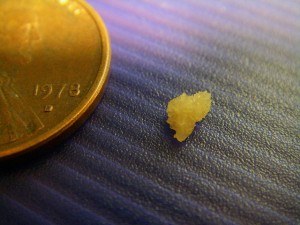
Kidney Stones Suck; Add This to Banish Them

December 11, 2014 by James Bogash

Photo courtesy of https://www.flickr.com/photos/arboreality/

Kidney stones are one of the most painful acute conditions that humans can endure.

Whenever I asked female patients who have had both children and kidney stones which was worse, the answer is always the kidney stones.  Maybe this is because childbirth is a natural process and the body will release endorphins to curb the pain.

Either way, kidney stones are extremely painful and if you just had a kidney stone you are likely willing to do anything to avoid getting another.

Like pretty much everything else in medicine, dogma rules when it comes to advice on lowering your risk of getting another kidney stone.  And frankly, the research that I have come across is pretty limited as well (you can read about some of them in a previous article by clicking here).

What I usually tell patients is that it is clear that a plant-based diet will lower your risk of kidney stones and, despite the long held belief that vitamin C contributes to kidney stones, they do not.

Another long held belief is that caffeinated beverages will also increase the risk of kidney stones.  This may be related to the also-long-held-but-incorrect belief, that caffeinated beverages dehydrate you.  This is the reason that the “experts” tell you to drink an additional glass of water for every caffeinated beverage that you take in.

Regular Rantings readers will know that I am not a big fan of the “8 glass of water a day” recommendation (especially when that water is from BPA-laden plastic water bottles) and I have always felt that the need to drink an additional glass of water for every glass of tea or coffee you drink was unneccesary.

Do you really think the Dalai Lama is dilligently drinking a glass of water for every cup of green tea he is drinking?

Of course not.

Looking back at blog posts I did over a decade ago, I was pretty sure that caffeinated beverages needed to be avoided for kidney stone prevention.  But, like a handful of other recommendations over the years, this one is subject to change.  Especially according to this particular study.

In this study, researchers looked at 4982 kidney stone patients to see if caffeine intake had an effect on their risk of developing kidney stones.  Here’s what they found:

  • Those with the highest intakes of caffeine intake had a 26%, 29% or 31% lower risk depending upon which is the three study groups were looked at).
  • Higher caffeine intake was linked to higher urine volume, calcium, and potassium as well as with lower urine oxalate and supersaturation for calcium oxalate and uric acid (meaning that the urine could hold more calcium before stones started to form).

Overall, these are pretty strong numbers given the long-given recommendation to avoid caffeinated beverage intake.  So, if you are a kidney stone sufferer, than it’s time to add some tea and / or coffee to your daily regimine.


Filed Under: Kidney Problems Tagged With: caffeine, coffee, kidney stones, nephrolithiathis, tea

Can you Get Too Many Antioxidants?

November 19, 2014 by James Bogash

CAN TOO MANY ANTIOXIDANTS CAUSE DAMAGE?  Just like everything else in life, balance is important.  This is not the first time that we have seen damage from higher levels of antioxidants.  In this particular study (done in a petri dish), addition of high dose antioxidants actually caused damage to the stem cells.  Keep in mind that some level of oxidative stress can be a good thing, causing cells to go into protective mode and upregulate enzymes that produce our own antioxidants.  The bottom line is that a broad base of plant based antioxidants will give our cells the balance they need to protect us.  High levels of only one type of antioxidant may actually be harmful.

Read More

Filed Under: Oxidative Stress Tagged With: Antioxidants, oxidative stress, stem cells

  • « Go to Previous Page
  • Page 1
  • Page 2
  • Page 3
  • Page 4
  • Interim pages omitted …
  • Page 43
  • Go to Next Page »

Primary Sidebar

Patient Quick Guide

Schedule An Appointment
Contact Our Office
Download Patient Forms

Categories

Chiropractic Mesa Arizona

Arthritis Chiropractor Mesa AZ
Graston Technique Mesa AZ
Back Pain Chiropractor Mesa AZ
Back Pain Doctor Mesa AZ
Wrist Pain Chiropractor Mesa AZ
Rotator Cuff Chiropractor Mesa AZ
Shoulder Pain Chiropractor Mesa AZ
Knee Pain chiropractor Mesa AZ
Manipulation Under Anesthesia In Mesa AZ
Headache Chiropractor Mesa AZ
Chiropractic Mesa AZ
Stem Cell Therapy Mesa AZ
Regenerative Medicine Mesa AZ
Massage Therapist Mesa AZ
Shoulder Pain Doctor Mesa AZ
PRP Therapy Mesa AZ
Chiropractic Mesa AZ
Who Is The Top Chiropractor In Mesa AZ?
Knee Injury Doctor Mesa AZ?

Footer

Resources

Site Map
Disclosure
Additional Resources

Best Massage Therapist Mesa AZ
Arthritis Doctor Mesa AZ
Chiropractic Mesa AZ
Back Pain Doctor Mesa AZ
Rotator Cuff Doctor Mesa AZ
Chiropractor Mesa AZ
Massage Therapist Mesa AZ
PRP Therapy Mesa AZ
Knee Pain Doctor Mesa AZ
Stem Cell Therapy Mesa AZ
Headache Doctor Mesa AZ
Shoulder Pain Doctor Mesa AZ

Office

Lifecare Chiropractic
1830 S. Alma School Rd, Ste 135
Mesa, AZ 85210
(480)-839-2273
Also Serving Tempe, AZ

Get Directions

  • Home
  • About
  • Common Conditions
  • Additional Services
  • Testimonials
  • Blog
  • E-Books
  • Contact

Copyright © 2026 · LifeCare Chiropractic · All Rights Reserved.