• Skip to main content
  • Skip to primary sidebar
  • Skip to footer

LifeCare Chiropractic

The Best Chiropractic Care in Mesa, Arizona

  • Home
  • About
    • Why Lifecare?
    • About Dr. Bogash
    • Team Members
  • Common Conditions
    • Wrist Pain/Carpal tunnel syndrome
    • Elbow Pain/Epicondylitis
    • Headaches
    • Knee Pain and Knee Injuries
    • Low Back Pain
    • Shoulder Pain and Rotator Cuff Problems
  • Additional Services
  • Testimonials
  • Blog
  • E-Books
  • Contact

Miscellaneous

Important Reason You Need to Improve Thyroid Function During Pregnancy

August 8, 2014 by James Bogash

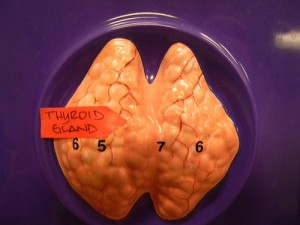
Improve thyroid function
Photo courtesy of https://www.flickr.com/photos/tobanblack/

It seems like everyone’s got thyroid problems these days. Luckily, there’s a prescription for that and you don’t need to worry your pretty little head over something as minor as a major organ going kaput in your twenties.

While I am, of course, being facetious, the attitude exists in medicine today that we can easily treat thyroid problems with thyroid replacement hormone like Synthroid or levothyroxine is completely backwards.  If it was your heart or kidneys or lungs that just stopped working at 25 the medical establishment would run thousands of dollars in tests to determine why.  For some reason the thyroid gland is treated completely different.

Maybe it’s because we have medications that seem to do a great job replacing the lost or diminished hormone levels.  The scary thing is that the reasons for thyroid hypofunction or failure can be very serious and if your doctor does not spend the time to dig for answers (or worse–is not even aware there are answers…) your health can be at risk.

I have heard Dr. Jeffrey Bland refer to the thyroid as the “yellow canary of the human body” when it comes to environmental toxicity.  This means that, when you are exposed to toxic chemicals, whether from heavy metals, flame retardants, stress, food allergies or pesticides in your water supply, your thyroid is the gland screaming out to you that something is wrong first.  It’s your early warning to clean up your body and restart your thyroid.

But alas, we ignore that and medicate.  Even worse, we treat labs values and not the patient themselves.  How often have you heard from friends or family members that his or her doctor said the lab numbers (usually only TSH is checked) were good and so there was no reason to adjust thyroid hormone levels?  Yet the patient is constipated, depressed and dragging his or her feet every hour of the day.  Doesn’t seem to make sense.

The studies linking environmental toxins and thyroid dysfunction are quite common (you can read about many of them in previous blog articles that can be read by clicking here).  But of particular concern is the compound ammonium perchlorate in drinking water.  It is used in the manufacture of rocket fuel, ammunition and fireworks and has been discarded in large quantities in Nevada since the 1950s.  This has led to contamination of the Colorado River as it picks up perchlorate from the soil.  From there, it can last in water for long periods of time.

Unfortunately, perchlorate is known to block the action of thyroid hormone.  This obviously creates a problem and has been shown to create thyroid problems.  Luckily, you can just take your Synthroid and ignore the fact that a known environmental toxins continues to run through your bloodstream and body tissues.

Just to demonstrate that the approach that most physician take for thyroid problems is dead wrong, I present this particular study.  In it, researchers looked at the pregnancies of 21,846 women.  Of these, 487 were hypothyroid during pregnancy.  In these 487 women, first trimester perchlorate levels were evaluated.  In those who showed the highest 10% of perchloarate levels, the children’s IQ was assesses at 3 years of age.  Here’s what they found:

  • Perchlorate was detectable in all women and iodine levels were low.
  • Those moms in the highest 10% of perchlorate levels had a 314% higher risk of having her child’s IQ being in the lowest 10%.
  • Here is the important point:  thyroid hormone therapy did not have an impact of perchlorate on offspring IQ.

This article is not about the IQ levels of the children.  This article illustrates that merely medicating the lab findings of an altered TSH does nothing to fix the problem.  With the thyroid, there is a very high likelihood that something is wrong.  Whether it’s prediabetes, stress, nutritional deficiencies or exposure to common toxic chemicals, it needs to be identified and addressed.

Maybe you can’t manage to get all the flame retardants out of your life (besides–who wants to risk bursting into flames at work?), but paying attention to where your exposures are and doing your darnedest to reduce these exposures is still going to pay off.  This is the only way to address it.

So, the next time your doctor tells you that you have thyroid problems and you ask him or her for what environmental exposures might be causing the problem and all you get is a blank stare, it might be time to find a new doctor.

Filed Under: Environmental, Thyroid Tagged With: hypothyroidism, Perchlorate, thyroid function

Natural Remedies for ADHD in Children; Do They Work?

June 2, 2014 by James Bogash

natural remedies for ADHD in children
Photo courtesy of https://www.flickr.com/photos/aliarda/

I believe every parent is inherently hesitant to put a child on drugs that mess with the brain. It would seem that natural remedies for ADHD in children would be safer.

Our childrens’ brains undergo some incredible changes throughout the entire adolescent period.  And when it comes to the brain, we know very little about the details.  This is why I believe that drugs need to be the very, very last option.  We have already seen a long list of natural approaches in the research that have demonstrated a benefit for behavioral problems in children.  These include:

  1. Avoiding junk foods.  These have been shown to contribute to behavioral problems in kids.
  2. Phosphatidylserine found in soy and brain supplements.
  3. Lithium (the natural kind, not the prescription).
  4. Getting  a good night’s sleep (even just 27 extra minutes of sleep led to improvements in behavior).
  5. Healthy fats have a strong history of being good for all brain conditions.

The list is longer, but you at least get the idea.  It is clear that natural approaches are not only safe, they are at least as effective as the medications used to attention and behavioral problems in children.  More importantly, natural treatments for ADHD work WITH the brain, rather than against it.

This particular study adds another natural tool to the arsenal of natural treatments for ADHD.  Our office has used a supplement containing valerian root, passionflora and hops (cleverly named VHP by Biotics) to successfully help patients with anxiety and sleep problems, so I am very comfortable with its use.  This study uses a patented formula of valerian root and lemon balm (under the brand name Sandrin, which I was unable to find any additional information about).  Here are the details on this 7 week-long study on 169 primary school children:

  • The children had hyperactivity and concentration difficulties but not did not meet ADHS criteria.

  • There was an impressive reduction in children having strong/very strong symptoms of poor ability to focus from 75% to 14%.

  • Hyperactivity ratings dropped from 61% to 13%.

  • Measures of impulsiveness dropped from 59% to 22%.

  • Parent rated social behavior, sleep and symptom burden also showed definite improvements.

  • Only two children experienced mild temporary adverse drug reactions.

Granted, the children in this study would not have been considered full-blown ADHD kids, but we really need to view this in perspective.  The formulation clearly had an effect.  Since the lifestyle changes noted earlier in this article work in different mechanisms, it would make sense that this formulation (or something like it) would be a strong tool in the complete natural approach for ADHD in children.

Filed Under: Anxiety, Healthy Kids, Stress Tagged With: AHDH in children, lemon balm, valerian root

Surprising Trait of Spouse May Improve Your Health and Life

May 5, 2014 by James Bogash


Spouse optimism benefits
Photo courtesy of Flickr.com

Optimistic people are fun to be around; negative people drain you. What if the boost from optimism or drain from pessimism was not limited to emotional effects?

When you ask someone how his or her day is going, do you REALLY want to know that he or she had a flat tire on the way into work, one child is home sick and they don’t have the money for the mortgage?  If you live a negative life, then you can bet that everyone who asks you is ask the “how is your day” question rhetorically.  On the flip side, if you just won the Lotto, your spouse just booked a trip on a Mediterranean cruise and your new stray dog that you rescued from abuse was house broken on day 3, then the question was NOT rhetorical and please share!

Time and time again in research studies we see that pessimism and optimism have direct impacts on health.  Negative people tend to stress out more and we all know how much stress destroys health.  All of this is clear.  But just how far does the protection of optimism extend?  This particular study starts to answer this very question.  In it, researchers looked at  3940 adults (1970 couples) over 50 from the Health and Retirement Study.  These couples were tracked for four years for how much optimism had an impact on spousal health and well-being.  Here’s what they found:

  • Being optimistic led to higher self-rated health, physical functioning and fewer chronic illnesses.
  • Having an optimistic spouse also led to better physical functioning and fewer chronic illnesses.
  • The strength of the relationship between optimism and health did not diminish over time (in other words, optimism exerted a constant benefit on health).

This study can be looked at in one of two ways.  And I guess which way pops into your head first will tell you whether you’re an optimist or pessimist.  First (the optimistic thought process) is that being happy and thinking positively is going to bring, not only your health and well-being up, but your partner’s as well.   Pluses all around.

The second (the pessimist) thought is that being negative will drag your partner towards less health and well-being along with you.

Personally, my first thought when I read this was that my wife owes me dinner (at the least!).

The bottom line is that your thoughts do not affect just YOUR health.  They affect the health of those around you as well.  And you can bet that children are affected far, far more than a spouse is because children are so much more vulnerable emotionally.  If you do not consider yourself a positive person, you do NOT have to be stuck there.  There are any number of tips, tools and help available to turn yourself into an optimistic person.  But first you have to admit that you have a problem.


Filed Under: Stress Tagged With: optimism, pessimism, spouse health, stress

Does Cranberry Really Work for Urinary Tract Infections?

April 22, 2014 by James Bogash

cranberries and urinary tract infections
Photo courtesy of http://www.freeimages.com/profile/Keira

Pretty much everyone knows that you should drink cranberry juice for a urinary tract infection. But is this an old wives tale?

The quick answer is no—it is not an old wives tale. The research on the benefits of cranberry juice has been around for a long time. And actually, it is one of the sugars, D-mannose, that is present in cranberry juice, that does all the work.

A clarification is important here. We are talking about REAL cranberry juice, not the cocktail junk loaded with added sugars. If anything, this type of drink will promote urinary tract infections. In addition to helping with urinary tract infections, cranberries are loaded with antioxidants. Which brings us to this particular study. In it, researchers looked at the effects of a single dose of either a placebo drink, a cranberry leaf extract beverage (CLEB) or low calorie cranberry juice cocktail (LCJC). All participants were given one of the drinks one week apart. Here’s what they found:

  • The cranberry drink increase blood glutathione peroxidase activity (a marker of antioxidant protection).
  • The cranberry cocktail increased glutathione concentrations and superoxide dismutase activity (antioxidant activity).
  • Interestingly, within the first 3 hours of drinking either cranberry beverage there was a strong ability to block the attachment of the bacteria E. coli to the wall of the bladder.

Personally, I was surprised that the cranberry juice cocktail had similar protection as the real stuff, but it is what it is. Either way, I would still steer patients towards the use of the real stuff.

In case you’re not aware of what constitutes the “real stuff,” look for the most expensive cranberry juice you can find. And it’s going to be very, very sour. More than what the average person would enjoy drinking. This is why it is typically mixed with other juices or with added sugars.

In addition to cranberry juice (or the straight up D-mannose, which can be bought separately from places like Amazon), I also recommend probiotic douches, to make sure that the normal, protective bacterial flora is present in the vaginal vault to keep future infections at bay.

Filed Under: Urinary Tract Infections Tagged With: Cranberry Juice, Urinary tract infection, UTI

On Thyroid Medication? Drastically Improve Thyroid Function with This

March 31, 2014 by James Bogash

vitamin C and thyroid medication
Photo courtesy of https://lifecarechiropractic.com/

Thyroid conditions are far too common. Mainstream medicine’s approach is to medicate with thyroid hormones.

From my perspective, I’m always looking for why an incredibly important organ in the human body would just up and get lazy. If this was your heart that stopped working at 28, your doctors would be up in arms trying to find an answer and fix the problem. But for some reason, because we have synthetic thyroid hormone that can be given, the thyroid going bad is no reason for alarm.

Before you follow this philosophy of medicating rather than clarifying, consider that the thyroid gland is generally considered the yellow canary of the human body (for those who don’t remember, canaries were used in the mines because they would up and die when methane levels began to climb; thus when the canary died it was time to run before the mine exploded). Stress, poor quality nutrition/prediabetes, toxic chemical exposures and food allergies top the list of things that negatively affect your thyroid.

Gluten, BPA in plastic water bottles, Teflon, flame retardants and heavy metals are all well documented to affect the thyroid. I don’t know that I have EVER had a patient come in who has a history of autoimmune thyroiditis (like Hashimoto’s or Graves) that were told that gluten sensitivity may be a huge factor in his or her thyroid dysfunction. And this includes patients who have had thyroids deliberately destroyed with radioactive iodine or surgically cut out.

But I digress.

In this particular study, researchers looked at a small group of hypothyroid patients who also had digestive complaints (another topic altogether and one that is beyond the depth of this article) to see whether the addition of 500 mg of vitamin C could have a positive effect. The results were pretty powerful:

  • Levels of TSH, free T4 and T3 all improved while on vitamin C.
  • TSH dropped an impressive average of 69.2%.
  • TSH levels normalized in 54.8% of those in the study.

Given how challenging it can be to manage thyroid medication dosage, anything that can improve the effectiveness of thyroid hormones, especially with something as incredibly cheap and safe as 500 mg of vitamin C, is a very good thing.

Filed Under: Thyroid, Vitamin C Tagged With: Armour thyroid, Synthroid, thyroid, thyroid medication, vitamin C

Lead Exposure Linked With Long-Term Cognitive Decline – (11-16-00)

February 25, 2014 by James Bogash

Lead Exposure Linked With Long-Term Cognitive Decline

Lead exposure is relatively common today, and the results of this study are no surprise. What this article does support is the identification of patients with high lead levels and chelation therapy to rid the body of this lead excess if found. Hair analysis is still one of the most effective, cheapest and easiest method I’ve come across to determine heavy metal exposure. What is stunning in this article is that the author suggests that much of what we term “age related cognitive decline” may actually be from lead exposure.

Neurology 2000;55:1144-1150 Cognitive function continues to decline in older adults years after occupational exposure to lead ends, report researchers in the October 24th issue of Neurology. “Former lead workers exhibited greater annual declines in adjusted test scores than did controls for 17 of 19 cognitive tests,” the investigators write. These reached significance for the Rey complex figure copy test, and the Rey auditory verbal learning test for immediate recall and recognition. Former lead workers also exhibited significantly greater age-related annual declines for four cognitive tests: block design, digit symbol, serial digit learning, and finger tapping non-dominant hand tests. Annual declines were larger with increasing peak tibia lead levels, though not for baseline blood lead levels. “An increase of 15.7 mcg/g of peak tibia lead was equivalent in its effects on annual test decline to 5 more years of age at the baseline visit,” the investigators write. “Some of what we have been calling ‘normal aging’ may in fact be due to past exposures to chemicals or other agents that can affect the central nervous system,” Dr. Schwartz commented in an American Academy of Neurology statement. “This is potentially a very important health problem.”

Filed Under: Miscellaneous Tagged With: Chelation therapy, Lead Exposure

H. pylori May Be Implicated in Sudden Infant Death Syndrome – (11-16-00)

February 25, 2014 by James Bogash

H. pylori May Be Implicated in Sudden Infant Death Syndrome

I try to stay away from articles on SIDS, but the association was very strong between H. pylori exposure and SIDS in this study.

Arch Dis Child 2000;83:429-434 “Infection has long been suspected to play a role in SIDS, and there is evidence implicating gastrointestinal infection,” lead researcher Dr. Jonathan R. Kerr of the University of Manchester, UK, told Reuters Health. “There is extensive overlap in the epidemiology of both H. pylori infection and SIDS,” he added. “Both are associated with poor communities, overcrowded living conditions, and show clustering within families.” Considering results for both sequences, 28 of 32 (88%) of SIDS cases showed evidence of H. pylori infection compared with only one of eight (12.5%) controls. The prevalence of H. pylori infection in infants in developed countries is generally less than 2%, so the 88% prevalence in this SIDS population is very high by comparison, Dr. Kerr said. “We have therefore identified a possible bacterial cause of SIDS, but emphasize that our findings must be independently confirmed,” he added. As for the connection between SIDS and H. pylori infection, Dr. Kerr and his colleagues theorize that “death may result from aspiration of stomach contents containing H. pylori urease into the lung with consequent release of ammonia into the circulation.”

Filed Under: Miscellaneous Tagged With: h. pylori, Infant Death Syndrome, SIDS

Antioxidant Supplementation in Atherosclerosis Prevention – (11-16-00)

February 25, 2014 by James Bogash

Antioxidant Supplementation in Atherosclerosis Prevention

More evidence supporting antioxidants and health. The dosages used in this study were relatively low, and yet beneficial effects were shown. And this study does not touch on the hundreds of other benefits from antioxidant supplementation.

Synergy Abstract

Read entire article here

Filed Under: Miscellaneous Tagged With: Antioxidant Supplementation, atherosclerosis

  • « Go to Previous Page
  • Page 1
  • Page 2
  • Page 3
  • Page 4
  • Page 5
  • Interim pages omitted …
  • Page 43
  • Go to Next Page »

Primary Sidebar

Patient Quick Guide

Schedule An Appointment
Contact Our Office
Download Patient Forms

Categories

Chiropractic Mesa Arizona

Arthritis Chiropractor Mesa AZ
Graston Technique Mesa AZ
Back Pain Chiropractor Mesa AZ
Back Pain Doctor Mesa AZ
Wrist Pain Chiropractor Mesa AZ
Rotator Cuff Chiropractor Mesa AZ
Shoulder Pain Chiropractor Mesa AZ
Knee Pain chiropractor Mesa AZ
Manipulation Under Anesthesia In Mesa AZ
Headache Chiropractor Mesa AZ
Chiropractic Mesa AZ
Stem Cell Therapy Mesa AZ
Regenerative Medicine Mesa AZ
Massage Therapist Mesa AZ
Shoulder Pain Doctor Mesa AZ
PRP Therapy Mesa AZ
Chiropractic Mesa AZ
Who Is The Top Chiropractor In Mesa AZ?
Knee Injury Doctor Mesa AZ?

Footer

Resources

Site Map
Disclosure
Additional Resources

Best Massage Therapist Mesa AZ
Arthritis Doctor Mesa AZ
Chiropractic Mesa AZ
Back Pain Doctor Mesa AZ
Rotator Cuff Doctor Mesa AZ
Chiropractor Mesa AZ
Massage Therapist Mesa AZ
PRP Therapy Mesa AZ
Knee Pain Doctor Mesa AZ
Stem Cell Therapy Mesa AZ
Headache Doctor Mesa AZ
Shoulder Pain Doctor Mesa AZ

Office

Lifecare Chiropractic
1830 S. Alma School Rd, Ste 135
Mesa, AZ 85210
(480)-839-2273
Also Serving Tempe, AZ

Get Directions

  • Home
  • About
  • Common Conditions
  • Additional Services
  • Testimonials
  • Blog
  • E-Books
  • Contact

Copyright © 2026 · LifeCare Chiropractic · All Rights Reserved.