• Skip to main content
  • Skip to primary sidebar
  • Skip to footer

LifeCare Chiropractic

The Best Chiropractic Care in Mesa, Arizona

  • Home
  • About
    • Why Lifecare?
    • About Dr. Bogash
    • Team Members
  • Common Conditions
    • Wrist Pain/Carpal tunnel syndrome
    • Elbow Pain/Epicondylitis
    • Headaches
    • Knee Pain and Knee Injuries
    • Low Back Pain
    • Shoulder Pain and Rotator Cuff Problems
  • Additional Services
  • Testimonials
  • Blog
  • E-Books
  • Contact

Heart Disease

Critical Aspect of Heart Disease: It’s NOT Black or White

July 8, 2014 by James Bogash

Risk factors for heart disease
Photo courtesy of https://www.flickr.com/photos/79023754@N04/

Medicine has created an imaginary divide between sickness and health.  We described health as merely the absence of an identified disease.

In other words, you have heart disease or you don’t.  You have cancer or you don’t.  You have celiac disease or you don’t.  Admittedly, over the years we’ve gotten better by identifying “pre” states.  Pre-hypertension.  Pre-diabetes.  Pre-osteoporosis.  Pre-cancerous.

These “pre” states were created less to educate you about needing to make better choices and more to identify the point at which the benefits of medicating a condition outweighs the risk of side effects.  Just in case you think this sounds cynical, read up on the history of osteopenia (“pre” osteoporosis).  It’s a little scary to see how much we all are duped by the drug companies when it comes to our health (NPR has a great overview of the process that went into building a drug market for osteopenia).
[Read more…] about Critical Aspect of Heart Disease: It’s NOT Black or White

Filed Under: Heart Disease Tagged With: cardiac stress test, heart attack, heart disease

Critical Aspect of Heart Disease: It’s NOT Black or White

July 8, 2014 by James Bogash

Risk factors for heart disease
Photo courtesy of https://www.flickr.com/photos/79023754@N04/

Medicine has created an imaginary divide between sickness and health.  We described health as merely the absence of an identified disease.

In other words, you have heart disease or you don’t.  You have cancer or you don’t.  You have celiac disease or you don’t.  Admittedly, over the years we’ve gotten better by identifying “pre” states.  Pre-hypertension.  Pre-diabetes.  Pre-osteoporosis.  Pre-cancerous.

These “pre” states were created less to educate you about needing to make better choices and more to identify the point at which the benefits of medicating a condition outweighs the risk of side effects.  Just in case you think this sounds cynical, read up on the history of osteopenia (“pre” osteoporosis).  It’s a little scary to see how much we all are duped by the drug companies when it comes to our health (NPR has a great overview of the process that went into building a drug market for osteopenia).

There is nothing wrong with using the label of “pre” when it comes to chronic disease.  I use it all too frequently with prediabetic patients in my office.  But to me, the “pre” is a warning sign that you need to get your act together because you are well on your way to any number of chronic diseases.  We should NEVER rely on drugs for any type of “pre” condition.  Never.  Lifestyle changes are the only recommendation that should be on the table at this point.  It is up to you to make the right choices.

One condition that we do not generally tack the “pre” label on is heart disease.  Sure, we love to tell patients they are at risk because they have high cholesterol or high blood pressure or not exactly optimal body weight.  But again, I think patients view this as an “off or on” situation.  Just because you have high cholesterol does not reaaallly mean that you have heart disease.  It only means that you are at a greater risk of having a heart attack.

This is an outright misunderstanding of the way heart disease works in our body.  Having a heart attack or stroke is merely the end process of decades of abuse on your blood vessels.  Almost the proverbial straw on the camel’s back.  Would you make needed changes if you knew you were a single straw away from the end of your life?

Some still would not, thinking that they would be lucky enough to escape this outcome.

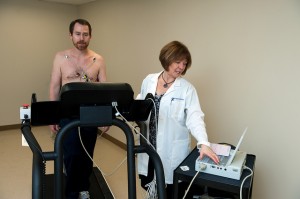
With that in mind, I would like to bring your attention to this particular study.  In it, researchers looked at  405 men and 813 women with three important factors:

  1. They had, for some reason, suspected coronary artery disease.
  2. They had NO previous history of coronary artery disease.
  3. They had no evidence of coronary artery disease on cardiac stress testing.

You may very well match this group of participants.  These patients would essentially have been given a clean cardiac bill of health after the tests were negative.  But the researchers didn’t stop there.  They looked at how well the blood flow moved through the coronary arteries using more specialized testing.  Here’s what they found as they followed this group of patients over the next 1.3 years:

  •  51% of men and 54% of women demonstrated some type of damage to their coronary arteries.
  • For every 10% increase in coronary flow reserve (basically healthier blood flow to the heart muscles) there was a 20% drop in the risk of major cardiac events.
  • In a small group who were evaluated in more depth (307 women and 97 men) who had no hardening of the heart arteries on CT scanning 44% of men and 48% of women still had damage to the heart vessels.

In other words, these patients, who had normal cardiac testing, were well on their way to having a heart attack.  And this was a large chunk of the patients in the study.  I’m sure that these patients thought that “everything was ok” and continued to go about their merry little life thinking everything was peachy-keen.

We need to understand, as a society, that a very large chunk of us are already on the “pre” heart disease pathway and that damage to the very blood vessels supplying the critical nutrients and oxygen to the muscles of our heart is already occurring.  Until we change our attitude towards heart disease and understand that it is a spectrum heart disease will continue to be this country’s #1 killer.

Filed Under: Heart Disease Tagged With: cardiac stress test, heart attack, heart disease

Had a Heart Attack? Skip the Meds and Do this Instead

June 13, 2014 by James Bogash

prevent heart disease
Photo courtesy of http://www.freeimages.com/gallery/wgroesel

While having a heart attack is never a good thing, it does not mean life is over. Or at least, if you make the right choices.

Regular readers of the Rantings will of course know where this conversation is going.  Newer readers will likely not be shocked either.  So why, given that we all know that healthy lifestyle changes are good for the heart, am I bothering to write this at all?

Because I just don’t understand.

The benefits of the right lifestyle changes are just flat-out powerful.  So why, given the power of lifestyle changes, do we still lose almost 600,000 people annually in the US alone, putting heart disease at the top of the list of killers in the US.

Following mainstream medical advice, EVERY heart attack patient will be put on medications.  Statins, blood thinners, blood pressure medications and probably some cyanide just to round it off.  Lifestyle changes are given tongue in cheek.  “Quit smoking.”  “Lose weight.”  “Eat better.”  “Exercise more.”  These are GOALS, not treatment plans.  I can’t tell you how often patients have been given these goals, but no real idea of how to attain them.

The reality is that very few doctors, cardiologists included, have neither the training NOR the time to educate patients about what they need.  Medications are what they know best and physicians use the tools they are most comfortable with.  There is also the small possibility that cardiologists think that lifestyle changes are NOT really all that helpful and that patients won’t follow them anyway.  Based on the results of this particular study, if this is your cardiologist’s opinion, it’s time to find a new one.

In it, researchers looked at  4,174 participants with coronary heart disease.  Ideal lifestyle factors were broken out into 4 categories:

  1. Physical activity ≥4 times/week
  2. Nonsmoking
  3. Highest adherence to the Mediterranean diet score
  4. Waist circumference <88 cm for women (just under 35″) and <102 cm for men (just over 40″)

I think we can all agree that these are some pretty easy guidelines that everyone can attain.  And, if you have already had a heart attack and feel that these guidelines are too stringent, then by all means keep your life insurance premiums paid up.  I really don’t have more to say–it’s your LIFE on the line here.

So what did the researchers find?  Here’s the results:

  • Physical activity ≥4 versus no exercise 31% lower risk of another heart attack and 29% lower risk of dying (which, we can all agree, is NOT the desired outcome).
  • Non-smoking versus smoking 50% lower risk of heart attack and 47% lower risk of death.
  • Mediterranean diet adherence led to 23% lower heart attack risk and 16% lower risk of death.
  • Waist circumference did not make any difference.

But here’s where things get interesting.  You see, lifestyle changes, unlike medications, are additive.  When you add these healthy behaviors together you get even more bang for your buck.  Here’s what happened when participants added lifestyle changes together:

  • Compared to those with ZERO lifestyle factors, those with at least one had a 40% lower risk of another heart attack and 35% lower risk of death.
  • Those with two factors had 51% lower (heart) and 43% (death).
  • Three factors led to a 62% lower risk of another heart attack and 59% lower risk of dying.

Three factors.  Not even all 4.  Just adopting 3 of these factors slashed your risk of having a second heart attack and dying far more than any medication could ever hope for.  Is YOUR life worth these changes?

Filed Under: Heart Disease Tagged With: lifestyle to protect the heart, prevent heart disease, secondary prevention of heart disease

Irregular Heartbeat and A-Fib; Surprising Link with Seizures

June 7, 2014 by James Bogash

The number of patients who have irregular heartbeats is increasing along with every other chronic disease known to man.

While I am not a practicing cardiologist, I did write a book on migraines and epilepsy.  So what does a Migraines and Epilepsy book have to do with an irregular heartbeat??

Quite a bit, it turns out.

You see, migraine headaches and seizures are strongly linked to a problem with the ability of the brain cells to generate energy.  For those of you who stayed awake in high school biology, I’m talking about ATP formation in the mitochondria…

While it may seem contradictory, too little energy in the brain cells will lead to migraine headaches and seizures.  Too little energy leads to brain cells firing before they are supposed to.   In other words, it takes energy to keep a brain cell quiet.  The energy (ATP) is required to operate pumps in the cell membrane (sodium-potassium pumps) and it takes a LOT of it.

Let’s move to the heart.  The heart cells that regulate the rhythm of the heart ALSO require a massive amount of energy to NOT fire.  Think of the heart regulating cells as you pushing a boulder up a hill so you can roll it back down.  Think of how much energy it would take you to push that boulder up to the top.

What would happen if you at McDonald’s for months on end, sat on the couch and stressed yourself crazy and THEN tried to push that boulder up to the top of the hill?  You guessed it—you’d give out somewhere up the hill, but not at the top, and that boulder would roll back down the hill before it was supposed to.

Take this same example back to the heart regulating cells.  The heart regulating cells fire and cause the heart to beat.  But before the next beat, the regulating cells have to gather a certain level of energy before they can fire again, much like rolling that boulder up the hill.

But, if these cells don’t have the energy needed to roll the boulder up the hill, these cells are going to fire before they are supposed to, causing an irregular heartbeat such as atrial fibrillation.  For this reason, anything that beats up the mitochondria (poor quality diets, too many calories, environmental chemicals, emotional stress, etc…) is going to increase the risk of an irregular heartbeat while anything that improves mitochondrial function (fruits, veggies and spices, exercise, mediation, vitamins, low calorie / high quality diet, etc..) is going to support a normal heartbeat.

I have been pushing this concept for several years now and it seems like it’s been slow to catch on, despite the research supporting it.  Just in case there are some of you that think that I’m completely out there and rambling just to hear myself type, I present this particular review.  In it, the author supports my concept, pushing the envelope by scandalously suggesting that antioxidants that support the mitochondria (vitamin E as mixed tocopherols, CoQ10, NAC, etc…) should be consider standard treatment for patients with irregular heartbeats.

Needless to say, after reading this article, I immediately sent the author flowers.

Filed Under: Heart Disease Tagged With: A-fib, atrial fibrillation, irregular heartbeat, mitochondria

Surprising Fact on Users of Statin Drugs to Lower Cholesterol–

April 30, 2014 by James Bogash

drugs to lower cholesterol and weight gain
Photo courtesy of http://www.freeimages.com/profile/julosstock

Society has been brainwashed into thinking that drugs to lower cholesterol are required to prevent heart disease if you have high cholesterol. Money thrown at a consistent marketing message can do that.

It is not uncommon for me to hear a patient speak defiantly in a phrase like, “I do NOT want to go on those cholesterol drugs.” It is stated in the same tone as someone saying he or she does not want to have a leg amputated due to a severed artery bleeding like an Uma Thurman opponent or gangrene you can smell from down the hall. This is how serious much of the American public thinks the issue of taking or not taking a statin is. They are under the mistaken belief that statin drugs will actually do a lot to protect him or her from a heart attack.

I think these patients fear that the doctor will recommend (key word here is “recommend,” not “force”) statins when the misguided lifestyle advice doesn’t work. If the lifestyle changes didn’t work, then taking a drug to lower cholesterol is now a requirement, not an option. If only the general public really knew (If that statement does not mean anything to you, it might be a good time to spend some time with my Cholesterol eBook that can be found on Amazon by clicking here).

But this article is not about beating up on how ineffective the statins are at actually preventing a heart attack or the long list of side effects associated with their use. Rather, this article is about a much, much bigger issue.

It is about the public’s view of medicine and the subsequent responsibility we have for our own health. Just yesterday I had a conversation with a patient whose wife is an obese diabetic with a desire for sweets that she just won’t kick. Her, and many other diabetics just like her, are under the delusion that everything is ok because they are on drugs to “control” the condition.

But what would’ve happened if we didn’t have drugs that we give to diabetics? We would have to sit this patient down, have a direct face-to-face conversation about what is going to happen to her if she doesn’t make changes. Not MIGHT, but WILL happen. Replay this scenario with pretty much every other chronic disease, especially in the early stages of the disease. In this scenario, the responsibility is smack dab in the patient’s lap where it should be.

Medications, however, remove the responsibility from the patient. There is no worse ideology than one that eliminates a lack of personal responsibility when it comes to the prevention and management of chronic disease. None.

This particular study says it all and makes it more real that patients who are given drugs to “control” their chronic disease or, even worse, drugs to control merely the RISK FACTOR for a chronic disease, (like cholesterol) have let go of personal responsibility.

In it, researchers compared two groups of 27,886 US adults, from 1999 through 2010; one group who took statins and the other group that did not use statins to lower cholesterol. Here’s what they found:

  • Over the time frames measured, the calorie intake of statins users climbed (2009-2010 was 9.6% higher than that in the 1999-2000 period).
  • The non-statin group calorie intake, however, was unchanged during the same study period.
  • Over the time frames, the fat intake of statin users jumped 14.4%.
  • Non-statin users’ fat intake? Unchanged.
  • BMI increased more among statin users (+1.3) than among nonusers (+0.4).

In a group who had an obvious concern over cardiac health, enough so to take a medication designed to lower cholesterol to lower the risk of a heart attack, the concern extended no further than a number on a lab test. If that number got better using a drug to lower cholesterol, there was no need to control anything else in the lifestyle.

Unless we return the true responsibility for health back where it belongs (with the patient) the health of our culture will continue to decline, with the doctors frustrated and their time bled dry and the drug companies raking in massive profits.

Filed Under: Cholesterol, Heart Disease Tagged With: Atorvastatin Side Effects, cholesterol, Drugs To Lower Cholesterol, heart disease, statins

Had a Heart Attack? 3 Critical Things to Know

April 21, 2014 by James Bogash

prevent heart disease
Photo courtesy of prevent heart disease, heart attack, lifestyle for heart disease

After your heart attack you want to do everything possible to prevent a second event. But few things will be as powerful as the choices you will make now.

Whether you had an actual heart attack with resulting damage to the heart, or had a stent put in or the full blown open heart surgery you are still in a very high danger level. Your cardiologist will certainly put you on statins (regardless of your cholesterol level) and make sure your blood pressure is under control. But these are the primary tools of the cardiologist. And yet, they are not the most powerful tools.

If you really, really do NOT want to have another cardiac event, lifestyle HAS to be a factor in your recovery. Granted, if you are a smoker it will be made very clear to you that quitting is not an option. Any provider you see will make this recommendation. However, the depth of knowledge on the specifics of nutrition and exercise is not usually there for most cardiologists (I am, of course, generalizing here). Many will refer you to a nutritionist, but most nutritionists will stick with the “party line” of salt restriction and saturated fat reduction (ok, ok…so I’m generalizing AGAIN).

Here’s the reality. The recommendations we give for both primary and secondary prevention of heart disease still suck. They are general recommendations that don’t get down to the specifics that can make a very large difference. We hear about eating nuts to protect your heart, but not about how these nuts should be raw with no added omega-6 oils (cottonseed, peanut, soybean). It’s these subtle differences that can make all the difference in outcomes.

The same goes for aerobic exercise. I have made it no secret that I’m a big fan of short-burst aerobic activity, and yet the general recommendations are still limited to sustained-type aerobic exercise like walking for 30 minutes a day.

So what’s the point of my rant? That, even though the recommendations given are general, they are still very, very powerful. And this particular article outlines just how powerful. Researchers followed 4,174 patients for just over 4 years who were undergoing cardiac rehab after an acute event to see how much adoption of ideal lifestyle factors had on the risk of another heart attack or death (which is, arguably, worse). The ideal lifestyle factors were:

  1. Physical activity ≥4 times/week
  2. Non-smoking
  3. Sticking with a Mediterranean diet (highest compliance)
  4. Waist circumference under 35 inches for women and 40 inches for men

Here’s what the researchers found:

  • Exercise (versus sitting on your butt) led to a 31% lower rate of a future cardiac event and 29% lower risk of death.
  • Not smoking (versus keeping your life insurance premiums paid) led to a 50% lower risk of a future event and 47% lower risk of dying.
  • Those who were more strict with a Mediterranean diet (versus not at all) had a 23% lower risk of another heart event and 16% lower risk of death.
  • Waist circumference, however, did not make a difference.
  • But, when patients had 3 of the ideal factors that made a difference (versus none), the risk for another cardiac event 62% lower and risk of death was a respectable 49% lower.

It is clear from this that the approach is NOT about a single change. Rather, it is the combination of multiple positive changes that goes a very long way towards making sure you’re going to be alive in 5 years.

Filed Under: Heart Disease Tagged With: heart attack, lifestyle for heart disease, prevent heart disease

Zetia & Cholesterol: How to Tell if Your Doc Stays Up to Date

April 11, 2014 by James Bogash

cholesterol lowering drugs
Image credit: jgroup / 123RF Stock Photo

Ezetimibe, aka Zetia, hit the market in 2002 based on its ability to lower LDL cholesterol levels. Scripts skyrocketed 180 TIMES over the next 6 years.

In the US in 2002, 6 out of 100,000 people were given prescriptions for Zetia; by 2008, this number vaulted to 1082 per 100,000 persons. A mind blowing increase for a drug that had not yet been shown to save lives, just shown merely to lower LDL cholesterol. In Canada, over similar time frames, use jumped from 2 per 100,000 to 495, an even more massive increase of 247.5 TIMES as many prescriptions. Again–for a drug that really hadn’t been shown to do anything just yet.

And it is chiropractors who are sometimes accused of being unscientific.

This should have all changed in 2008 with the release of the data from the ENHANCE trial. In the ENHANCE trial, ezetimibe was added to a statin (the combination being called Vytorin) to further force cholesterol levels down, because that is really all that is important. Disappointingly, the trial showed no benefit from ezetimibe.

Just in case this wasn’t enough, in 2009 in the ARBITER 6–HALTS trial, the combination was actually shown to INCREASE plaguing in the carotid arteries of the neck. Not a good thing. Surely, by this point prescriptions for Zetia fell to nonexistent levels, right?

Not quite.

This particular study looked at how much the publication of the ENHANCE trail data affected physicians’ use of ezetimibe in both the US and Canada. In the US, after the publication of these two trials, prescriptions fell from the aforementioned 1082 per 100,000 people down to 572, a drop of 47.1%. In Canada, however, the increase in the number of prescriptions slowly and steadily moved up (from 2 to 495 per 100,000 people) even after the publication of the trials.

This is not the first example of mainstream medicine ignoring the evidence that is supposed to guide the practice of medicine. But this one seems particularly bothersome. This drug launched itself from zero to near superstar status on pretty much nothing but the ability to lower a single lab value 20%. And, I might add, this particular lab value is LDL cholesterol, which has now lost favor as a lab value that has any real ability to predict risk of heart disease.

The bottom line is that you should ONLY see a physician who keeps up with the medical literature. Maybe not to the DSM-V worthy level that some of us do, but at LEAST the basics. If you doctor has written you a prescription for either Zetia or Vytorin, he or she is not in this group.

Filed Under: Cholesterol, Drug Research, Heart Disease Tagged With: cholesterol, drug research, ezetimibe, heart disease, Vytorin, Zetia

Irregular Heartbeats on the Rise

March 7, 2014 by James Bogash

Atrial fibrillation. Afib. Irregular heartbeat. Palpitations. It goes by many names. Regardless of what you care to call it, this condition is becoming more common.

I have addressed Afib in the past, outlining how powerful simple lifestyle changes are to help eliminate this condition, but it seems like word is just not getting out. As a result, the rates of people with irregular heartbeat continues to climb. This particular article gives some numbers to illustrate just how bad the problem has become. Here’s what they found:

  • By 2010 there were 33.5 million people worldwide with Afib.
  • Lost quality of life, measured basically as years of health lost, increased by 18.8% in men and 18.9% in women from 1990 to 2010.
  • From 1990 to 2010, the number of people with AF (per 100 000 population) increased in both men and women.
  • Worse, death rates from AFib complication rates increased 2-fold in women and 1.9-fold in men.

The bottom line is that the number of people affected by AFib is going up, while at the same time these people are losing quality of life and dying faster.

Don’t let anyone tell you this has nothing to do with lifestyle. It has everything to do with the choices we make. From stress to lack of exercise to a diet devoid of protective nutrients. If you happen to be one of the lucky ones affected by an irregular heartbeat, AND you’re willing to make some lifestyle changes to make it better, feel free to read through my earlier blog article on this very topic by clicking here.

Filed Under: Heart Disease, Stroke Tagged With: afib, atrial fibrillation, irregular heartbeat, Palpitations, stroke

  • « Go to Previous Page
  • Page 1
  • Interim pages omitted …
  • Page 5
  • Page 6
  • Page 7
  • Page 8
  • Page 9
  • Interim pages omitted …
  • Page 48
  • Go to Next Page »

Primary Sidebar

Patient Quick Guide

Schedule An Appointment
Contact Our Office
Download Patient Forms

Categories

Chiropractic Mesa Arizona

Arthritis Chiropractor Mesa AZ
Graston Technique Mesa AZ
Back Pain Chiropractor Mesa AZ
Back Pain Doctor Mesa AZ
Wrist Pain Chiropractor Mesa AZ
Rotator Cuff Chiropractor Mesa AZ
Shoulder Pain Chiropractor Mesa AZ
Knee Pain chiropractor Mesa AZ
Manipulation Under Anesthesia In Mesa AZ
Headache Chiropractor Mesa AZ
Chiropractic Mesa AZ
Stem Cell Therapy Mesa AZ
Regenerative Medicine Mesa AZ
Massage Therapist Mesa AZ
Shoulder Pain Doctor Mesa AZ
PRP Therapy Mesa AZ
Chiropractic Mesa AZ
Who Is The Top Chiropractor In Mesa AZ?
Knee Injury Doctor Mesa AZ?

Footer

Resources

Site Map
Disclosure
Additional Resources

Best Massage Therapist Mesa AZ
Arthritis Doctor Mesa AZ
Chiropractic Mesa AZ
Back Pain Doctor Mesa AZ
Rotator Cuff Doctor Mesa AZ
Chiropractor Mesa AZ
Massage Therapist Mesa AZ
PRP Therapy Mesa AZ
Knee Pain Doctor Mesa AZ
Stem Cell Therapy Mesa AZ
Headache Doctor Mesa AZ
Shoulder Pain Doctor Mesa AZ

Office

Lifecare Chiropractic
1830 S. Alma School Rd, Ste 135
Mesa, AZ 85210
(480)-839-2273
Also Serving Tempe, AZ

Get Directions

  • Home
  • About
  • Common Conditions
  • Additional Services
  • Testimonials
  • Blog
  • E-Books
  • Contact

Copyright © 2026 · LifeCare Chiropractic · All Rights Reserved.