THE WESTERN DIET KILLS US YET AGAIN…Inflammatory bowel disease is when your body attacks its own gut. Ulcerative colitis and Crohn’s are the biggies. Not only are these diseases bad enough all on their own, but these conditions are associated with much higher rates of colorectal cancer. This particular study implicates the Western Diet (high in processed foods, animal saturated fats, artificial stuff, low in fruits and veggies, healthy oils, phytonutrients) in this progression from IBD to cancer. Adding more doom to the picture, it seems that the rates of IBD are going up in our children. This is likely a result of messing with the immune system too early with wanton use of antibiotics and vaccination (both of which skew the immune system towards autoimmunity). This makes it even more important to avoid antibiotics in children except in the most dire of circumstances, view each immunization with a magnifying glass and make sure they grow up knowing what fruits and veggies and olive oil look like and have no idea that you’re supposed to eat that brilliantly colored food looking product that comes in a box or plastic wrap.
Gastroenterology
Wrist Pain Chiropractor Mesa AZ :
Catecholamine-Producing Cells in the Synovial Tissue During Arthritis
CAN STRESS DESTROY OUR JOINTS? Catecholamines are hormones released by the adrenal glands, the most recognized of which is adrenaline. Looking at the article, it suggests that catecholamines might have some pretty potent anti-inflammatory effects and may always be at work controlling inflammation within a joint. However, in the initial stages of joint degeneration there is a loss of the signals from the sympathetic (fight or flight) nervous system and the body tries to adapt local production of catecholamines in the joint itself. Basically, the nerves fail and then the cells in the joint themselves try to pick up the slack. This likely fails with time and leads to exhaustion of these local cells. To me, it would suggest that, once you’re late in the process of arthritis, nothing’s likely to help. BUT, early on, adrenal support might be a very good thing. This also suggests that stress, which depletes the adrenal glands, may directly affect the process of osteoarthritis. Could adrenal support supplements help in the early stages of arthritis?? Good question… Read More…
Appendicitis Concerns: Don’t Rush to Have it Removed
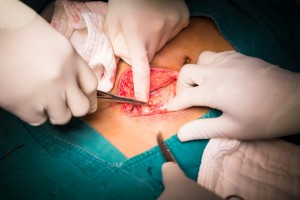
The common belief is that, if your appendix becomes inflamed and infected, it needs to come out now. As in like “emergency surgery” now.
It’s one of those situations where you would never think about doing a randomized study on it because it would be withholding life-saving medical treatment from those in the placebo group. Kind of like surgery to remove a tumor. Or like a clinical study to see if parachutes really do save lives.
It takes some forward thinking individuals to really challenge the status quo, and even once it has been challenged, it still takes years or sometimes decades before real change occurs. A perfect current example is arthroscopic knee surgery to go in and “clean out” the knee. Surgeons all thought it was a requirement to go in and clean everything out. At least until the VA did a placebo-controlled study on arthroscopic surgery of the knee and found that, after a year, there was no difference in the patients who had surgery and the patients who only thought they had surgery.
Years later, surgeons still refuse to change behaviors despite the strong evidence that they are not actually helping knee pain patients.
Dogma rules.
Back to your appendix. It has only been recently that scientists have determined that your appendix really does have a use. For pretty much ever, science believed that the appendix was a vestigial organ — and organ that we may have needed a million years ago but don’t need today. It is believed that the appendix basically acts as a storage organ for bacteria to repopulate the gut after a severe infection in the gut such as cholera or Salmonella.
Sounds like a good idea to me, especially considering how important the bacteria in your gut are for health.
This was, of course, before the time of heavy duty antibiotics that can pretty much wipe the slate of your gut clean of all the bacteria that we’d like to have growing there, leaving other bacteria that we do not want growing to thrive, like the Clostridia family (think C. diff infections).
But when your appendix becomes infected and inflamed, what options do you have? As mentioned, surgery is generally considered the only option. But, just like so many other procedures that we take for granted are the best options, the answer is not always so clear. In this particular study, researchers looked at what happened when uncomplicated acute appendicitis was treated with antibiotics instead of surgery in 530 patients with CT-confirmed appendicitis (this is not the time to bring up ultrasound versus radiation overload CT-scanning…). For reference, uncomplicated appendicitis refers to an infection of the appendix that does not involve a perforation or an abscess formation.
Patients were given either antibiotics (intravenous ertapenem @ 1 g/day for 3 days followed by 7 days of oral levofloxacin @ 500 mg once daily and metronidazole @ 500 mg 3 times per day) or had surgery to remove the appendix. Here’s what happened:
- In the antibiotic group, 70 patients (27.3%) still ended up undergoing an appendectomy within 1 year. The remaining 186 (72.7%) avoided surgery.
- Of the 70 patients in the antibiotic group who ended up having surgery, 58 (82.9%) had uncomplicated appendicitis, 7 (10.0%) had complicated acute appendicitis and 5 (7.1%) did not have appendicitis but received appendectomy for suspected recurrence.
- There were no abscesses or other major complications associated with having a delayed appendectomy.
In other words, darn near 3/4 of these patients did NOT need to have an organ they were born with removed. Granted, the rather large doses of antibiotics given in the non-surgical group presents its own set of problems, but when balanced against the removal of an organ that we don’t know all that much about, but deals with bacterial flora in the gut, I think I’d take the antibiotics. Besides–you’re still going to get a hefty antibiotic dosing if you had surgery anyway, so why not try to save the organ?
What’s nice to know is that, out of 256 patients who received the antibiotics, only 7 (2.7%) later presented with a more complicated infection. Those are pretty good odds.
One other thing to consider. What would have happened if the antibiotic group were followed up with high dose probiotics to combat the ill effects of the antibiotics? Personally, I think there’s a very large possibility that the 27.3% of patients who still needed surgery would be a much smaller group.
Do Gastroesophageal Reflux Disease Drugs Lead to Cancer?
For those who have educated themselves, the big fear of uncontrolled gastrointestinal reflux disease is that it could turn into esophageal cancer.
Because of this fear, people accept the idea that using drugs that block stomach acid is the right thing to do. After all, acid splashes up on the esophagus and damages the lining because it is not designed for that type of abuse. The damaged lining of the esophagus tries to heal and, over time, these cells break down from the chronic damage and become precancerous. This condition is referred to as Barrett’s esophagus and it is a strong risk factor for later development of esophageal cancer.
For many years now, mainstream medicine has approached this problem using drugs like Nexium and Prilosec with a tenacity of the papparazzi on Britney Spears. But blocking stomach acid, an absolutely critical component of digestion, wreaks havoc on your body’s ability to live healthy. Few drugs will create as many long-term problems as drugs to block stomach acid. With the exception of maybe antibiotics, which can take years to recover from, if ever.
I have certainly covered the dangers of blocking stomach acid in previous articles that can be read by clicking here, so I won’t go over them again. But let’s just sum it up by saying that it’s a baaaad idea. Of course, if you have a perforated ulcer and you are bleeding internally, than this class of drugs will be a lifesaver. But for the rest of you not lying in a hospital bed pasty white from anemia this is not a good idea.
So what does all this have to do with this particular article? In it, researchers took an interesting look at the bacteria in the upper gastrointestinal tract and the risk of developing esophageal or stomach cancer. More specifically, they looked at how much diversity there was in the bacteria found. Keep in mind that higher diversity is usually a good thing and a sign of a healthier bacterial flora. (Antibiotics decimate bacteria flora diversity, just so you know…) The bacterial diversity was then compared to known markers that increase the risk of development of esophageal and gastric cancer (serum pepsinogen I/pepsinogen II ratio or PGI/II for gastric cancer risk and esophageal squamous dysplasia or ESD for esophageal squamous cell carcinoma). Here’s what they found:
- Lower microbial diversity (number of bacterial genera per sample) was led to higher risks for both gastric and esophageal cancer.
Before you can realize just how important this is, you need to know that the use of drugs that block the production of stomach acid interfere with the normal balance of bacteria in the gut. When you block stomach acid, you’ve just destroyed your body’s ability to kill off certain bacteria that are NOT supposed to grow in the GI tract. This leads to a condition known as small bowel bacterial overgrowth–bacteria growing where it is not supposed to be growing.
In general, any drug that is going to interfere with the normal function of the GI tract is going to upset the delicate balance of bacteria residing there. This means that antibiotics and drugs that block acid production may very well contribute to the development of the very cancers that doctors are mistakenly using these classes of drugs to try to prevent. Talk about a backwards system.
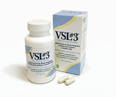
This also means that using heavy hitting probiotics (like VSL-3 high potency probiotics that I am a very big fan of for those patients who have really screwed up their systems with antibiotics) should be an important part of your cancer-prevention routine.
Long-term improvement in functional dyspepsia using hypnotherapy – (01-09-03)
Long-term improvement in functional dyspepsia using hypnotherapy
While much of mainstream medicine has forgotten the contribution that stress makes to GI complaints, this article strongly reminds us of the power of the mind. In this study, after one year, 90% of patients treated w/ meds and 84% of patients treated w/ supportive care resumed medication usage. This is in stark contrast to the big fat goosegg percentage for the hypnotherapy group. Chalk another up for the power of the mind.
Colonic fermentation influences lower esophageal sphincter function in reflux disease – (04-16-03)
Colonic fermentation influences lower esophageal sphincter function in reflux disease
I must admit that I had to do a little additional research on this one not just because it was new news, but also because production of short chain fatty acids by colonic flora is actually a therapeutic goal for many conditions. Although the mechanism remains unknown, this association is a consistent finding. This would suggest care be taken for patients with reflux disease and use of soluble fibers such as fructooligosaccarhides (FOS).
Gastroenterology Online
COX-2 inhibitors delay gastric wound healing in rats – (09-07-00)
COX-2 inhibitors delay gastric wound healing in rats
Evidence is starting to accumulate on the potential adverse effects of these new anti-inflammatories. This article suggests that, even though they lower your chances of getting an ulcer, COX-2 may hinder any ulcer that were already present from healing.
Journal of Gastroenterology and Hepatology 15 (7), 752-761 The present study demonstrated that cyclo-oxygenase-2 inhibitors delay gastric wound healing by suppressing expansion of the mucosal proliferative zone. These results provide evidence that cyclo-oxygenase-2 has an important role in gastric mucosal regeneration.
Fatty acids reduce movement of protein across intestinal epithelium – (08-10-00)
Fatty acids reduce movement of protein across intestinal epithelium
It is common knowledge that fish oil can help with Crohn’s disease. This article suggests a mechanism for this benefit. Certain good fats can stabilize the gastrointestinal tract’s ability to keep bad stuff out of the body.
Journal of Gastroenterology and Hepatology 15 (6), 626-631 Both w-3 and w-6 polyunsaturated fatty acids reduce transcellular, non-receptor-mediated permeation of proteins across differentiated Caco2 cell monolayers, without altering paracellular permeability. Alteration of intestinal barrier function should be considered as a possible mechanism of action of dietary polyunsaturated fatty acids.
Mercury poisoning associated with a Mexican beauty cream** There are many examples of certain “health products” actually being high in certain heavy metals which damage our bodies. Shark cartilage can be an excellent example.
wjm — Abstracts: Weldon et al. 173 (1): 15