Avoid Artificial Food Colors – ARE YOU SURE YOU WANT TO GIVE THAT BRILLIANTLY COLORED, CARCINOGENIC JUNK FOOD TO YOUR CHILD? Many are not aware that the coal tar dyes (you know, the ones with the label like FD&C #7…and why exactly are #1-6 no longer used??) are suspected carcinogens. I remember asking a patient to bring in her prescription prenatal vitamins for me to look at. Opening the bottle, I knew instantly that the color of the tablets was not of Mother Nature. I’m sure if I shut the lights off they would’ve glowed. I proceeded to ask the patient whether she actually cared what color her prenatal vitamins were. Of course, the answer was “no.” So why had her OB written a prescription for a vitamin (supposed to help) that had suspected cancer causing agents in them? Is this a time to be playing with “maybe” the dyes don’t cause cancer? And what about just about every other food we market to kids? Do you realize most pickles (except Bubbies, which are, arguably, the best pickles on the planet) have food coloring in them? Just how much do you have to process a cucumber to take the green out? Read labels. Always, always avoid artificial food colorings. Period. And for goodness’ sake–please keep them out of reach of children! Read More…
Dietary Protein
Migraine Doctor Mesa AZ Residents Trust
MIGRAINE SUFFERERS BEWARE NEW PREVENTATIVE APPROACH. You’ve all read me ranting and raving about how we are completely missing the boat on treatment of migraines. That migraineuers have an increased risk of heart disease and stroke because the problem is NOT in the brain, but it is in the body. It is the body screaming that something is wrong and sufferers bodies are using the brain to get the owner’s attention. Lifestyle needs to be fixed. Getting out processed foods, increasing intake of healthier fats, exercise, avoidance of as many chemicals as possible, stress management. This is the approach that is required. It’s NOT optional! If this approach is not taken, the migraine patient is going to die an early death. It’s that serious. The problem is that mainstream medicine still thinks treatment “success” is gauged by getting rid of the headache via medication. Now it’s getting worse. Beta blockers are well known to increase the risk of stroke and diabetes, so we’re just going to try to use them as “prevention” in patients suffering with migraines. UGH! Read More…
Mesa AZ Chiropractor Explains Why Fat Isn’t a Bad Thing
Fat Isn’t a Bad Thing
BUT I THOUGHT “FAT” WAS FATTENING?? Man did the 90’s screw us all up. That darn food pyramid was one of the worst things to happen to our health after the Value Meal. Because of this decade, we began to associate “fat” with fattening. This is just not true, and we are having a hard time undoing the deep seated belief that fat is bad. Certainly there are good and bad fats, but so long as we stick to the good ones, everything will be just dandy. The problem we are now seeing is that there is so much research out there supporting the benefits of omega-3 fatty acids in multiple chronic diseases. Doesn’t really sound like a problem, until we realize that many of these conditions would not even exist if we ate more foods that contain these fats in the first place! That means wild caught fish (NO FARM RAISED), wild game, omega-3 eggs, flax seed, nuts, chia, salvia. Increasing our intake of these fats while eliminating / reducing intake of omega-6 fats like cottonseed (BAD!!), corn, soybean, safflower and sunflower oils is always a good thing. Read More…
High Protein, Gut
LOSING WEIGHT THIS WAY MAY DAMAGE THE COLON? The high protein / low carb (aka Atkin’s diet) has never been a good idea with only a few exceptions. In general, this type of diet will kill you in the long run, and this particular study suggests that the route of deceasement (Word is suggesting that “deceasement” isn’t a word, but it seems to fit..) will be colon cancer. Even just 4 weeks of this type of diet was enough to lower the amount of protective compounds in the colon and increase the number of hazardous compounds. The likely problem here is the high levels of animal based saturated fat combined with the low levels of both soluble and insoluble fiber from lack of whole grains, beans and certain fruits and veggies. Read More…
Wrist Pain Chiropractor Mesa AZ :
Catecholamine-Producing Cells in the Synovial Tissue During Arthritis
CAN STRESS DESTROY OUR JOINTS? Catecholamines are hormones released by the adrenal glands, the most recognized of which is adrenaline. Looking at the article, it suggests that catecholamines might have some pretty potent anti-inflammatory effects and may always be at work controlling inflammation within a joint. However, in the initial stages of joint degeneration there is a loss of the signals from the sympathetic (fight or flight) nervous system and the body tries to adapt local production of catecholamines in the joint itself. Basically, the nerves fail and then the cells in the joint themselves try to pick up the slack. This likely fails with time and leads to exhaustion of these local cells. To me, it would suggest that, once you’re late in the process of arthritis, nothing’s likely to help. BUT, early on, adrenal support might be a very good thing. This also suggests that stress, which depletes the adrenal glands, may directly affect the process of osteoarthritis. Could adrenal support supplements help in the early stages of arthritis?? Good question… Read More…
Want to Add More Muscle Mass? Use This Simple Trick Before Bed

Admit it. You’d like to be built just a little more like the Rock or Jennifer Aniston, especially if it wouldn’t take much work.
Hate to disappoint you, but it’s not going to be that easy. But every little bit helps. And exercise is going to have to be a part of it. You can’t hook up some cheesy As-Seen-On-TV electronic gadgets to your abs while watching the Walking Dead and expect to make it to the cast of Magic Mike IV. And there certainly isn’t any fat burning supplement you can buy at GNC that’s going to work magic either.
Dietary choices and exercise have to be a part of the equation. Both resistance and aerobic (although I have pointed out in prior articles that resistance training IS aerobic training).
If you browse the shelves of your local healthfood store (or worse, a national chain supplement store) you’ll see all kinds of products geared towards weight lifting and bodybuilding. Quite frankly, most of these are junk products promoted through a mutation of the medical research.
Take the “NO-______” products (fill in the blank…explode, explosion, burst, etc…) that are loaded with the amino acid arginine. Yes, arginine is a precursor to nitric oxide that helps to open up blood vessels. This led to the mistaken idea that putting arginine into an awful tasting drink mix will open up blood flow to the muscles and allow a stronger set when lifting. And these products aren’t cheap.
Of course, for many Americans, the most important thing is to actually HAVE a workout. But once you’re past that hurdle, there really are some solid approaches that can help you improve the outcomes from your workouts. Probably one of the more tried and true is the use of creatine. Creatine is used by the muscles to make a short-term energy source called phosphocreatine. More phosphocreatine leads to a better short term energy boost, allowing for that extra rep or even an extra set.
Another popular approach is the use of protein supplements. The list of available products is quite long and varied and can be purchased anywhere from the aforementioned health food store to Walmart and Costco. Unfotunately, many of these products are junk and loaded with artificial sweeteners and should be avoided by anyone serious about getting in shape. In reality, you can likely get just as good of a boost of amino acids from eating a chicken breast or bison burger.
And maybe an even more important question should be the “when” of taking protein powders. Since most of our muscle recovery and healing occurs while we are sleeping, it does seem like this might be a good time to make sure our bodies have a decent supply of amino acids to work with. Despite this, most gym-goers seem to indulge in protein shake homage either in the morning or immediately after a workout.
If this fits you, it’s possible that this particular study may change your mind. In it, researchers took 44 young men (21-23 years old) in a progressive, 12-week resistance exercise training program and split them into two groups. One group took a protein supplement with 27.5 g of protein, 15 g of carbohydrate, and 0.1 g of fat every night before going to bed. The other group received a non-calorie placebo drink.
Outcomes were assessed using a whole-body (dual-energy X-ray absorptiometry), limb (computed tomography scan), and muscle fiber (muscle biopsy specimen) level before and after exercise training. Strength was assessed using a 1-repetition maximum strength testing. Here’s what they found:
- Muscle strength increased 26% more in the protein-supplemented group (74.5 pounds versus 59.0 pounds).
- The size of the quadriceps muscle (cross-sectional area) increased 75% more in the protein group (8.4 cm2 vs. 4.8 cm2).
- There was a 129% greater increase in type II (fast-twitch) muscle fiber size in the protein group (2319 μm2 versus 1017 μm2).
I don’t know about you, but getting a pretty significant boost in outcomes from the SAME workout sure sounds like a good thing to me. But remember, this group was involved in a 3 month progressive exercise routine to go along with the protein supplement. That being said, here are some decent options for protein powders that you can find on Amazon (I’m somewhat partial to plant-based proteins):
- Orgain organic plant based protein powder
- Garden of Life RAW organic protein (this brand had some problems with heavy metals last year, but this seems to have been resolved)
- Vega sport performance
- Or, if you happened to read my prior article on the powerful effects of glutamine on your gut bacteria, you may be able to kill two birds with one stone by trying a glutamine powder.
Let me know if this works for you…
Adding This Simple Snack Can Extend Your Life
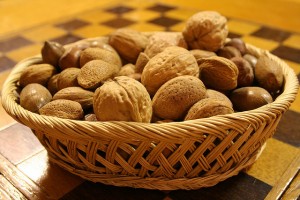
Sure–you know that avoiding smoking, exercising regularly and eating lots of veggies and fruits will help you live longer. But can one simple snack extend your life?
Turns out that if the snack consists of different types of nuts the answer is probably a solid yes. The benefits of nuts on our long-term health is well-documented. They protect your brain, they protect against diabetes and they strongly protect your heart. And the benefits are not isolated to a single type of nut–it seems like every time researchers look at a particular type of nut it shows a protective effect on whatever chronic disease that happens to be in the study.
However, there are a few very important factoids to take into account.
First, raw nuts are the best option. Absolutely, positively NO added oils. That means cottonseed oil, peanut oil and any other oil manufacturers try to stuff into the nut container. These added oils will completely counteract the benefits of the nuts. Personally, I buy bulk bags of almonds, pecans and walnuts from Costco because their prices on these 3 types of nuts is the lowest you can find. Then, when Sprouts has other types of nuts on sale, like cashews or hazelnuts, I add them to the mix. If I’m feeling really rich, I’ll splurge on a pound of macadamia nuts.
Next, I really don’t concern myself over added salt. The research linking low salt diets and chronic disease is very weak and likely is more due to the presence of high levels of sodium (and low potassium) in processed foods. Personally, however, I prefer to match my nuts with dark chocolate drops instead of salt to spruce up the experience.
Either way, the addition of nuts to your daily routine is a powerful one. But just how powerful? This particular study asked this very question. It looked at 17,184 residents of Spain over the course of 5 years to see if nut consumption had any effect on the participants risk of dying from any cause (all-cause mortality). Here’s what they found:
- Those participants who ate nuts at least twice per week had a 56% lower risk of dying when compared to non-nut consumers.
These are some pretty serious numbers.
This powerful effect of nuts is likely due to several factors present within nuts. First, they help you avoid snacking on other, less healthy, snacks. The fat present in nuts (polyunsaturated and monunsaturated) has consistently shown to protect your heart from damage. Lastly, they are an excellent source of gamma tocopherol–the powerhouse form of vitamin E that has been shown again and again to protect the brain and the heart.
Either way, if you are not already snacking on nuts during a typical week, it’s definitely time to start.
Dietary Protein and Weight Reduction – (10-08-01)
Dietary Protein and Weight Reduction
It’s so nice to know that the American Heart Association is so current and up to date with dietary recommendations. All sarcasm aside at how slow the AHA is to adopt any position that may be considered new or different, this article really does highlight some of the dangers of a high protein diet.
Circulation — Abstracts: St. Jeor et al. 104 (15): 1869