• Skip to main content
  • Skip to primary sidebar
  • Skip to footer

LifeCare Chiropractic

The Best Chiropractic Care in Mesa, Arizona

  • Home
  • About
    • Why Lifecare?
    • About Dr. Bogash
    • Team Members
  • Common Conditions
    • Wrist Pain/Carpal tunnel syndrome
    • Elbow Pain/Epicondylitis
    • Headaches
    • Knee Pain and Knee Injuries
    • Low Back Pain
    • Shoulder Pain and Rotator Cuff Problems
  • Additional Services
  • Testimonials
  • Blog
  • E-Books
  • Contact

whole grains

Is That Wonder Bread with Whole Grains Good for Me?

October 16, 2015 by James Bogash

Ok, so this is the perfect example of marketing taking a good idea and messing it all completely up.

Refined carbs, as I have written about many times in the past, are when you take the whole grain and lop off about 2/3 of the grain, removing 90% of the nutrients and leaving all the calories.  So, while “enriched wheat flour” sounds like it might be a healthy thing (isn’t “enriched” a good thing??), if it is on the label, it’s off the list.

Just because something says “made with whole grains” on the front of the package does NOT mean it’s now a health food because you added a gram or two of whole grains into a pound of crap.

In this particular article, to further reinforce the idea that whole grains are the only option, researchers found that whole grains actually lowered levels of hsCRP, a marker of inflammation in the body.  Less inflammation = less chronic disease.  Pretty simple equation.
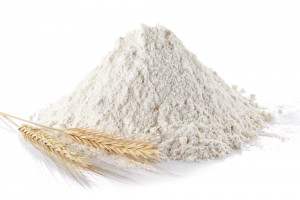
Filed Under: Inflammation Tagged With: CRP, hsCRP, inflammation, whole grains

But I Avoid White Flour and Sugar–Isn’t That Enough?

September 26, 2015 by James Bogash

I can honestly say that it is very rare that patients truly understand what a refined carb is and how bad it is for health.

Which is disturbing considering that refined carbs are known to increase the risk of pretty much every chronic disease known to man.  Regardless of what color it is, if a product contains enriched wheat flour, sugar or high-fructose corn syrup (HFCS) it is REFINED and needs to be avoided.

You HAVE to read the ingredients label.  It is sad that many “diet” websites that provide nutritional information do not actually list the ingredients!!

In this particular study, women eating a higher glycemic index diet (which would mean her diet is much higher in refined carbs instead of whole grains) had almost a 300% higher risk of dying from some type of inflammatory disease.  And yet, society as a whole is not being educated on what a “refined carb” is.  Abhorable.

Filed Under: Anti-Aging, Dietary Fiber Tagged With: enriched wheat flour, high-fructose corn syrup, inflammation, refined carbohydrates, whole grains

To Wheat or Not to Wheat-THAT is the Question

March 11, 2015 by James Bogash

whole grains and inflammation
baibaz/Dollar Photo Club

Over the decades one macronutrient or other has gotten beat up: fats, carbs, proteins. Sometimes it’s components within these food groups: eggs, red meat, potato chips, etc…

But rarely do we pay attention to anything beyond the hype.  Most of the controversy over foods that have been demonized has been taken out of context.  Except potato chips and fast food.  They are evil.

But other things, like fats as an entire food nutrient, were completely taken out of context and as a result we lost an entire decade of good fats from our diets.  Proteins were heavily promoted with the Atkin’s diet without any discussion about plant versus animal-based proteins.  And carbs have always taken a beating, without any real discussion about whole grain versus refined junk.

You can’t go a day without hearing about gluten-this or gluten-free that.  I’ve seen products labeled as “gluten-free” that would never have gluten in them anyway, purely for marketing.  But this is for good reason because there are clear links between gluten in foods and conditions like migraines, seizures and skin conditions, just to name a few.

Do I think that the whole “gluten-free” craze has been overblown?  Yes.  Do I think that there is a good sized chunk of the population who should live gluten free?  Yes.  Do I think that the rest of us should live a gluten-minimal diet?  Yes again.

Buried within the research and hype on gluten-free is the fact that we eat processed junk.  There is no doubt that enriched wheat flour is very bad for our health and should be avoided.  How much of the benefits of going gluten free are actually from avoiding enriched wheat flour?

Let’s face it–most of the carbohydrates we eat today are processed.  Much as I’ve tried through diligently scouring the aisles, the mainstream grocery stores do NOT carry whole grain bread loaves.  Sure, the label may SAY whole grain, but a quick peak at the ingredients will show you that the whole grains are located somewhere after sodium benzoate on the list.  Hamburger and hot dog buns are even worse.

ANY enriched product should be avoided like the plague (which, if you actually survive Yersina pestis your immune system will be stronger for it.  Not so with refined carbs…).  And, in general, keeping your carb intake lowered is probably a good idea.  But the addition of carbs in fruits and vegetables and whole grains is still consistent with a healthy lifestyle.

Which brings us to this particular study.  In it, researchers looked at 80 overweight or obese patients with a low intake of fruit and vegetables and sedentary lifestyle (great combination, I might add…can’t imagine how they found any of this type of subject) to see how whole grain intake or refined grain intake impacted a bunch of different markers of health.  Here’s what they found after 4-8 weeks of the study:

  1. There was a 4-fold increase in the blood levels of the polyphenol dihydroferulic acid (aka DHFA-a very potent antioxidant that has been linked to lowered rates of breast cancer).
  2. There was a 2-fold increase in the related compound ferulic acid (FA) showing up in the stool.
  3.  By 8 weeks, the ferulic acids levels had doubled in the urine.
  4. After 8 weeks there was a reduction in the high-powered inflammatory molecule tumor necrosis factor-α (TNF-α).
  5. After 4 weeks there was an increase in the levels of interleukin 10 (IL-10 is a molecule that helps to balance the immune system).
  6. In the whole grain group, those who had higher levels of fecal FA had higher levels the bacteria families Bacteroidetes and Firmicutes (consistent with healthier outcomes) but reduced levels of the dangerous bacterial family Clostridium.
  7. In addition, as the TNF-α levels went down there were increased levels of Bacteroides and Lactobacillus.

Anyone who falls into the “grains are evil and cause inflammation and should therefore be banned from the diet” camp would have a hard time arguing that the changes that occurred in this study with whole grain intake were a bad thing.

But again, whole grains should be just a PART of a comprehensive dietary program that is conscientiously chosen to lower your risk of chronic disease and help you live life to the fullest.  This means that you have to read the labels and can not rely on the games that the marketing department plays with you on the front of your bag of bread.


Filed Under: Dietary Fiber, Inflammation Tagged With: dietary fiber, ferulic acid, inflammation, TNF-alpha, whole grains

Whole Grains and Diabetes Prevention: Are You Reading the Label?

January 25, 2013 by James Bogash

You don’t label shop your grains. Your buying choice comes from the front of the food package. But is this pattern missing your whole grains to prevent  diabetes?

It is interesting to note that our national recommendations are NOT to avoid refined carbohydrates.  Rather, they suggest we should eat more whole grains.  I am generally not a conspiracy minded person, but clearly money is the only reason these recommendations are written as such.  Before I get into this, you need to fully understand the difference between a whole grain and a refined carbohydrate.

The whole grain contains the germ (the bulk of the protective nutrients), endosperm (the calories) and the bran (the fiber). To extend shelf life and increase palatability to the oblivious American public, the germ and bran is lopped off and we’re left with the endosperm–the calories minus some 90% of the phytonutrients that where present in the whole grain. The result is a devastating calorie rich/phytonutrient poor staple consumed by the vast majority of Americans. So “enriched wheat flour,” “sugar” and “high fructose corn syrup” all fall into this category.

It is rare that someone truly understands the distinctions between the whole grain and refined carbohydrate, but this understanding is critical to health.  Refined carbohydrates have been linked to pretty much every chronic disease, while whole grains generally protect.  Opposite ends of the spectrum.  Despite this clear difference and the very clear research that states that refined carbohydrates are pretty much evil, our national recommendations still do not tell us to avoid them.

If the powers that be (namely the USDA and the Surgeon General) stood up and declared that refined carbohydrates should be avoided completely, Nabisco, Kraft, Quaker, Mars and Nabisco would likely go out of business.  They really don’t offer any products that do not generate some degree of harm to your health.

Since we can’t have that happen, you are instead told to eat more whole grains.  So these companies can make the same crappy products and toss in some whole grains after the “contains less then 2% of…” part of the label.  This allows the companies to slap the “made with whole grains” on the front of the package.  You, as the unwary customer who does not read the ingredients label thinks that Wonder Bread is now a health food because it is “made with whole grains.”

The analogy I usually give is the guy at the Skittles factory over a vat of product with an eyedropper of fruit juice.  After the single drop, they proudly proclaim that Skittles are made with real fruit juice and put it on the front of the label.  But does any parent look at the front of the Skittles package and think, “Made with whole grains!  I’ve GOT to give this to my kids for their health?”

All of this ranting brings me to this particular article.  Researchers looked at whether a higher intake of whole grains led to a lower risk of developing prediabetes.

Overall, those with the highest intake of whole grains had a 34% lower risk of progressing to prediabetes (Tweet this).  This level of whole grain intake can only come by replacing refined carbohydrates with whole grains.

The bottom line is, if you are not reading ingredients labels and instead focus exclusively on carbohydrate content in the “nutrition facts” grid, you are missing the most important aspect of what you are eating.

Do you read the label?  Do you think that you should, in the best interests of your family’s health, go to the fridge and pantry right now and throw out all the food items with enriched wheat flour and high fructose corn syrup?

Filed Under: Diabetes (Type 2), Prediabetes Tagged With: diabetes prevention, enriched wheat flour, high-fructose corn syrup, prediabetes, refined grains, whole grains

WHOLE GRAINS AND PROSTATE CANCER: NEW RESEARCH

December 12, 2011 by James Bogash

The protective effect of whole grains on many chronic diseases is well established.  This is the opposite from refined carbs, which have shown an increase in pretty much every chronic disease we can experience.  But how do whole grains protect against prostate cancer?

From most patient’s standpoint, it does not really matter “why” whole grains protect against prostate cancer, only that it does.  However, for those of us with more inquisitive minds, this research study provides some neat insights.  By having a greater understanding of the mechanism by which whole grains protect against prostate cancer, we can begin to understand why some patients may derive greater protection than others.  This same understanding can help explain why Asian women consuming soy have a much lower risk of breast cancer than American women consuming soy.  Actually, one of the underlying reasons is the same between whole grains and prostate cancer in men and soy and breast cancer in women.

This study followed the metabolic fate of whole grain (rye) vs a refined carbohydrate product.  The whole grain product showed an increase in 5 compounds:  3-hydroxybutyric acid, acetone, betaine, N,N-dimethylglycine, and dimethyl sulfone (MSM).  These are all beneficial compounds on overall health, and, as the authors suggest, this indicates a favorable shift in the metabolism of cells that may be one of the reasons these compounds can be so protective of many types of cancer.


Filed Under: Prostate Cancer Tagged With: prostate cancer, whole grains

WHY NOT ALL FIBER IS CREATED THE SAME

July 18, 2011 by James Bogash

As devastating as it is for human health, few I have come across truly understand the difference between a whole grain or refined carbohydrate.  The typical answer include white sugars and flours.  The real answer is far more expansive. 

The whole grain contains the germ (the bulk of the protective nutrients), endosperm (the calories) and the bran (the fiber).  To extend shelf life and increase palatability to the oblivious American public, the germ and bran is lopped off and we’re left with the endosperm–the calories minus some 90% of the phytonutrients that where present in the whole grain.  The result is a devastating calorie rich/phytonutrient poor staple consumed by the vast majority of Americans.  So “enriched wheat flour,” “sugar” and “high fructose corn syrup” all fall into this category.

 In comes the fiber story.  There is no doubt that fiber, both soluble (able to be digested by the bacteria in our guts to beneficial compounds) and insoluble (“roughage”-not digestible at all) are good for our gut.  This study just expands on this, finding that fiber’s benefits extend to lowering pretty much every other cause of death.

But do not fall into the opposite end of the processed grains spectrum.  Many products like fiber supplements and many of the big name breakfast cereals (Quaker, Post, Kellogg’s, etc…) contain only the bran.  This leaves out the heavy phytonutrient content of the germ that is also devoid in the refined carbs like enriched wheat flour.

I have no doubt that the benefits of whole grains and dietary fiber are derived not merely from the fiber content, but rather the entire blend of the grain, nut, fruit, vegetable or bean.  Remember this next time you read an ingredient label.  “Fiber” does NOT appear on the ingredient label of a whole grain.

http://archinte.ama-assn.org/cgi/content/abstract/171/12/1061

Filed Under: Colon / Colorectal Cancer, Digestive Complaints Tagged With: all cause mortality, colon / colorectal cancer, fiber, refined carbs, whole grains

Primary Sidebar

Patient Quick Guide

Schedule An Appointment
Contact Our Office
Download Patient Forms

Categories

Chiropractic Mesa Arizona

Arthritis Chiropractor Mesa AZ
Graston Technique Mesa AZ
Back Pain Chiropractor Mesa AZ
Back Pain Doctor Mesa AZ
Wrist Pain Chiropractor Mesa AZ
Rotator Cuff Chiropractor Mesa AZ
Shoulder Pain Chiropractor Mesa AZ
Knee Pain chiropractor Mesa AZ
Manipulation Under Anesthesia In Mesa AZ
Headache Chiropractor Mesa AZ
Chiropractic Mesa AZ
Stem Cell Therapy Mesa AZ
Regenerative Medicine Mesa AZ
Massage Therapist Mesa AZ
Shoulder Pain Doctor Mesa AZ
PRP Therapy Mesa AZ
Chiropractic Mesa AZ
Who Is The Top Chiropractor In Mesa AZ?
Knee Injury Doctor Mesa AZ?

Footer

Resources

Site Map
Disclosure
Additional Resources

Best Massage Therapist Mesa AZ
Arthritis Doctor Mesa AZ
Chiropractic Mesa AZ
Back Pain Doctor Mesa AZ
Rotator Cuff Doctor Mesa AZ
Chiropractor Mesa AZ
Massage Therapist Mesa AZ
PRP Therapy Mesa AZ
Knee Pain Doctor Mesa AZ
Stem Cell Therapy Mesa AZ
Headache Doctor Mesa AZ
Shoulder Pain Doctor Mesa AZ

Office

Lifecare Chiropractic
1830 S. Alma School Rd, Ste 135
Mesa, AZ 85210
(480)-839-2273
Also Serving Tempe, AZ

Get Directions

  • Home
  • About
  • Common Conditions
  • Additional Services
  • Testimonials
  • Blog
  • E-Books
  • Contact

Copyright © 2026 · LifeCare Chiropractic · All Rights Reserved.