• Skip to main content
  • Skip to primary sidebar
  • Skip to footer

LifeCare Chiropractic

The Best Chiropractic Care in Mesa, Arizona

  • Home
  • About
    • Why Lifecare?
    • About Dr. Bogash
    • Team Members
  • Common Conditions
    • Wrist Pain/Carpal tunnel syndrome
    • Elbow Pain/Epicondylitis
    • Headaches
    • Knee Pain and Knee Injuries
    • Low Back Pain
    • Shoulder Pain and Rotator Cuff Problems
  • Additional Services
  • Testimonials
  • Blog
  • E-Books
  • Contact

Chiropractic Care

Cervical Disc Bulge: Do I Need Surgery?

April 9, 2014 by James Bogash

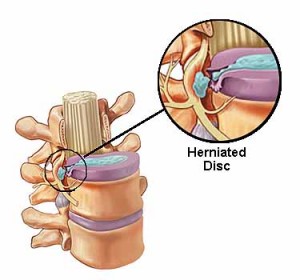
Disc bulge in neck
Disc bulges usually do not need surgery

Now, before I state that our office does very well with disc bulges in the neck, I need to preface this with the fact that we’ve had 2 patients in the past 6 months end up in surgery.

That being said, the vast majority of patients who have cervical disc bulges accompanied by pain in the arm due to that disc bulge that are seen in our office recover nicely. Because back and leg pain are more widely publicized, there is more knowledge about sciatica from back pain; patients frequently come in stating that his or her “Atica” or “schizophrenia” is flared up. Most of these cases are not actually true sciatica (despite what he or she has been told) but are either local pain (no leg pain) or a referred pain from the hip or sacroiliac joint.

Pain in the arm originating from the neck is also very common, but less patients who walk through the door seem to be aware of this relationship. The typical patterns of disc pain in the arm or leg follow a very typical pattern called dermatomes. The problem is that there are many other things that also cause pain into the arm such as the rotator cuff, problems in the forearm such as carpal tunnel and problems stemming from the muscles around the neck such as the anterior scalene or pec minor.

Because there are so many causes of pain into the arm, it can be challenging to nail down exactly what may be causing your problem. For me, sometimes the answer isn’t clear on the first visit or two, but rather, takes some time to clarify exactly what’s causing the pain. Disc bulges in the neck causing pain in the arm can look an awful lot like a rotator cuff referral into the arm. If I work on the rotator cuff for a visit or two and nothing changes, we shift gears towards a treatment of a disc bulge.

Treatment of a cervical disc bulge in our office involves soft tissue work (Graston, stretching, fascial work), chiropractic adjusting and traction. I’m a big fan of home traction devices as well that can allow you to treat the disc bulge several times a day (we recommend this one from Amazon: Instapark® Cervical Neck Traction).

With this approach, the vast majority of patients respond well. This particular study supports this position. In it, chiropractic researchers looked at a group of studies to get a better idea of how long it takes someone to recover from a cervical disc herniation. Here’s what they found:

  • On the down side, they found that complete recovery could take as long as 24-36 months.
  • Luckily, patients were already noting substantial improvements within the first 4-6 months.
  • Overall 83% of patients resolved completely.
  • Patients with a workers’ compensation claim appeared to have a poorer prognosis.

Before you start getting depressed about the 4-6 months timeframe, in our office, if we are going to be able to help a disc pain patient, improvement starts within a few visits and usually progresses forward from there. The use of the traction device helps.

As for the worker’s compensation portion of the equation, I wonder if the poorer prognosis has to do with less of these patients making it into chiropractic offices in a timely matter. Many primary care doctors don’t consider chiropractic for disc problems and will usually use medications and pain injections first.

Filed Under: Chiropractic Care, Disc Problems, Neck Pain Tagged With: cervical disc bulge, chiropractic, disc herniation, manipulation, neck pain

Do You Limit Activities Because of Low Back Pain?

April 3, 2014 by James Bogash

One of the concerns from new patients in for chiropractic care centers around movements and activities that could make the condition worse.

Quite frankly, it’s rare that the typical low back pain patient will be made worse in the long run by activities that they may do, provided that the activity wouldn’t produce low back pain in a patient who does not have low back pain. In other words, lifting and twisting while carrying a 100 pound object is not a good idea whether you have low back pain or never have in your life.

A large chunk of patients who come in with a new episode of low back pain don’t recall doing anything to bring about the episode. Sometimes the aggravating event is not as obvious (new shoes, side sleeping without a pillow between the knees, new chair, etc…) and sometimes, the patient is in my office, not because of what they did, but because of what they are NOT doing. As in moving around.

It is very common for the mere act of being a couch potato to create low back pain. So, when the new patient comes into my office and is concerned that movement may make his or her back pain worse, I reassure them that movement is a good thing. Sacroiliac conditions, for example, do way better when the patient is moving around and keeping the joint “lubricated.”

A frustrating aspect of practice for me is how often chronic low back pain patients, or those who have a tendency to “throw out” their backs, have been told to “take it easy” and limit activity by an orthopedic doctor, family practice doctor, physical therapist or even my own colleagues.

Fear of movement. It’s never a good thing.

This particular study drives this point home. Researchers looked across 17 clinical studies to see how much of an effect fear avoidance behaviors (as measured by the Fear Avoidance Beliefs Questionnaire (FABQ) or the Tampa Scale of Kinesiophobia (TSK)) had on whether or not treatment was effective. Here’s what they found:

• In patients who had up to 6 months’ duration of low back pain, high fear avoidance beliefs were associated with more pain and / or disability and a lower likelihood of returning to work.
• However, if patients were able to show a decrease in fear avoidance beliefs during treatment there was less pain and disability.
• Interventions that addressed fear avoidance beliefs led to better outcomes.
• The results were not as strong in chronic patients.

I had recently been asked to participate in a chronic pain panel for the Arizona Corporation Commission. This involved looking at case studies of chronic pain patients to see how guidelines could be effectively applied for treatment. However, I had such a hard time being non-biased looking at these studies because so many of the cases of chronic pain are actually failed cases of acute pain.

And in Arizona, very few patients ever make it into chiropractic offices in the early stages, when manipulation can be the most powerful. Most end up medicated and / or put into physical therapy. Considering that the cost of going into physical therapy treatment for non-surgical spinal conditions first here in Arizona is almost TRIPLE the cost of chiropractic care, it may be that fear avoidance behaviors are addressed intuitively by chiropractors, lowering the chance of a condition becoming chronic.

Of course, this also means that, should you come across a chiropractor who uses fear (i.e. subluxation kills and without adjusting your nervous system can’t flow) to sell you on more care, it may be time to work on your short burst activity and run the other way.

Filed Under: Chiropractic Care, Low Back Pain Tagged With: back pain. chiropractic care, fear avoidance, low back pain, manipulation

Physical Therapy or Manipulation for Chronic Low Back Pain?

April 1, 2014 by James Bogash

The answer to chronic low back pain is NOT nothing. Choices for care include chiropractic manipulation or physical therapy.

I know that it seems intuitive that rehab exercises for chronic low back pain would be a good idea. However, I can’t say that I’ve ever been completely on board with this idea. While not every case of chronic low back pain does well in our office, we do pretty darn well with the vast majority of cases that come through. From years of experience, I firmly believe that advanced soft tissue techniques in competent physicians’ hands combined with manipulation is one of the strongest tools for management of chronic low back pain.

Despite this, there is a belief that patients with chronic low back pain should go to physical therapy to get rehab exercises for his or her low back pain and many primary care physicians still continue to refer patients out for physical therapy.

Always happy to find out that my practice philosophy is not shared by my office alone, I present this particular article, looking at the outcomes of 12 weeks of treatment in 199 patients with chronic low back pain (defined as more than 6 weeks’ duration) using exercise versus manipulation.

Specifically, exercised consisted of high-dose, supervised low-tech trunk exercise. As a way of measuring outcomes, researchers looked at four motion parameters in the sagittal plane and two in the horizontal plane as well as the jerk index parameter.

The group that received manipulation changed in all of the parameters measured. In addition, the manipulation group had a smoother motion pattern (reduced jerk index) at the end of the study. The exercise group, however, only improved in half of the parameters measured and there were no improvements in the jerk index.

Based on this study, a patient with chronic low back pain would be much better off seeing a provider who can do spinal manipulation. Adding the aforementioned soft tissue techniques to manipulation gives you an even greater chance of finding relief where nothing else has helped.

Filed Under: Chiropractic Care, Low Back Pain Tagged With: chiropractic, chronic low back pain, exercises for low back pain, manipulation, rehab

Car Accidents and Mild Traumatic Brain Injury; Is It Real?

March 27, 2014 by James Bogash

If you’re an insurance adjustor reading this, you KNOW that patients involved in a car accident are faking it.

Those of you out there who have actually been on the receiving end of a whiplash injury would beg to differ. Sure, maybe not at the scene of the accident, but by the next morning you’re feeling it. Owning a chiropractic office, we see patients who have been involved in car accidents all the time. Most recover on a very straightforward trajectory, especially when we apply soft tissue treatment along with manipulative therapy.

Some, however, refuse to heal at a rate that is expected. Damn patients. If only we handed out the pamphlets beforehand so these patients would know how fast they are supposed to heal. We are currently dealing with a case right now that continued FAR longer than we had thought originally (care extended beyond a year—NOT at all a usual length of treatment in our office). The insurance people who reviewed the case stated that she should’ve been all better by 12 weeks.

She definitely should’ve read the pamphlet.

The real world, however, does not always follow the guidelines we make for it. And sometimes, we later find out that the guidelines weren’t really all that representative of what happens when later research informs us. The problem here is that these guidelines change with the speed of a snail on 1,000 mg of gabapentin TID.

This particular study has so many interesting aspects to it that I’m not really sure where to begin. But, since the article really focuses on mild traumatic brain injury, maybe that’s a good place to start. For those of you unlucky ones who have never experienced MTBI follow head trauma, either in sports or in a car accident, let me enlighten you to just a few of the symptoms:

  • Fatigue
  • Irritability / behavioral changes
  • Inability to focus / fuzzy thinking
  • Headaches
  • Dizziness

In a nutshell, it sucks. Worse, if you are involved in a relationship, have a job or a life, it begins to disrupt all of these by frustrating those around you.

When this happens to my patients, the best answer I usually have for them is that it just takes time to recover. In some it’s weeks, in some up to a year. When symptoms are more severe, there are certain supplements that may help protect the brain and allow it to heal faster. These can include CoQ10, vitamin E and magnesium threonate.

In this research study of 7170 adult residents injured in car accidents from Saskatchewan, Canada (for those of you who ever wondered where Bigfoot is hiding out—it’s here), 1716 met the criteria for MTBI. For those of you good with math, that’s 24%. A pretty hefty number and far higher than I would ever have expected. Here are some details of the MTBI sufferers:

  • Most common in the 18- to 23-year-old group.
  • Most were not hospitalized (73%).
  • Loss of consciousness in 28% and 23% reported posttraumatic amnesia.
  • Average time to recovery was 100 days, or a little over 3 months.
  • 23% did not recover by 1 year.

Looking at what we have here, we can make a quick assessment that a very large chunk of people involved in car accidents end up with criteria for MTBI, yet a quick screen based on loss of consciousness or memory would’ve missed a huge chunk of those suffering MTBI. After seeing this information I KNOW I have missed patients over the years by not looking for MTBI because there was no overt signs of head trauma reported or a loss of consciousness or memory.

Now, before you walk away already amazed at the information in this study, there’s more (and it’s NOT free shipping). The researchers were able to identify factors associated with slower than expected recovery from MTBI:

  • Age above 50 years
  • Having less than a high school education
  • Having poor expectations for recovery
  • Depressive symptoms
  • Having arm numbness
  • Having hearing problems
  • Having headaches (good thing no one has a headache after a car accident)
  • Having low back pain
  • Having thoracic back pain
  • Surprisingly, loss of consciousness and posttraumatic amnesia were NOT associated with recovery.

After reading through this article and thinking back to the aforementioned patient, she absolutely, positively met many of the symptoms for MTBI as well as experienced 5 of the above factors associated with a delayed recovery. Is it possible that I could’ve done something different early on to change the outcome trajectory? It’s not exactly clear, but maybe I could’ve expected a more realistic outcome and burned the pamphlets.

Filed Under: Chiropractic Care, Migraine, Neck Pain, Whiplash Tagged With: auto accident, car accident MTBI, headache after car accident, mild traumatic brain injury

Dangers of Tylenol Use in Pregnancy; Use Chiropractic Instead

March 11, 2014 by James Bogash

Pregnant women are told to stay aware from steroids and ibuprofen because it can have direct effects on the developing baby, so OBs recommend Tylenol. This is a bad idea.

For starters, it has been known for a long time now that acetaminophen is linked to asthma in adults. Then someone asked if acetaminophen use in pregnancy could contribute to the development of asthma in the child after he or she is born. Turns out that the answer here is also a yes. Despite this information, OBs still recommend products like Tylenol for pain in pregnant women.

While my opinion on this topic may be slightly biased, it seems to me that chiropractic care during pregnancy is the ONLY safe approach that will in no way harm your little developing lima bean. Not only safe, but effective as well. Not too shabby.

Just in case you have no fear of your little one developing asthma from popping a few acetaminophen over the course of 9 months or so, hopefully this particular article will help sway you against over the counter wonder drugs.

From this study, I think the scariest take home message is that, out of 64,322 births (there may have been some twins mixed into these numbers, but essentially, it’s a LOT of births), over HALF had used acetaminophen during pregnancy. HALF!!! That just shocks me. Maybe it just illustrates how incredibly permissive we have become in society to drugs regardless of the situation. And understand that if there was ever a sensitive time in life it is during pregnancy.

Here’s the details of the study:

  1. Children whose mothers used acetaminophen during pregnancy were 37% more likely to have a hospital diagnosis of hyperkinetic disorder.
  2. They were 29% more likely to be on ADHD medications.
  3. They were 13% more likely to have ADHD-like behaviors at age 7.
  4. If acetaminophen was used in more than 1 trimester during pregnancy, these percentages were even higher.

Clearly there was a relationship between acetaminophen use during pregnancy and childhood behavioral problems years later. Is there any point at which society will stand up and say that ANY medication during pregnancy should be avoided unless absolutely, positively necessary?

All those pregnant women how had pain during pregnancy are likely cursing me now. However, I can tell you, from 15 years’ experience, that chiropractic care is VERY effective for most of the pains experienced in pregnancy, especially when you combine soft tissue methods along with the adjusting.

And yet, despite this, I find that few OBs will recommend chiropractic care before use of analgesics like Tylenol.

This has to change.

Filed Under: Chiropractic Care, Healthy Pregnancy Tagged With: Acetaminophen, ADHD, pregnancy, Tylenol

2 Things Every Chronic Migraine Sufferer Should be Checked for

February 18, 2014 by James Bogash

This is one of those “I’m a chiropractor so this will be biased” articles. This bias is further accentuated by the fact that I’ve written a Migraines and Epilepsy book. This article describes that ONE thing that EVERY single headache sufferer needs to do, and yet rarely do.

I understand headaches very well. Migraines. Tension type headaches. Cervicogenic headaches. Sinus headaches. Unfortunately, many chronic headache sufferers actually experience many different types of headaches. Since most physicians have a single tool to use, they can only address a single type of headache at a time. This is why it seems like no treatment works—it’s rare that a single treatment that is going to help for more than one type of headache.

But there is a great place to start. It should absolutely begin in a chiropractor’s office. Why? (Other than my bias, of course…) Because the tension-type / cervicogenic headache is so extremely common and a chiropractor who also understands the soft tissues involved in these types of headaches is the ONLY type of provider who can address them.

In case you think I’m being a little biased, think for a second, what tools the typical primary care doctor, orthopedic doc or neurologist has to treat muscle problems. Note that I said “muscle problems” and not muscle spasms. True muscle spasms are pretty rare in these types of headaches. Injections do nothing to fix the problems and the medications may mask what’s really going on, but there just are not any medications that are designed to actually heal the soft tissue problems involved in these types of headaches.

One could argue that a well-qualified massage therapist can also address these soft tissue problems, and it is a strong argument. However, the other aspect that contributes to these headaches, improper movement of the joints at the very top of the neck, can only be addressed by a chiropractor.

So you can see that my bias does, in reality, have quite a bit of factual information to support it.

What does all of this have to do with this particular study? In this small study, researchers looked at 4 things in chronic migraine sufferers:

  1. Myofascial trigger points (MTrPs) in the SCM and upper trap muscles
  2. Forward head posture (FHP)
  3. Neck range of motion (ROM)
  4. Cervical facet joint stiffness

As I’ve mentioned, these aspects are all well within the range of conditions that soft-tissue oriented chriopractors can treat very effectively.

So what did they find when they compared this group of chronic migraine sufferers to a similar group that did not experience headaches?? They did not find any difference in the neck range of motion nor in forward head posture. They did, however, note:

  • There was increased stiffness of the cervical facet joints stiffness at Occiput-C1 (top of the spine and the skull joint) as well as at C1-C2.
  • There were more active and latent MTrPs in the right trapezius and SCM muscles.

So, with this study and others that have come before it, I would ask the perpetually unanswered question—why do we not see referrals from neurologists and PCPs to chiropractors at least for the evaluation of whether or not these 2 findings are present?

Filed Under: Chiropractic Care, Migraine Tagged With: chiropractic, Chronic Migraine Headache, chronic migraine relief, headache, migraine, trigger points

Medicare Overspending and Waste: Chiropractic’s Role

December 10, 2013 by James Bogash

The Medicare expense is one of the larger burdens on the budget ($472 B–about 14%) and it’s not getting any better.

Every year the argument about the Sustainable Growth Formula (SGF) comes up in front of Congress.  Physicians want more money to align with an increased cost of living.  But rarely does Medicare ever take a hard look at some of the procedures they pay for and evaluate the costs versus the benefits.

I have written about the massive wastes within the spinal surgery realm of Medicare.  A specific example has to do with the increase in the more complex spinal fusions instead of simple decompressive surgeries.  Many times the cost, similar outcomes and more dangerous.

This is representative of the waste in Medicare.  I can tell you, with my built-in bias of course, that chiropractic care is one of the least appreciated services provided within the Medicare system.  Chiropractic care is a massive cost savings, NOT an add-on cost like many believe.  For non-surgical spinal complaints, it is around a 30% cost savings.  When factored into all spinal complaints, the cost savings is greater.

But how much does chiropractic care cost Medicare?  My profession was under the spotlight in 2006 when Medicare declared that a large percentage of the claims paid by Medicare were “inappropriate.”  This had little to do with the actual care and more to do with the documentation of that care.  Medicare’s rules for documentation are clear-cut, but quite lengthy and can be a challenge to dot every “i” and cross every “t.”  All of this made a little more challenging by the fact that Medicare only pays for a single service (manipulation) when done by a chiropractor.  Our office spends about 1 hour on a new Medicare patient (in general, the Medicare patient is more challenging because he or she is more likely to be on multiple medications, have had surgeries, have an increased risk of low bone density, etc…) and I get paid for about 3 minutes of this actual time.  Same thing with a recurring visit–we spend about 15 minutes and get reimbursed for that same 3 minutes.

This particular study looks into what percentage of Medicare payments went for chiropractic.  Here’s what they found:

  1. Chiropractic spinal manipulation grew 13% from 2002 to 2004, declined 5% through 2008.
  2. In 2008, 1.7 million beneficiaries (6.9%) used chiropractic services.
  3.  Chiropractic services accounted for about 1/10th of 1% of overall Medicare expenditures.

Yup.  0.1%.

For a profession that has the potential to save mass amounts of money (and already DOES), our reimbursement does not even register as a blip on the radar screen of costs.

To me, this reinforces the fact that chiropractic care is, without any doubt whatsoever, THE highest value in healthcare available.  Nothing else even comes close.

Filed Under: Chiropractic Care Tagged With: chiropractic, chiropractor, Medicare

Radio Frequency Ablation Dangers – 4 Things to Know

November 27, 2013 by James Bogash

“They’re going to burn out the nerves in my neck.”  Sounds pretty permanent, but fortunately, not accurate.

Radiofrequency ablation or neurotomy, aka RFA, is a procedure done in a pain management or anesthesiologist’s office.  RFA is the next step after a series of epidural steroid spinal injections have failed to provide lasting relief.  Usually, a nerve block procedure is done first as a test to see if burning out the nerve is going to be done on the correct level or area.

As I mentioned, this does not “burn out” the nerve.  Rather, it is a procedure that uses a high frequency electrical current at a very specific temperature to destroy the myelin sheath that surrounds the nerve, while not damaging the nerve itself.  For low back pain (not sacroiliac pain) caused by the facet joints, the nerve that is cauterised is the medial branch nerve that provides feedback between the joint and the brain.  If there is a problem with this facet that is creating inflammation, it is likely that there is a constant message up to the brain that you perceive as pain.  Burning off the myelin sheath cuts off communication between that facet and the pain centers in the brain.

Sounds like a great idea and sometimes, it is one of the few options left to patients.  While I don’t have any numbers to back me up, I would not be surprised if a large chunk of patients referred for RFA have never seen a chiropractor.

So what’s the problem if it works?  Even if it is just temporary (the myelin sheath ultimately grows back and the communication between the facet and brain is restored, usually taking anywhere from 3-12 months)?  The problem, like all medical procedures, is that there are dangerous side effects.  But before we get into the gist of this blog post, I need to highlight some problems that occur when the nervous system is cut off from a joint.

Charcot joint (aka neuropathic arthropathy) occurs when damage is done to the nerves feeding a joint.  This can be from diabetes, leprosy, syphilis or any other disease process that destroys the nerves.  Ultimately, the joint breaks down and severe joint damage occurs.  While the exact mechanism is still not understood, part of this process is believed to occur by dysregulation of the autonomic nervous system that leads to an increased blood flow to the denervated joint.  This increased blood flow results in weakening of the bones surrounding the joint and breakdown of the joint.

In addition, it is possible that the lack of feedback from the joint due to the nerve damage leads to further damage and destruction of the joint.

Back to this particular study.  In it, researchers looked at the long-term effects of radiofrequency ablation on the disc, joints and muscles surrounding the joint (specifically the multifidus).  Here’s the details:

  1. 27 patients were identified that had before and after MRIs done.
  2. Spinal levels not treated with RFA were used for comparison.
  3. The disc in the area of the radiofrequency ablation had 342% more degeneration (14.9% versus 4.6%).
  4. Luckily, there was no difference in the multifidus cross-sectional area or rates of deterioration in the facet joints.

The greatly increased disc breakdown is not a good thing.  There is a chance that all of the damage was not caused by the RFA since we already know that epidural steroid spinal injections also increase the degeneration that occurs within the disc  and it is highly likely that patients had epidurals before they got to the point of needing a RFA.

Either way, this information once again supports the idea that chiropractic care should, unequivocally be at the front end of care for musculoskeletal complaints and especially spinal complaints.  This does not ensure that epidurals and radiofrequency ablations will not happen, but it darn well makes sure it’s only used as a last resort.  And a last resort is where it should sit.


Filed Under: Chiropractic Care, Disc Problems, Low Back Pain, Neck Pain Tagged With: back pain, facet joint injection, radiofrequency ablation, radiofrequency neurotomy, RFA

  • « Go to Previous Page
  • Page 1
  • Interim pages omitted …
  • Page 4
  • Page 5
  • Page 6
  • Page 7
  • Page 8
  • Interim pages omitted …
  • Page 17
  • Go to Next Page »

Primary Sidebar

Patient Quick Guide

Schedule An Appointment
Contact Our Office
Download Patient Forms

Categories

Chiropractic Mesa Arizona

Arthritis Chiropractor Mesa AZ
Graston Technique Mesa AZ
Back Pain Chiropractor Mesa AZ
Back Pain Doctor Mesa AZ
Wrist Pain Chiropractor Mesa AZ
Rotator Cuff Chiropractor Mesa AZ
Shoulder Pain Chiropractor Mesa AZ
Knee Pain chiropractor Mesa AZ
Manipulation Under Anesthesia In Mesa AZ
Headache Chiropractor Mesa AZ
Chiropractic Mesa AZ
Stem Cell Therapy Mesa AZ
Regenerative Medicine Mesa AZ
Massage Therapist Mesa AZ
Shoulder Pain Doctor Mesa AZ
PRP Therapy Mesa AZ
Chiropractic Mesa AZ
Who Is The Top Chiropractor In Mesa AZ?
Knee Injury Doctor Mesa AZ?

Footer

Resources

Site Map
Disclosure
Additional Resources

Best Massage Therapist Mesa AZ
Arthritis Doctor Mesa AZ
Chiropractic Mesa AZ
Back Pain Doctor Mesa AZ
Rotator Cuff Doctor Mesa AZ
Chiropractor Mesa AZ
Massage Therapist Mesa AZ
PRP Therapy Mesa AZ
Knee Pain Doctor Mesa AZ
Stem Cell Therapy Mesa AZ
Headache Doctor Mesa AZ
Shoulder Pain Doctor Mesa AZ

Office

Lifecare Chiropractic
1830 S. Alma School Rd, Ste 135
Mesa, AZ 85210
(480)-839-2273
Also Serving Tempe, AZ

Get Directions

  • Home
  • About
  • Common Conditions
  • Additional Services
  • Testimonials
  • Blog
  • E-Books
  • Contact

Copyright © 2026 · LifeCare Chiropractic · All Rights Reserved.