• Skip to main content
  • Skip to primary sidebar
  • Skip to footer

LifeCare Chiropractic

The Best Chiropractic Care in Mesa, Arizona

  • Home
  • About
    • Why Lifecare?
    • About Dr. Bogash
    • Team Members
  • Common Conditions
    • Wrist Pain/Carpal tunnel syndrome
    • Elbow Pain/Epicondylitis
    • Headaches
    • Knee Pain and Knee Injuries
    • Low Back Pain
    • Shoulder Pain and Rotator Cuff Problems
  • Additional Services
  • Testimonials
  • Blog
  • E-Books
  • Contact

disc herniation

Lumbar Disc Herniation; Do I Really Need Surgery?

September 13, 2014 by James Bogash

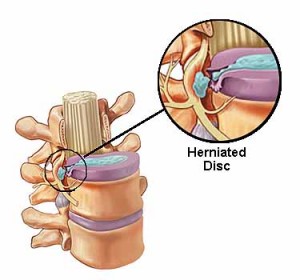
In general, most patients think that the diagnosis of a lumbar disc bulge means that surgery is inevitable.  This couldn’t be further from the truth.

There are so many misconceptions that revolve around low back pain that it’s always hard to decide where to start.  I have covered many of these issues in the past such as:

  • Why you should avoid an MRI unless absolutely necessary
  • Why epidurals and radio frequency ablation is such a bad idea

The list is much longer, but these are probably the top two concerns when it comes to low back pain.  It is rare that a MRI actually finds anything useful that actually relates to your current symptoms.  It is clear, however, that a MRI sets in motion a serious of events leading to epidurals and surgery.

That’s not to say that surgery is not a viable option for disc problems.  As successful as our office usually is treating disc problems, there have definitely been patients who have not responded to care and ended up in surgery, but it’s been a handful.

When someone does have a bona fide disc bulge that is creating his or her current symptoms, a very common concern centers around permanent nerve damage.  And it’s a very real concern.  Nerves don’t like pressure on them and if the pressure is sustained for a period of time permanent damage can occur.  For this reason, many surgeons will urge patients with a disc bulge to undergo surgery before this nerve damage occurs.

While pain in the leg is usually the first sign of nerve involvement (not all leg pain comes from a disc injury–the patterns associated with disc injury are very specific), muscle weakness takes some time to show up.  When this muscle weakness progresses, surgeons are quick to recommend surgery.

But, even at this stage of the game, is surgery for a lumbar disc bulge really needed?  This is the exact question asked by the authors of this particular study.  In it, researchers looked at  150 patients with sciatica due to a lumbar disc herniation and whose symptoms also included a moderate or severe muscle weakness to see how much of a difference having early surgery (versus more prolonged conservative care) had on the recovery of the muscle strength.  Here are the details:

  • In seven (10%) of the 70 patients who were assigned to early surgery the leg pain resolved even before surgery could be performed.
  • 32 patients (40%) of the 80 assigned to conservative care ended up having surgery because of severe pain.
  • While the muscle strength recovered faster in the surgery patients, by 26 weeks there was no difference in muscle recovery between the surgery and no-surgery group.
  • At the 1 year mark, complete recovery of muscle strength occurred in 81% of surgical patients and 80% of non-surgical patients.

The results from this study clearly indicate that muscle strength recovery is no different between those who have surgery and those who don’t.  Just like what I see in our office, some patients are in too much pain and decide for surgery, although the 40% number makes me wonder what “conservative care” really consisted of for the number to be that high.

Another very important tidbit that researchers discovered had to do with factors that led to a lower likelihood of having muscle strength actually return.  These were:

  • Those with a severe muscle weakness at the beginning were 540% more likely to still have weakness after a year.
  • Those with a lumbar disc herniation that took up more than 25% of the space in the spinal canal had a 640% higher chance of not experiencing any muscle strength recovery after a year.

The take home message is that, even with muscle weakness that occurs as the result of a lumbar disc bulge, your likelihood of recovery is just as good whether or not you have surgery.  The only two factors that would make your situation more dire would be a more severe muscle strength loss and a larger disc bulge.  Aside from that, if the pain is no unbearable, odds are that you are better off not going through the pain and risk of future problems that come from surgery for a lumbar disc bulge.
 

Filed Under: Chiropractic Care, Low Back Pain Tagged With: chiropractic, disc herniation, lumbar disc bulge, surgery for disc herniation

Cervical Disc Bulge: Do I Need Surgery?

April 9, 2014 by James Bogash

Disc bulge in neck
Disc bulges usually do not need surgery

Now, before I state that our office does very well with disc bulges in the neck, I need to preface this with the fact that we’ve had 2 patients in the past 6 months end up in surgery.

That being said, the vast majority of patients who have cervical disc bulges accompanied by pain in the arm due to that disc bulge that are seen in our office recover nicely. Because back and leg pain are more widely publicized, there is more knowledge about sciatica from back pain; patients frequently come in stating that his or her “Atica” or “schizophrenia” is flared up. Most of these cases are not actually true sciatica (despite what he or she has been told) but are either local pain (no leg pain) or a referred pain from the hip or sacroiliac joint.

Pain in the arm originating from the neck is also very common, but less patients who walk through the door seem to be aware of this relationship. The typical patterns of disc pain in the arm or leg follow a very typical pattern called dermatomes. The problem is that there are many other things that also cause pain into the arm such as the rotator cuff, problems in the forearm such as carpal tunnel and problems stemming from the muscles around the neck such as the anterior scalene or pec minor.

Because there are so many causes of pain into the arm, it can be challenging to nail down exactly what may be causing your problem. For me, sometimes the answer isn’t clear on the first visit or two, but rather, takes some time to clarify exactly what’s causing the pain. Disc bulges in the neck causing pain in the arm can look an awful lot like a rotator cuff referral into the arm. If I work on the rotator cuff for a visit or two and nothing changes, we shift gears towards a treatment of a disc bulge.

Treatment of a cervical disc bulge in our office involves soft tissue work (Graston, stretching, fascial work), chiropractic adjusting and traction. I’m a big fan of home traction devices as well that can allow you to treat the disc bulge several times a day (we recommend this one from Amazon: Instapark® Cervical Neck Traction).

With this approach, the vast majority of patients respond well. This particular study supports this position. In it, chiropractic researchers looked at a group of studies to get a better idea of how long it takes someone to recover from a cervical disc herniation. Here’s what they found:

  • On the down side, they found that complete recovery could take as long as 24-36 months.
  • Luckily, patients were already noting substantial improvements within the first 4-6 months.
  • Overall 83% of patients resolved completely.
  • Patients with a workers’ compensation claim appeared to have a poorer prognosis.

Before you start getting depressed about the 4-6 months timeframe, in our office, if we are going to be able to help a disc pain patient, improvement starts within a few visits and usually progresses forward from there. The use of the traction device helps.

As for the worker’s compensation portion of the equation, I wonder if the poorer prognosis has to do with less of these patients making it into chiropractic offices in a timely matter. Many primary care doctors don’t consider chiropractic for disc problems and will usually use medications and pain injections first.

Filed Under: Chiropractic Care, Disc Problems, Neck Pain Tagged With: cervical disc bulge, chiropractic, disc herniation, manipulation, neck pain

Slipped Disc in Back: Common Sciatic Nerve Treatment Falls Short

December 6, 2012 by James Bogash

MRI finds a slipped disc in back. Options are short, but you decide on a common sciatic nerve treatment from your doctor’s suggestion. But what’s the best option?

The task of deciding what options are the best seems daunting. Medications, injections, chiropractic (my personal favorite), acupuncture, massage, physical therapy and probably 10 others I’m forgetting.

But before you decide on a treatment, we need to back up a little. The conversation needs to start with where you got your diagnosis. The diagnosis of a disc problem (slipped disc, disc bulge, disc herniation – the actual description is quite technical, but you get the idea) can be make quite accurately in a competent physician’s office. Rarely is an MRI needed to diagnose a disc problem, and the guidelines clearly state, that in the absence of red flags, any imaging needs to wait until 4 weeks of conservative treatment. Despite this mainstream medicine seems to want to order MRIs and CT scans at the first sign of back problems.

This is were the problems begin. Numerous studies have confirmed that early MRIs are a bad thing, driving expensive, dangerous and unneeded treatments. But let’s say you made the mistake of not going to a chiropractor first for your back pain and you did get an MRI or CT scan. And this MRI or CT shows that you have some type of problem with the intervertebral discs of your lumbar spine.

Here comes the big question. Do you have leg pain or not? And is this leg pain scleratogenous, radicular or radiating? I don’t really expect you to answer that question, but hopefully you can begin to see that just because your back pain is accompanied by leg pain this does NOT mean that you have sciatica. I can’t tell you how many times I’ve seen patients with leg pain that, after some targeted soft tissue work on his or her low back and glut region (gluteus maximus, posterior hip, rump, derriere–you get the idea), the leg pain gets better or is gone.  There is no way a slipped disc in back would respond that fast.

Sciatica refers to radicular pain that comes from chemical or pressure (from a disc) directly on the sciatic nerve. For those of you unsure of where the sciatic nerve goes, I’ll clarify. It goes into the leg. Despite this, I have seen patients spend tens of thousands of dollars for epidural injections for low back pain that doesn’t involve pain in the leg. I’m not sure there’s ever been an indication to use epidural injections in the lumbar spine for treatment of local back pain (without leg pain). It may be done all the time, but that doesn’t make it right.

Overall, this means that you need to see someone who understands all the nuances of back pain and leg pain. (hint, hint….a chiropractor). Anything short of that and you may get sent in the wrong direction.

Back to this particular article that looked at the effectiveness of epidural steroid injection as a common sciatic nerve treatment.

I have personally referred a small handful of patients out for epidural steroid injections over the years, but they are few and far between. I have never considered spinal injections as a stand alone therapy. At the most, they allow a small window of pain relief, where other options have failed, where other therapies can be used more aggressively.

So what happens if an epidural is the only therapy used? Basically, confirming other studies, these researchers found that they suck. Here are the specifics:

  • Researchers looked at 25 different studies.
  • Epidural corticosteroid injections improved leg pain 6.2 points (out of 100).
  • This was only noted in the short term (2 wks to 3 months).
  • Beyond 3 months, the benefits were even smaller–pretty much non-existent.

So basically, an epidural injection for sciatic pain is very expensive (I’ve seen bills as high as $5,000 per shot) and really does nothing but provide a small amount of pain relief for a short period of time. Worse, it may accelerate destruction of the disc and lead you to surgery. Of course, none of this takes into account the close to 400 cases of fungal meningitis on the East Coast from contaminated vials of the steroid used in this procedure, with almost 30 deaths so far.

Where do I sign up?

Filed Under: Chiropractic Care, Disc Problems, Low Back Pain Tagged With: back pain, Disc, disc bulge, disc herniation, epidural, low back pain, Nerve Treatment, Radicular Pain, Sciatic Nerve, Sciatic Nerve Treatment, sciatica, Slipped Disc, Spinal Disc Herniation

DID YOU HAVE AN MRI FOR LOW BACK PAIN?

September 3, 2011 by James Bogash

There are definitely times when knowing less is a good thing.  It occasionally happens where a patient who has signs and symptoms of a disc herniation presents to our office.

Based on an exam and the history given by the patient, disc involvement (bulge, herniation, rupture, etc…) can be diagnosed and treatment started.  A full blown disc bulge may take several days to start to show a response, but the outcomes are usually very good.

Sometimes, it is not a disc problem that is causing the patients’ low back and leg pain.  Sclerotogenous referral from the hip (I really love the word “sclerotogenous”–makes me sound smart) or involvement of the fascia is also notorious for causing leg pain.

Sometimes, it may take a few days to be able to tell the difference.  Certainly an MRI would be helpful, right?  Not so fast…

You see, there is a large chunk of the population that has disc abnormalities on MRI (we can argue about the percentages, but let’s just agree that not all disc abnormalities on MRI cause problems).  We have also seen that MRIs done before and some time after a patient has a disc bulge don’t change much, even though the pain may be gone.

This particular study contributes to what any chiropractor can probably tell you.  MRIs increase the risk of having surgery.  Sounds strange…I mean–how could having an MRI affect your back?

It’s the mindset and the potential diagnosis of a disc problem, even if the disc problem is not what is causing a patient’s pain.

In this study, when the primary care doctor or orthopedic doctor had a financial incentive to order an MRI (usually because the unit was installed in their clinic) the number of MRI for low back pain went up.  In addition, in the orthopedic surgeon’s office, the number of patients getting surgery went up 34%. 

Just something to consider the next time you THINK you need an MRI… 

Read more…

Filed Under: Disc Problems, Low Back Pain Tagged With: disc bulge, disc herniation, low back pain, MRI, orthopedic surgeon

DO NOT DO THIS FOR A WORK INJURY!!

May 20, 2011 by James Bogash

As a chiropractor, I can tell you that taking advantage of more complicated and “high tech” treatments for many, if not most, musculoskeletal complaints is bad news.  Study after study shows that things like getting an MRI leads to higher chance of receiving an epidural.  Receiving an epidural leads to a higher chance of having surgery.  It becomes a cascade effect.

Most studies looking at chiropractic care for musculoskeletal complaints find that our care is at least as effective and definately cheaper.  Especially when you focus on less medication, less imaging and certainly less surgery.  Which always makes it difficult when someone tries to cut out chiropractic benefits to “save money.”  Math wasn’t my strong point, but sure seems to make sense to keep chiropractic in the picture.

This particular study, while not looking at chiropractic care, did look at the opposite end of the spectrum.  Researchers looked at patients with a herniated lumbar disc diagnosed in a hospital setting.  Almost 42% of them did not return to the workforce full time.  42%!!  The odds were worse if surgery was performed.

The bottom line is to seek chiropractic care FIRST.  Care will be simpler, less costly, and your odds of returning to work will be highter.

Read More…

Filed Under: Disc Problems, Work Injuries Tagged With: chiropractic, disc herniation, hosptial, return to work

Primary Sidebar

Patient Quick Guide

Schedule An Appointment
Contact Our Office
Download Patient Forms

Categories

Chiropractic Mesa Arizona

Arthritis Chiropractor Mesa AZ
Graston Technique Mesa AZ
Back Pain Chiropractor Mesa AZ
Back Pain Doctor Mesa AZ
Wrist Pain Chiropractor Mesa AZ
Rotator Cuff Chiropractor Mesa AZ
Shoulder Pain Chiropractor Mesa AZ
Knee Pain chiropractor Mesa AZ
Manipulation Under Anesthesia In Mesa AZ
Headache Chiropractor Mesa AZ
Chiropractic Mesa AZ
Stem Cell Therapy Mesa AZ
Regenerative Medicine Mesa AZ
Massage Therapist Mesa AZ
Shoulder Pain Doctor Mesa AZ
PRP Therapy Mesa AZ
Chiropractic Mesa AZ
Who Is The Top Chiropractor In Mesa AZ?
Knee Injury Doctor Mesa AZ?

Footer

Resources

Site Map
Disclosure
Additional Resources

Best Massage Therapist Mesa AZ
Arthritis Doctor Mesa AZ
Chiropractic Mesa AZ
Back Pain Doctor Mesa AZ
Rotator Cuff Doctor Mesa AZ
Chiropractor Mesa AZ
Massage Therapist Mesa AZ
PRP Therapy Mesa AZ
Knee Pain Doctor Mesa AZ
Stem Cell Therapy Mesa AZ
Headache Doctor Mesa AZ
Shoulder Pain Doctor Mesa AZ

Office

Lifecare Chiropractic
1830 S. Alma School Rd, Ste 135
Mesa, AZ 85210
(480)-839-2273
Also Serving Tempe, AZ

Get Directions

  • Home
  • About
  • Common Conditions
  • Additional Services
  • Testimonials
  • Blog
  • E-Books
  • Contact

Copyright © 2026 · LifeCare Chiropractic · All Rights Reserved.