
• Skip to main content
  • Skip to primary sidebar
  • Skip to footer

LifeCare Chiropractic

The Best Chiropractic Care in Mesa, Arizona

  • Home
  • About
    • Why Lifecare?
    • About Dr. Bogash
    • Team Members
  • Common Conditions
    • Wrist Pain/Carpal tunnel syndrome
    • Elbow Pain/Epicondylitis
    • Headaches
    • Knee Pain and Knee Injuries
    • Low Back Pain
    • Shoulder Pain and Rotator Cuff Problems
  • Additional Services
  • Testimonials
  • Blog
  • E-Books
  • Contact

chronic low back pain

Chronic Neck and Low Back Pain – Amazing Procedure Helps in ONE Day

March 23, 2015 by James Bogash


manipulation under anesthesia
Ded Pixto/Dollar Photo Club

As a practicing chiropractor, I see patients who have had chronic problems improve just about every day.  Despite how successful we are at treatment, there are still patients that we can’t help.

At least not in the office.  And not while the patient’s conscious.

There is a little-known procedure called manipulation under anesthesia (MUA) that involves a team of physicians in a surgical center working in a unique matter to help patients who have lost all hope at responding to any other treatment.  Some of these are surgical candidates who want to avoid the pain, rehab and uncertainty of invasive surgery.  Some of these are not surgical candidates because they don’t have a specific “lesion” to go in and fix surgically.

And, quite frankly, the results from surgery in clinical trials for back and neck pain are not exactly stellar.  The research study results from pain management procedures like epidural injections is even worse.  This from someone who reads a LOT of medical literature.

One anesthesiologist that I worked with called MUA “yoga in a can.”  Which pretty much sums it up.  So much of the problems that I see in my office are linked to poor movement.  Movement at the individual spinal level (let’s say L5-S1 as an example) or movement of the spine as a whole (the entire lumbar spine, for example).  While it is not common, it is rare for me to see someone with good flexibility who is very active to have low back and neck pain.

This is one of the reasons why yoga is so bad for a chiropractic practice.  Because it gets the spine moving.

I’ve been doing MUAs for almost a decade now and have seen some amazing results.  What I have never seen is a negative outcome.  I’m not saying that I haven’t seen patients not respond, but I can honestly say I’ve never had a patient get worse after an MUA.  Try asking a surgeon if he or she has ever had a bad outcome.

Even better, people who have observed or assisted with the procedure (there are any number of videos available on Youtube.com) all state that it looks like it would feel REALLY good after.  Ever heard anyone observing spinal surgery say the same thing??

Some conditions respond better than others.  For neck pain and headaches, the procedure is darn near a miracle (check out one of my patient’s testimonials by clicking here).  Shoulder problems, especially frozen shoulder, respond so well that insurance actually recognizes this as a condition they will pay for.  Low back pain generally relates to how “tight” the patient is in the first place.  Highly flexible patients may not respond as well to manipulation under anesthesia from my experience, but patients who have very little flexibility will do very well.

The problem with MUA is that there is just not enough money to fund good quality clinical studies.  For spine surgery, if a device manufacturer is charging $1,000 for a single screw, they’ve got the money to throw around on a study or two.  That leaves research on MUA in the realm of case studies.

Which brings us to this particular article.  In it, researchers looked at 30 patients with chronic neck and back pain who had failed to respond to conservative therapy underwent a SINGLE MUA by a single chiropractor.  Here’s the details:

  • A mere 2 weeks after the MUA procedure, 52% of the patients reported improvement.
  • At four weeks, this number was 45.5%.

While I would prefer to see this number at 100% response, we all know this isn’t realistic.  But having almost 50% of the patients who were likely at their wit’s end from pain and loss of quality of life respond from a SINGLE session of MUA is nothing to disregard.

At this point I would like to add that many of the MUA protocols recommend 3 sessions of MUA.  It is likely that, while still not 100%, the number of patients who responded to MUA would go up.  In addition, because of my personal background with soft tissue treatments like Graston, I utilize these procedures during the MUA with the hopes that outcomes will be even better.

Make no mistake about it-manipulation under anesthesia IS a surgical procedure, although it is non-invasive.  There are costs involved and risks of anesthesia.  But when balanced against constant pain, loss of quality of life and the risk of surgery, it seems a simple decision.
 

Filed Under: Chiropractic Care, Low Back Pain, Neck Pain Tagged With: chiropractic, chiropractor, chronic low back pain, chronic neck pain, manipulation under anesthesia, MUA

Physical Therapy or Manipulation for Chronic Low Back Pain?

April 1, 2014 by James Bogash

The answer to chronic low back pain is NOT nothing. Choices for care include chiropractic manipulation or physical therapy.

I know that it seems intuitive that rehab exercises for chronic low back pain would be a good idea. However, I can’t say that I’ve ever been completely on board with this idea. While not every case of chronic low back pain does well in our office, we do pretty darn well with the vast majority of cases that come through. From years of experience, I firmly believe that advanced soft tissue techniques in competent physicians’ hands combined with manipulation is one of the strongest tools for management of chronic low back pain.

Despite this, there is a belief that patients with chronic low back pain should go to physical therapy to get rehab exercises for his or her low back pain and many primary care physicians still continue to refer patients out for physical therapy.

Always happy to find out that my practice philosophy is not shared by my office alone, I present this particular article, looking at the outcomes of 12 weeks of treatment in 199 patients with chronic low back pain (defined as more than 6 weeks’ duration) using exercise versus manipulation.

Specifically, exercised consisted of high-dose, supervised low-tech trunk exercise. As a way of measuring outcomes, researchers looked at four motion parameters in the sagittal plane and two in the horizontal plane as well as the jerk index parameter.

The group that received manipulation changed in all of the parameters measured. In addition, the manipulation group had a smoother motion pattern (reduced jerk index) at the end of the study. The exercise group, however, only improved in half of the parameters measured and there were no improvements in the jerk index.

Based on this study, a patient with chronic low back pain would be much better off seeing a provider who can do spinal manipulation. Adding the aforementioned soft tissue techniques to manipulation gives you an even greater chance of finding relief where nothing else has helped.

Filed Under: Chiropractic Care, Low Back Pain Tagged With: chiropractic, chronic low back pain, exercises for low back pain, manipulation, rehab

To Cut or Not to Cut: Very Long Term Outcomes of Spinal Fusion Surgery

November 22, 2013 by James Bogash

Over time, surgeons have moved to more and more complex procedures.  But whether these lumbar spine surgeries are better is still in question.

Initially, spinal surgeries were less complicated with procedures like laminotomies and laminectomy, but surgeons (at least under Medicare) have been moving towards more complex procedures that are more expensive with a higher rate of complications.  The problem with the vast majority of studies on the outcomes of surgery look at very short-term, usually no longer than 1 or 3 years.  The re-surgery rate is known to be as high as 23% after 10 years.

So, if you didn’t have a repeat surgery, what can you expect after 10 years, and will you outcomes be any better than under the care of a competent physician who truly understands low back pain (like maybe a chiropractor….)?  This is the question that was asked in this particular study.  Researchers followed 473 patients with chronic low back pain of at least 1 year’s duration who were all considered candidates for spinal fusion.  The average follow-up was 11 years.  The patients were put into one of two groups:

  1. Lumbar spine fusion with either instrumented or noninstrumented fusion.
  2. Nonoperative treatment that included multidisciplinary cognitive-behavioral and exercise rehabilitation.

Keep in mind that true management in the #2 scenario above is not done by the average practitioner.  Rather, this is a comprehensive approach encompassing both your mental state, the way you related (or don’t relate) to your pain as well as the physical treatments that can go a long way towards reducing the level of pain.

So what did the researchers find out after 11 years about the differences between spinal fusion and the comprehensive approach?

Nothing.

Yup.  No difference in the long run.  And this does not take into account the fact that a lumbar fusion will lead to further degeneration of the levels above and below as well as the chance that the surgery will not relieve the original symptoms it was attempting to address.

The bottom line is that surgery really should absolutely, positively be your last resort.  And THEN you still try something else before surgery.  You need to make sure that you can look yourself in the eye 6 months after surgery and tell yourself that you tried everything else before surgery.  And yes, this DOES include chiropractic.


Filed Under: Chiropractic Care, Low Back Pain Tagged With: chiropractic care, chronic low back pain, conservative care, low back pain, lumbar fusion, lumbar spinal surgery

Foot Bone Connected to the Back Bone = Less Pain Meds??

September 3, 2013 by James Bogash

work place injuries chronic low back pain
orthotics and work place injuries

We all know the human body is connected, and for a chiropractor, some of these relationships are old hat, especially when it comes to back pain.

I’ve just started to participate in an Industrial Commission of Arizona ad hoc committee on chronic pain management, although one of my colleagues has been on the panel since it started and has a much better idea of the objectives of the committee.  However, even in my first meeting, there seems to be a heavy focus on medication management and pain management (which includes all the types of injections used for chronic pain).  There is very little focus specifically on manipulation and chiropractic care–it is just lumped together under “conservative care.”  And here in the workman’s compensation arena in Arizona, chiropractic care is microscopically small chunk of this conservative care.

Given how incredibly effective we are (chiropractic care is the most efficient model of care delivery in healthcare today for non-surgical spinal complaints, and leads to an overall 30% cost savings across the board which translates into BILLIONS of dollars saved), this omission is glaring.

So what does all this have to do with this particular study?  Chiropractic care does NOT equal manipulation, although this is a tool heavily used in a chiropractic office.  Rather, most chiropractors will utilize a wide variety of tools to help patients manage pain, both acute and chronic.  These can include:

  • manipulation
  • TENS units
  • exercises / rehab
  • home instructions
  • counseling on long-term management / avoidance of flare ups
  • stress management
  • heel lifts / orthotics

I know that in our office discussions on pillows, sleeping positions, sleeping surfaces, the absolute need to move around and exercise, ergonomics, stress management and occasionally inversion tables and at-home cervical traction collars are pretty much a daily thing.  The point is that chiropractors are, in general, one of the most competent providers in the health care system for managing pain.  Of course, my opinion may be slightly biased, but I can, as usual, back up this bias with solid evidence.

Now, if I can direct your attention to the last bullet point above, orthotics, we can get back to the study.

Researchers took a group of 62 patients presenting with chronic (longer than3 months), nonspecific, low back pain after suffering a work-related low back injury and followed for 6 weeks.  The groups were split up into:

  1. About half the patients when given usual care, which consisted of a 6-week exercise therapy program along with prescription pain meds.
  2. The other half received the same therapy in addition to customized foot orthotics.

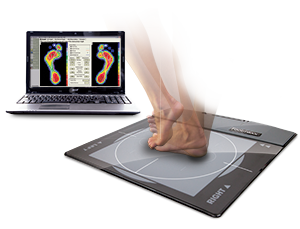
Our office has used a computerized gait analysis system for almost a decade now (I think maybe it’s time to upgrade the software…) and the orthotics are made based on the data obtained from walking across a pressure plate during a normal walking pace.  Pretty cool to be able to see how your foot strikes the ground.  This information can be very helpful for those suffering from low back pain.  Support the arches (especially if your work duties involve standing for prolonged periods) and control the shock of the heel striking the ground and this can really be the final piece of the puzzle to help resolve or better control chronic low back pain.

So what did the researchers find 8 weeks later?

  1.  Both groups had improved.
  2. The orthotic group had a lower disability scores (as measured by the Oswestry Disability Index).
  3. Those in the orthotic group were using less pain meds by the end of the study period.

Pretty impressive for a simple intervention with almost no downside.  On top of that, the money saved on the medications alone would likely pay for the orthotics.

The bottom line is that, whether you’re suffering from a chronic work place injury or chronic low back pain unrelated to a work injury, make sure you ask your chiropractor if he or she thinks orthotics may help your chronic low back pain.


Filed Under: Chiropractic Care, Low Back Pain, Work Injuries Tagged With: chronic low back pain, foot orthotics, low back pain, orthotics, worker's compensation, workplace injury

BUT CHIROPRACTORS WANT YOU TO COME BACK IN FOREVER…

September 1, 2011 by James Bogash

As a chiropractor, I obviously have an opinion on this one.  My profession has had a tendency to get dirt flung at it in the past.  We’ve always been treated as the red headed stepchild of healthcare despite very strong evidence that we are damn good at treating patients effectively and saving money while doing it.

But what about those chiropractors that want you to come back endlessly week after week after month after month, even after the pain’s gone?

Personally, in our office I always explain to patients that, so long as they avoid gravity, stress and computers they’ll probably be just fine going forward.  After all, chiropractic care is an intervention–I’m doing something to the patient that they can’t do themselves.  I do not believe that, in a perfect world, we should need any type of intervention.  But, given the reality of our lifestyles, however, my biased opinion is that some degree of regular care is good.

That may mean weekly for those with decades of musculoskeletal “baggage” from decades of improperly treated pain.  Or every month or every few months for the average person.  This has always seemed to work out well, although this has been limited to my own experiences and opinion.

Now this particular study adds some evidential weight to my personal experiences.  This looked at patients with chronic low back pain.  Basically, the participants in this study who were seen for an initial course of chiropractic care but were seen every other week after the initial trial of care did better after 10 months than those who did not receive the regular care.

Maybe we’re not so crazy after all… 

Read more…

Filed Under: Chiropractic Care, Low Back Pain Tagged With: chiropractic care, chronic low back pain, maintanence care

Primary Sidebar

Patient Quick Guide

Schedule An Appointment
Contact Our Office
Download Patient Forms

Categories

Chiropractic Mesa Arizona

Arthritis Chiropractor Mesa AZ
Graston Technique Mesa AZ
Back Pain Chiropractor Mesa AZ
Back Pain Doctor Mesa AZ
Wrist Pain Chiropractor Mesa AZ
Rotator Cuff Chiropractor Mesa AZ
Shoulder Pain Chiropractor Mesa AZ
Knee Pain chiropractor Mesa AZ
Manipulation Under Anesthesia In Mesa AZ
Headache Chiropractor Mesa AZ
Chiropractic Mesa AZ
Stem Cell Therapy Mesa AZ
Regenerative Medicine Mesa AZ
Massage Therapist Mesa AZ
Shoulder Pain Doctor Mesa AZ
PRP Therapy Mesa AZ
Chiropractic Mesa AZ
Who Is The Top Chiropractor In Mesa AZ?
Knee Injury Doctor Mesa AZ?

Footer

Resources

Site Map
Disclosure
Additional Resources

Best Massage Therapist Mesa AZ
Arthritis Doctor Mesa AZ
Chiropractic Mesa AZ
Back Pain Doctor Mesa AZ
Rotator Cuff Doctor Mesa AZ
Chiropractor Mesa AZ
Massage Therapist Mesa AZ
PRP Therapy Mesa AZ
Knee Pain Doctor Mesa AZ
Stem Cell Therapy Mesa AZ
Headache Doctor Mesa AZ
Shoulder Pain Doctor Mesa AZ

Office

Lifecare Chiropractic
1830 S. Alma School Rd, Ste 135
Mesa, AZ 85210
(480)-839-2273
Also Serving Tempe, AZ

Get Directions

  • Home
  • About
  • Common Conditions
  • Additional Services
  • Testimonials
  • Blog
  • E-Books
  • Contact

Copyright © 2026 · LifeCare Chiropractic · All Rights Reserved.