
• Skip to main content
  • Skip to primary sidebar
  • Skip to footer

LifeCare Chiropractic

The Best Chiropractic Care in Mesa, Arizona

  • Home
  • About
    • Why Lifecare?
    • About Dr. Bogash
    • Team Members
  • Common Conditions
    • Wrist Pain/Carpal tunnel syndrome
    • Elbow Pain/Epicondylitis
    • Headaches
    • Knee Pain and Knee Injuries
    • Low Back Pain
    • Shoulder Pain and Rotator Cuff Problems
  • Additional Services
  • Testimonials
  • Blog
  • E-Books
  • Contact

appendicitis

Appendicitis Concerns: Don’t Rush to Have it Removed

July 8, 2015 by James Bogash

is surgery for appendicitis needed
chanawit / Dollar Photo Club


The common belief is that, if your appendix becomes inflamed and infected, it needs to come out now.  As in like “emergency surgery” now.

It’s one of those situations where you would never think about doing a randomized study on it because it would be withholding life-saving medical treatment from those in the placebo group.  Kind of like surgery to remove a tumor.  Or like a clinical study to see if parachutes really do save lives.

It takes some forward thinking individuals to really challenge the status quo, and even once it has been challenged, it still takes years or sometimes decades before real change occurs.  A perfect current example is arthroscopic knee surgery to go in and “clean out” the knee.  Surgeons all thought it was a requirement to go in and clean everything out.  At least until the VA did a placebo-controlled study on arthroscopic surgery of the knee and found that, after a year, there was no difference in the patients who had surgery and the patients who only thought they had surgery.

Years later, surgeons still refuse to change behaviors despite the strong evidence that they are not actually helping knee pain patients.

Dogma rules.

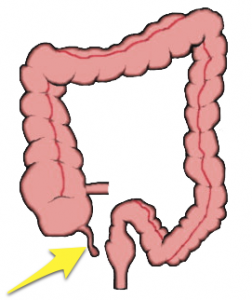
Back to your appendix.  It has only been recently that scientists have determined that your appendix really does have a use.  For pretty much ever, science believed that the appendix was a vestigial organ — and organ that we may have needed a million years ago but don’t need today.  It is believed that the appendix basically acts as a storage organ for bacteria to repopulate the gut after a severe infection in the gut such as cholera or Salmonella.

Sounds like a good idea to me, especially considering how important the bacteria in your gut are for health.

This was, of course, before the time of heavy duty antibiotics that can pretty much wipe the slate of your gut clean of all the bacteria that we’d like to have growing there, leaving other bacteria that we do not want growing to thrive, like the Clostridia family (think C. diff infections).

But when your appendix becomes infected and inflamed, what options do you have?  As mentioned, surgery is generally considered the only option.  But, just like so many other procedures that we take for granted are the best options, the answer is not always so clear.  In this particular study, researchers looked at what happened when uncomplicated acute appendicitis was treated with antibiotics instead of surgery in 530 patients with CT-confirmed appendicitis (this is not the time to bring up ultrasound versus radiation overload CT-scanning…).   For reference, uncomplicated appendicitis refers to an infection of the appendix that does not involve a perforation or an abscess formation.

Patients were given either antibiotics (intravenous ertapenem @ 1 g/day for 3 days followed by 7 days of oral levofloxacin @ 500 mg once daily and metronidazole @ 500 mg 3 times per day) or had surgery to remove the appendix.  Here’s what happened:

  • In the antibiotic group, 70 patients (27.3%) still ended up undergoing an appendectomy within 1 year.  The remaining 186 (72.7%) avoided surgery.
  •  Of the 70 patients in the antibiotic group who ended up having surgery, 58 (82.9%) had uncomplicated appendicitis, 7 (10.0%) had complicated acute appendicitis and 5 (7.1%) did not have appendicitis but received appendectomy for suspected recurrence.
  • There were no abscesses or other major complications associated with having a delayed appendectomy.

In other words, darn near 3/4 of these patients did NOT need to have an organ they were born with removed.  Granted, the rather large doses of antibiotics given in the non-surgical group presents its own set of problems, but when balanced against the removal of an organ that we don’t know all that much about, but deals with bacterial flora in the gut, I think I’d take the antibiotics.  Besides–you’re still going to get a hefty antibiotic dosing if you had surgery anyway, so why not try to save the organ?

What’s nice to know is that, out of 256 patients who received the antibiotics, only 7 (2.7%) later presented with a more complicated infection.  Those are pretty good odds.

One other thing to consider.  What would have happened if the antibiotic group were followed up with high dose probiotics to combat the ill effects of the antibiotics?  Personally, I think there’s a very large possibility that the 27.3% of patients who still needed surgery would be a much smaller group.
 

Filed Under: Gastroenterology Tagged With: appendectomy, appendicitis, appendix, probiotics

Does Your Child Have Appendicitis? Avoid CT Scan Side Effects

April 17, 2014 by James Bogash

CT scan side effects-appendicitis
Photo courtesy of https://www.flickr.com/photos/ajc1/

A visit to the ER for abdominal pain in a child can be scary. Most often it’s something simple, but appendicitis can lurk in the shadows.

Signs and symptoms of appendicitis can include slight fever, right sided abdominal pain as well as nausea and vomiting. Almost certainly, a visit to the ER will include a CT scan, despite the strong evidence that the radiation doses from handing out CT scans along with the Halloween candy is creating some 29,000 new cases of cancer per year, half of which will be fatal.

And we just don’t seem to be learning the lesson here. Despite evidence that CT scanning used to diagnose appendicitis in children does not actually change anything, the numbers of scans done in the ER continue to climb.

But is there a better way? You bet. Ultrasounds have been shown to be very helpful in picking up appendicitis cases in children. The problem is that ER physicians take the results of the ultrasound (which, by the way, have NO radiation exposure and are far less expensive than that $3,000 CT scan) with a grain of salt and still order the CT scan for “confirmation.”

This particular study helps to clarify that the CT scan approach is the wrong direction. In this study, researchers looked back on a group of 662 kids with suspected appendicitis to see if there was a difference in outcomes between those who went the CT route (high radiation exposure) and the ultrasound to MRI route (no radiation exposure). Here’s what they found:

• 265 went the CT scan route and 397 had ultrasounds and MRI.
• Negative appendectomy rate (the # of surgeries performed for no reason) was 2.5% for the CT group and 1.4% for the US / MRI group.
• Perforation rate was no different between the groups and the time it took to move to antibiotic administration and operation was no different either.

In other words, the US/MRI route was just as fast and just as safe, but results in almost half the number of children undergoing a surgical procedure to remove an organ they were born with for no reason. Worse, recent research indicates that the appendix may be a reservoir for good bacteria to repopulate the gut after an episode of diarrhea or other gastrointestinal illness. Removing this organ removes this source of good bacteria.

So, the next time you have a doctor recommend a CT scan with high radiation doses for your child, it may be time for a quick second opinion.

Filed Under: Healthy Kids Tagged With: appendicitis, CT scan side effects, MRI for appendicitis, ultrasound for appendicitis

CT Scan Side Effects: Beware of Pediatric ER Visits

December 3, 2012 by James Bogash

We love technology in medicine like CT scans, however, it is replacing a well thought out diagnosis. But are CT scan side effects worth the information obtained?

Regardless of whether it is for a child or for yourself, going to the emergency is dangerous business. Not only is the ER a breeding ground for bacteria like MRSA and C. diff, but the risk of unnecessary procedures being done is ridiculously high. Some of these may be harmless like bloodwork (not considering the pain of the blood draw and the pain of the cost of labs being done in the hospital) or an ultrasound.

But some may be downright dangerous.

Several years ago someone raised a scary question. We know that the potential CT scan side effects from radiation (computerized tomography, also called a CAT scan) is very, very high. As an example, a single CT scan of the chest is equal to about 133 two-view xrays of the chest. I’ve had patients who had several CT scans done in a single ER visit. If you do the math, you’ll realize this becomes amazingly high.

And keep in mind that there is NO safe level of radiation. Radiation is cumulative. A single dose today can affect you decades down the road.

There are an overwhelmingly high number of CT scans done in the US every year. Approximately 70 million scans are done every year. Yup – 70 MILLION. I know that ERs use them because they are quick and very billable, as anyone who has looked at a hospital bill can affirm. MRIs have no radiation exposure but the turnover time is much, much longer.

A group of researchers back in 2009 estimated the number of cancers resulting from CT imaging in the United States. The number? A massive 29,000 cases that is produced as a result of the CT scans done in a single year. Half of these would be expected to be fatal, resulting in 14,500 cancer deaths per year as a result of an exceedingly high number of CT scans done per year.

So, the above study was done in 2009 and actually got quite a bit of press. So, hopefully, medical providers have learned from this and are ordering advanced imaging with care. The cynically part of me realizes how slow medicine is to adopt new research when money and dogma is involved. The hopeful part of me believes that studies like the CT radiation cancer study will cause drastic changes in the way we practice medicine.

It better. You see, prior to this study in 2009, CT rates were going anywhere but down. This particular study looked at abdominal CT scans (one of the higher radiation dose imaging scans) of children in the ER presenting for abdominal pain and how the number of CT scans changed from 1998 to 2008. The findings are a little scary:

  • Of all pediatric ED visits, 6.0% were for abdominal pain
  • The use of CT scans of the abdomen in these kids was 0.9% in 1998
  • This skyrocketed to 15.4% in 2008 (an increase of over 1700%)
  • There was no change in the use of ultrasounds or X-rays, which can be used to rule out many causes of abdominal pain in kids
  • There was no increase in the diagnosis of appendicitis or in hospital admissions
  • Older and male patients were more likely to have a CT scan
  • Black children were one-half as likely to undergo a CT scan

In a nutshell, the number of kids getting CT scans of the abdomen went up exponentially in a decade, without any use of alternative imaging like an ultrasound (which does not give off radiation). These kids were no more likely to be diagnosed with appendicitis or be admitted to the hospital. In other words, there really was no rationale for the increased use of abdominal CT scans in these kids.

I can’t exactly explain why this number was on the rise (even though hopefully, after the 2009 study was released, this trend has been strongly reversed). Maybe as defensive medicine?  Maybe relying less on a physician’s diagnostic skills and more on technology?

Either way, if your child has to go to the ER for abdominal pain, make sure you ask questions and ensure that every test being ordered is absolutely necessary.

Filed Under: Healthy Kids Tagged With: abdominal CT scan, appendicitis, medical imaging, pediatric ER visit

Primary Sidebar

Patient Quick Guide

Schedule An Appointment
Contact Our Office
Download Patient Forms

Categories

Chiropractic Mesa Arizona

Arthritis Chiropractor Mesa AZ
Graston Technique Mesa AZ
Back Pain Chiropractor Mesa AZ
Back Pain Doctor Mesa AZ
Wrist Pain Chiropractor Mesa AZ
Rotator Cuff Chiropractor Mesa AZ
Shoulder Pain Chiropractor Mesa AZ
Knee Pain chiropractor Mesa AZ
Manipulation Under Anesthesia In Mesa AZ
Headache Chiropractor Mesa AZ
Chiropractic Mesa AZ
Stem Cell Therapy Mesa AZ
Regenerative Medicine Mesa AZ
Massage Therapist Mesa AZ
Shoulder Pain Doctor Mesa AZ
PRP Therapy Mesa AZ
Chiropractic Mesa AZ
Who Is The Top Chiropractor In Mesa AZ?
Knee Injury Doctor Mesa AZ?

Footer

Resources

Site Map
Disclosure
Additional Resources

Best Massage Therapist Mesa AZ
Arthritis Doctor Mesa AZ
Chiropractic Mesa AZ
Back Pain Doctor Mesa AZ
Rotator Cuff Doctor Mesa AZ
Chiropractor Mesa AZ
Massage Therapist Mesa AZ
PRP Therapy Mesa AZ
Knee Pain Doctor Mesa AZ
Stem Cell Therapy Mesa AZ
Headache Doctor Mesa AZ
Shoulder Pain Doctor Mesa AZ

Office

Lifecare Chiropractic
1830 S. Alma School Rd, Ste 135
Mesa, AZ 85210
(480)-839-2273
Also Serving Tempe, AZ

Get Directions

  • Home
  • About
  • Common Conditions
  • Additional Services
  • Testimonials
  • Blog
  • E-Books
  • Contact

Copyright © 2026 · LifeCare Chiropractic · All Rights Reserved.