• Skip to main content
  • Skip to primary sidebar
  • Skip to footer

LifeCare Chiropractic

The Best Chiropractic Care in Mesa, Arizona

  • Home
  • About
    • Why Lifecare?
    • About Dr. Bogash
    • Team Members
  • Common Conditions
    • Wrist Pain/Carpal tunnel syndrome
    • Elbow Pain/Epicondylitis
    • Headaches
    • Knee Pain and Knee Injuries
    • Low Back Pain
    • Shoulder Pain and Rotator Cuff Problems
  • Additional Services
  • Testimonials
  • Blog
  • E-Books
  • Contact

Seizures / Epilepsy

Stress and Seizures. Good or Bad?

October 2, 2013 by James Bogash

Before we answer that question, we need to understand that stress is supposed to be good for us.

While many may find that hard to believe, the stress response is an adaptive response designed to protect us in times of hardship.  This may be an increased storage of calories for a famine or a heightened immune response to fend off an infection.  In addition, the acute stress response produces a sharpening of the neurological system.  Makes sense—you really wouldn’t want to lose focus when chased by a saber-toothed tiger.

Either way, that was then.  This is now.

Acute stress no longer has a place in the world we live in. Sure, we get cut off in traffic or pissed off on the phone with the cellular phone company, but rarely do the majority of us have to deal with life-threatening situations that require a true acute stress adrenaline surge.

Rather, our lives seem dominated by chronic stress that never seems to have an end.  But what does this do to our brains and does this have an impact on the development and further risk of seizures?

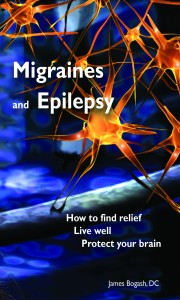
In my book, Migraines and Epilepsy, I point out that acute stress is protective for our brains and against seizures, while chronic stress destroys our brains and promotes seizures.

This particular article goes a long way towards explaining how this may happen.  But first, a primer on adrenal hormones and stress.

The outside part of the adrenals, called the cortex, produces 3 hormones: cortisol, aldosterone and DHEA.  Aldosterone helps to conserve sodium to keep our blood pressure elevated.  Cortisol is the body’s stress hormone.  DHEA, dehyrdoepiandrosterone, is used by our bodies to make other steroid hormones like testosterone, estrogen and progesterone.  When we experience chronic stress, the cortex of the adrenal glands can only make so much end-product and the default choice is cortisol, leading to lower levels of aldosterone and DHEA.  So what happens now?

Researchers looked at what role DHEA played at the synapses of brain cells (the gap between two neurons where messages get passed along).  Specifically, the transfer of the excitatory neurotransmitter glutamate in seizures.  In general, the more glutamate that is present in the synaptic cleft between the brain cells, the more the brain cells fire, potentially perpetuating a seizure and creating a massive amount of damage to the cells.

Giving DHEA to rats who had seizures induced by iron led to an increase in the transporters responsible for getting the glutamate out of the synaptic cleft.  Less glutamate means that those brain cells are going to fire less.   This is a very good thing and goes a long way towards understanding how adrenal health and stress contribute so massively to seizures.

For this reason, stress management HAS to be a major tool for anyone dealing with epilepsy and seizures.
 

Filed Under: Seizures / Epilepsy Tagged With: adenal, Dehydroepiandrosterone, DHEA, epilepsy, Glutamate, natural remedies for seizures, seizures / epilepsy

Natural Remedies for Seizures: At the Heart of the Problem

August 26, 2013 by James Bogash

Ahh.  Mitochondria.  Darn near my favorite word.  And the key to natural remedies for seizures and chronic migraines.

This is certainly not the first time I’ve written about my favorite organelle, and to some, it may seem like I attribute mitochondrial dysfunction to just about all that is evil in human physiology.  Lest you think I’ve turned into a broken record, you need to remember what the mitochondria do in each and every one of the cells of your body.

Deep inside every cell, at the electron microscopic level, cells are very busy little things.  Thousands upon thousands of reactions occur every second inside each and every cell.  Some cells have more going on than other cells, like the nervous system, muscle, heart and other organs.  Each and every thing that gets done requires energy in the form of ATP, and that ATP comes from healthy functioning mitochondria.

It’s at the core of what we are, and the breakdown of this process can wreak havoc on every single cell in your body, but likely beginning with the high energy demand cells like those just mentioned.  But for the purpose of this article, we’ll stick with the brain.

Due to the massive energy demand, each brain cell has thousands of mitochondria floating around in the cytosol.  You see, in order for a brain cell to NOT fire, it requires constant energy to keep levels of sodium and potassium on opposite sides of the cell membrane.  Without a constant pumping action shifting leaky sodium back out of the cell, the brain cell would no longer be able to keep an electrical gradient and the cell would fire before it’s supposed to.  Kind of like 10 strong men holding up a heavy boulder—if half of them decide they all have to go to the bathroom at the same time, the remaining five will likely leave the boulder to collapse to the ground suddenly.

With seizures, the same thing happens.  Without enough energy in the form of ATP from the mitochondria, a brain cell may fire before it’s supposed to, triggering a seizure (for a more detailed overview, feel free to purchase my Migraines and Epilepsy eBook by clicking here).

What’s worse is that this firing of a brain cell before it is supposed to actually causes connecting cells to fire (monkey see, monkey do).  This depletes the energy in the brain further, leading to a bad situation.  The brain cells affected by this surge of firing become sick, leading to an increased risk of future seizures.

When this process happens after a very first seizure, it can set up the stage for the development of future seizures, a process called epileptogenesis.  This particular article sets up the stage for looking into mitochondrial dysfunction as the root of the progression to epilepsy and using interventions geared towards the mitochondria to slow or stop this progression.

Unfortunately, mainstream medicine has been slow to adopt this mechanism as it relates to seizures.  Maybe slow isn’t the word.  Sloth speed in quicksand may fit better.

Current approaches to seizures and epilepsy take no thought into protecting the brain from further damage.  NONE of the anti-epileptic medications will improve mitochondrial function and some have been shown to worsen it.  Neurologists and epileptologists think their job ends when the seizures are controlled, but all the medications do is completely numb down the neurons so they can’t communicate effectively.  Worse, when the seizures are intractable and don’t response to a single medication (which happens in some 70% of seizures), multiple medications are used to numb the brain further.

Until we take a stand and accept that the mitochondria are THE critical element in seizures, epileptics will not be fully served by the physicians pledged to protect them.

Filed Under: Seizures / Epilepsy Tagged With: epilepsy, mitochondria, natural remedies for seizures, seizure

Did Your Neurologist Recommend Natural Remedies for Seizures?

June 13, 2013 by James Bogash

Seizures will impact your life.  Period.  Uncontrollable, or refractory, seizures can destroy it.

I have certainly covered non-pharmacological therapies for seizures in past blog articles.  The list of things known to help improve brain health in seizure patients is quite long.  If you’d like to read through past blog articles on these approaches you can begin by clicking here.

How many of these approaches has your neurologist discussed with you?

If the answer is “none,” then it’s probably time to find a new one.

In the meantime, we can add to the list of things that are good for your brain and subsequently, your seizures.  This particular article reviews the power of exercise as an adjunct to the treatment of seizures.  I remember a colleague telling me about a friend who had a Boston terrier who was epileptic.  The owner found that, by throwing the dog on the treadmill every day, the dog remained seizure free.

Even if you’re not a canine, exercise has multiple benefits to seizure patients:

  1. Many anti-epileptic drugs (AEDs) will cause low bone loss.  Exercise can help counteract this bone loss.
  2. Stress is devastating to the brain and will increase seizure risk.  Exercise can clearly reduce stress levels.  This may be the most powerful effect of exercise.
  3. The Bhadori Leanness program consists of a short fast combined with exercise and has been suggested as a strong neuroprotective approach.

Overall, it is clear that exercise needs to be a critical part of the care plan for any patient with seizures.  I have written frequently on the benefits of short burst aerobic exercise.  You can read more about these this type of approach by clicking here.

Here’s the beauty.  There is no interaction between any anti-epiliptic drug and exercise, with the exception of an increased risk of falls from the imbalance from some of the medications.  So, if you’re not already exercising, what are you waiting for?

Filed Under: Seizures / Epilepsy Tagged With: anticonvulsant, epileptic seizure, Frontal Lobe Epilepsy, seizure, Seizure Types, Treatment Of Seizures

Acute Valproate Administration Impairs Methionine Metabolism in Rats – (09-19-02)

May 18, 2013 by James Bogash

Acute Valproate Administration Impairs Methionine Metabolism in Rats

Valproate is a drug commonly used to control seizures and has many potentially severe side effects. While many patients with seizures would probably have good results with lifestyle changes geared towards reducing seizure activity (i.e. stress reduction, high does fish oils to stabilize cellular membranes…), many patients need this medication. Here we see research beginning to elucidate the physiology behind the side effects. Unfortunately, it will be decades yet before high dose (most likely in the gram-dosage range) folic acid along with SAM-e and betaine will be standard recommendation.

Nutrition.org — Abstracts: Úbeda et al. 132 (9): 2737

Read entire article here

Filed Under: Seizures / Epilepsy Tagged With: Methionine Metabolism, Valproate

Natural Remedies for Seizures That Don’t Respond to Medications

May 6, 2013 by James Bogash

For those of you not familiar with the jargon, a refractory seizure is one that does not respond to medication.

Unfortunately, this is not a tiny fraction of epileptics.  Rather, upwards of 1/3 of epileptics have seizures that do not respond to any medication that is used.  The options that mainstream medicine have at this point are not pleasant.  Vagal nerve stimulators embedded in your neck.  Surgery to remove a part of your brain.  Or, just deal with it.

The impact on the lives of these patients is severe.  Restricted driving, inability to work and social isolation can be the result.

However, I have long felt that mainstream medicine’s approach to seizures is an inherently faulty one.  In almost all cases, the initial, and sometimes only, goal is to use medication to control the seizure.  If this doesn’t work, a different medication is used or they are used in combination.  Statistically, if the first doesn’t work at controlling your seizures, the likelihood of being able to control your seizures with medication just goes down from there.

But there is rarely the thought to heal the brain and restore the way it is supposed to function.  The medications do not do this (in some cases it is actually worsening brain cell function), rather, they are designed to keep one sick brain cell from communicating with its neighbor.  Ramp up the suppression strong enough and hopefully you can stop the seizures.  But you haven’t fixed the sick neuron that started the mess in the first place.

Which brings us to this particular article.

My book, Migraines and Epilepsy, How to Find Relief, Live Well and Protect Your Brian, has a strong focus on the mitochondrial aspect of both migraines and epilepsy.  In a nutshell, when your brain cells cannot produce the energy they need to function optimally, things break down.  Chronic migraine headaches and seizures can result.  While it’s not that simple, this is the basic concept.

When you understand the mitochondria and the role it plays, you can better understand the factors that contribute to migraines and seizures as well as the natural remedies for seizures and migraines that improve brain cell function.

As mentioned by the author, treatments geared towards improving energy needs of the brain cells are “untapped.”  This is probably an understatement, but you begin to see the point.

Overall, by NOT looking at natural remedies for seizures and migraines, researchers have might have missed out on therapies that are more effective and far safer than current medications.  The difference is that this type of an approach to treatment works on healing the brain at it’s most fundamental level–the energy needs of the cell.

Stay tuned…

Filed Under: Migraine, Seizures / Epilepsy Tagged With: epileptic, epileptic seizure, Frontal Lobe Epilepsy, Migraines And Seizures, seizure, Seizure Trigger, Seizure Types, Seizures And Migraines

Chronic Migraine Headaches and Seizures Linked

April 26, 2013 by James Bogash

chronic migraine headaches and seizures linked
Chronic migraine headaches and seizures linked

Only the most learned will view migraine headaches and seizures through the same lens, despite some very apparent similarities in the underlying causes.

One of the learned would of course be me.  I can say this because I’ve written a book on the integrative management of migraines and epilepsy (which is, unfortunately not the name of the book–my select members of a focus group nixed this title pretty quickly, leaving me with less dramatic: Migraines and Epilepsy; How to find relief, Live well and Heal your brain).

As this particular article points out, the mechanisms leading to chronic migraine headaches and epileptic seizures overlap.  These include (but are not limited to):

  • Neurotransmitter problems (GABA, glutamate)
  • Ion channel dysfunctions (such as sodium and potassium pumps)
  • Photosensitivity plays a role in the connection
  • Medications used to treat seizures are now well accepted for migraine treatment as well

The nice thing about this relationship is that natural approaches that have been shown to be effective for one can be tried in the other without waiting years for clinical studies to be done to demonstrate efficacy.  You can almost consider it double the research.

As an example, let’s look at the ketogenic diet.  This has been shown to be a very powerful tool in the management of refractory seizures (as to why we wait to use a dietary approach last, I haven’t yet figured that one out…) across many studies.  The use of the ketogenic diet in migraines, however, is not as well studied, and yet it’s use certainly seems to make sense.

Another very compelling argument is the contribution of gluten sensitivity to both migraines and seizures.  Several studies have found strong links in migraine sufferers and epileptics and the presence of gluten sensitivity.  This data is solid enough to recommend a trial of gluten free living to see if it has an impact on your condition.

The benefit of supplementation like CoQ10, magnesium and vitamin D are established in both conditions as well.

The bottom line is that, luckily for chronic migraine headache sufferers and epileptics, the research community seems to be coming together around the linkage between these two conditions, albeit slowly.  Personally, I think this bodes well for the future of these conditions and medicine’s ability to manage, improve or even eliminate them.

Filed Under: Migraine, Seizures / Epilepsy

Migraine Headaches and Seizures Linked

January 31, 2013 by James Bogash

I have stated for years that the causes of chronic migraine headaches and epilepsy are the same. While not generally accepted, it is consistent with current research.

The finding of a genetic link between migraines and epilepsy have been all over the news since this article hit the mainstream media earlier this month.  I have had a standing Google alert for “migraines and epilepsy” for quite some time now.  Nothing was on the radar screen on the Internet until this study hit.

For those of you who know, I have a particularly strong interest in migraines and epilepsy and have spent the past 6-7 years working on my book, “Migraines and Epilepsy: You Are Not Alone.”  During the writing of this book, it has been very common for me to be asked about the combination of the two conditions, because they are not generally thought of in the same sentence.  This includes most specialists dealing with epilepsy and with migraines.

However, the underlying problem with both of these conditions are very, very similar and this particular study lends weight to this concept.

Basically, researchers looked for families that had several epileptics in the family so they could basically single out a family with a strong genetic predisposition to seizures.  Seizures don’t always run strongly in families, so this was the researchers way to kind of “narrow the pool” so to speak.  They then looked at the presence of migraine with aura within these families and found a definite link between the two (Tweet this).

So what does this really mean?  When I think genetics traits, I think of enzymes, because genetic uniquenesses that change the speed of how an enzyme runs is the most common difference or commonality in conditions that run in families (this is called a single nucleotide polymorphism, or SNP for short).  With a genetic link between migraines and epilepsy, I can clearly envision an enzyme that affects how our cells generate energy (the technical term would be SNPs present that affect the mitochondrial energetic pathway).

If several family members have problems generating energy for the brain cells, this can result in different outcomes along the same path.  In one family member it produces a seizure disorder.  In another family member a migraine with aura.

My hope for this study is that we don’t view these as “comorbidites,” meaning that these two conditions just happen to coexist but don’t have much relationship to each other (like high triglyerides and high blood pressure).  Rather, we need to view these two conditions as having the same basic problem, but with a different outcome depending upon the individual.

As an example, (and a bad one, but it’s close to bedtime as I write this) consider stress.  People under extreme levels of stress may experience different outcomes.  Stroke in one, heart attack in another.  And cancer in a third.  All stemming from the same problem, but leading to different outcomes dependent upon uniqueness’s present within the individual’s makeup.

Overall, this post was designed less to educate and more to inform.  If you are a migraine headache sufferer or someone who experiences seizures, pay attention to things that you may learn that help the other condition–it may benefit you as well.

Filed Under: Migraine, Seizures / Epilepsy Tagged With: Chronic Migraine Headache, epilepsy, epileptic seizure, migraine, migraine headaches, migraine with aura, migraines, Migraines And Seizures, Migralepsy, seizure, Seizure Disorders

Treatment of Epilepsy in Women – (01-29-04)

December 4, 2012 by James Bogash

Updates on the Treatment of Epilepsy in Women

The topic of seizures hits close to home for me. My wife had experienced several seizures several years ago. All her contact with mainstream medicine strongly urged anti-epileptic medication. This included a “well-known and respected” neurologist. There was NEVER any consideration that medication was not the answer. A little thought process and recollection strongly tied aspartame to her symptoms. No Nutrisweet – no seizures. To think that the doctors wanted to put her on a medication with potentially devastating side effects for a condition that was related to one initiating factor I would consider at best ignorance and apathy, at worst malpractice.

Arch Intern Med — Abstracts: Tatum et al. 164 (2): 137 –

Read entire article here

Filed Under: Seizures / Epilepsy Tagged With: epilepsy, neurologist, seizures / epilepsy

  • « Go to Previous Page
  • Page 1
  • Page 2
  • Page 3
  • Page 4
  • Page 5
  • Page 6
  • Interim pages omitted …
  • Page 8
  • Go to Next Page »

Primary Sidebar

Patient Quick Guide

Schedule An Appointment
Contact Our Office
Download Patient Forms

Categories

Chiropractic Mesa Arizona

Arthritis Chiropractor Mesa AZ
Graston Technique Mesa AZ
Back Pain Chiropractor Mesa AZ
Back Pain Doctor Mesa AZ
Wrist Pain Chiropractor Mesa AZ
Rotator Cuff Chiropractor Mesa AZ
Shoulder Pain Chiropractor Mesa AZ
Knee Pain chiropractor Mesa AZ
Manipulation Under Anesthesia In Mesa AZ
Headache Chiropractor Mesa AZ
Chiropractic Mesa AZ
Stem Cell Therapy Mesa AZ
Regenerative Medicine Mesa AZ
Massage Therapist Mesa AZ
Shoulder Pain Doctor Mesa AZ
PRP Therapy Mesa AZ
Chiropractic Mesa AZ
Who Is The Top Chiropractor In Mesa AZ?
Knee Injury Doctor Mesa AZ?

Footer

Resources

Site Map
Disclosure
Additional Resources

Best Massage Therapist Mesa AZ
Arthritis Doctor Mesa AZ
Chiropractic Mesa AZ
Back Pain Doctor Mesa AZ
Rotator Cuff Doctor Mesa AZ
Chiropractor Mesa AZ
Massage Therapist Mesa AZ
PRP Therapy Mesa AZ
Knee Pain Doctor Mesa AZ
Stem Cell Therapy Mesa AZ
Headache Doctor Mesa AZ
Shoulder Pain Doctor Mesa AZ

Office

Lifecare Chiropractic
1830 S. Alma School Rd, Ste 135
Mesa, AZ 85210
(480)-839-2273
Also Serving Tempe, AZ

Get Directions

  • Home
  • About
  • Common Conditions
  • Additional Services
  • Testimonials
  • Blog
  • E-Books
  • Contact

Copyright © 2026 · LifeCare Chiropractic · All Rights Reserved.