• Skip to main content
  • Skip to primary sidebar
  • Skip to footer

LifeCare Chiropractic

The Best Chiropractic Care in Mesa, Arizona

  • Home
  • About
    • Why Lifecare?
    • About Dr. Bogash
    • Team Members
  • Common Conditions
    • Wrist Pain/Carpal tunnel syndrome
    • Elbow Pain/Epicondylitis
    • Headaches
    • Knee Pain and Knee Injuries
    • Low Back Pain
    • Shoulder Pain and Rotator Cuff Problems
  • Additional Services
  • Testimonials
  • Blog
  • E-Books
  • Contact

organic

Gluten, GMOs, Probiotics and Monsanto; the Web Tightens

April 12, 2014 by James Bogash

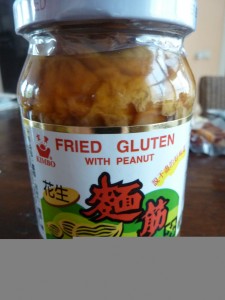
gluten and GMOs
Photo courtesy of https://www.flickr.com/photos/kattebelletje/

I’ve had many people ask me about this “gluten free” thing and whether it’s “real.” Or is it just a fad?

First and foremost, the entity known as celiac disease is nothing new. The traditional acceptance of celiac disease is a condition where the immune system of the gut attacks the gluten containing portion of grains (namely wheat, but also to a certain degree in oats, barley and rye). This attack results in the lining of the gut (the villa) being flattened out. While a normal gut may have the area of a tennis court, in someone with celiac disease that eats gluten, the destruction of the lining of the gut leaves you with a ping pong table.

The shrinkage of the area that is needed to absorb nutrients wreaks havoc long term and leads to most of the issues associated with traditional celiac disease (osteoporosis, neurological disturbances, shortened life span, etc…). This is the far end of the spectrum and is usually diagnosed via biopsy of the lining of the gut. Moving up the spectrum (from worst to less-worser), the blood markers anti-transglutaminase and anti-gliadin antibodies will be elevated and can be checked in a blood test.

This is generally where mainstream medicine stops at the definition of celiac disease. However, as I mentioned, it is a spectrum and not a set point. As you move away from the biopsy proven gluten allergy to the other end of the spectrum, “sensitivity” becomes a much better word to use. At this end, the number of people with sensitivity to gluten is quite high and it is very real.

And the numbers of people with gluten sensitivity keep going up. But why?

A portion of this may due to a cross reaction between a protein found in the yeast Candida albicans and a protein found in gluten. This means that a prescription for antibiotics, which will increase the number of yeast in your gut, can initiate the onset of celiac disease in genetically susceptible patients.

Combine the wanton use of antibiotics with conventionally grown grains given high amounts of nitrogen-based fertilizer (more nitrogen leads to more gliadin for the gut to react to) and you’ve got a recipe for more gluten problems.

But it turns out the story may be more complicated. This particular article looks at the role of glyphosphate (the principle component of the herbicide Roundup used heavily in GMO crops) and the realionship to celiac disease. While the article is quite complex, here are the high points:

• Fish exposed to glyphosate develop digestive problems that are similar to celiac disease.
• Glyphosphate triggers imbalances in gut bacteria (reduced Lactobacillus and Bifidobacterium, which break down gluten).
• Disrupts detox P450 enzymes, interrupting the activation of vitamin A and D, the maintenance of bile acid production as well as the breakdown of environmental toxins.
• Glyphosphate chelates and leads to deficiencies in iron, cobalt, molybdenum and copper.
• Glyphosphate leads to deficiencies in the amino acids tryptophan, tyrosine, methionine and selenomethionine.
• In addition, both celiac patients and glyphosphate exposure increase risk of non-Hodgkin’s lymphoma.
• Both are associated with reproductive issues like infertility, miscarriages, and birth defects.

Making matters worse, glyphosphate residues in wheat and other crops are likely increasing due to the growing practice of crop desiccation just prior to the harvest.

So, is it glyphosphate toxicity or gluten sensitivity? I’m pretty sure that this article didn’t entirely clear things up for many of you. The bottom line is that the answer likely lies somewhere in between. Either way, it would seem smart to take away two needed changes from this article. First, living a naturally gluten-restricted diet is a good idea. This does NOT mean buying the same types of foods you have always eaten but just buying them gluten-free. Not a good idea.

Second, if you do take in any gluten-containing grains, make sure they are organic or at least GMO free to reduce the likelihood that you will be exposed to glyphosphate.

Filed Under: Toxicity Tagged With: Celiac Disease, gliaden, Gluten, glyphosphate, GMO, Monsanto, organic, Wheat

Chicken With a Side of Arsenic: 4 Reasons to Go Organic

August 12, 2013 by James Bogash

We can no longer hide behind the shield of ignorance.  The foods we are eating are killing us.  Slowly.

Orthorexia nervosa is the term used by some psychologists to refer to those of us who go out of our way to live healthy, unprocessed and organic.  While the Latin origins of the word “orthorexia” mean “correct diet,” the lifestyle associated with this has someone now become an actual psychological diagnosis (although not recognized in the new DSM-V).

One could argue that, 10,000 years ago, everyone would have fit the diagnosis.  It is the way we were MEANT to live.  But society has become so accepting of toxic foodstuff and exposures that anyone who does not accept them to some degree is pathologic.

Go figure.

For those of you not eating organic animal products, it’s time for a wake up call.  They should be avoided as much as possible.  There are already a variety of reasons that I have covered in previous blog post that can be read by clicking here.

Before we get to this article, we need to cover a short primer on the heavy metal arsenic.  Without going into too much detail, the mathmatical equation “arsenic = bad” should pretty much sum it up.  Kidney damage, cancer and death (arguably the worst of the 3…) are well known side effects, just to name a few.  Typical exposures are usually through water. but food can be a source as well.

Arsenic containing compounds are used often in the chicken industry (a compound called Roxarsone) to make the chickens grow faster.  Sounds like a great idea to me.  It’s a surprise the bodybuilding community hasn’t picked up on this fantastic idea themselves.  So what if it’s extremely toxic if it’ll help you get bigger faster??

But seriously, though…who EVER thought adding a toxic, carcinogenic (so carcinogenic that even the American Cancer Society agrees that it causes cancer) compound to our food supply?  Luckily as we’ll see from this particular study, organic chicken is a safer choice:

  1. Arsenic levels were TRIPLE the amount in conventional versus organic and antibiotic-free chicken (the organic was only slightly better).
  2. Roxarsone was detected in 20 of 40 conventional samples, 1 of 13 antibiotic-free samples, and none of the 25 organic samples.
  3. Researchers estimated that consumers of conventional chicken would ingest an additional 0.11 µg/day of arsenic compared with consumers of organic chicken.
  4. This increase in arsenic exposure could result in 3.7 additional lifetime bladder and lung cancer cases per 100,000 exposed persons.

While these numbers aren’t very large (3.7 cases out of 100,000 people), it is yet another piece of the puzzle of human chronic disease.  While you may think that this is hard to balance out against the high cost of organic chicken (Costco sells it for about $6/lb), it gets balanced out by smaller serving sizes, which you should be doing anyway.   A plant based lifestyle can still include chicken and beef, but only the higher quality variety.

Filed Under: Dietary Protein, Environmental Tagged With: arsenic free range, organic, organic chicken

Organic Market: 3 Reasons Why Buying Organic Food is Good

October 2, 2012 by James Bogash

Many wonder if buying at an organic market is worth the extra money. A recent study looking at organic food has confused many consumers.  Here is some insight.

This particular study seemed to garner very high press coverage, and yet the much more important study that found medication used for mild hypertension (think billions of dollars in drugs) was ineffective remained mostly ignored.

By now, there have been many reviews and comments on this study, trying to criticize based on perceived biases, funding questions and poor data collection problems.

I think most everyone is missing some of the most important points.

We have known for years that organic nutrients do not have appreciably higher levels of vitamins or minerals.  First, the facts:

  1. We know that shifting our intake to organic drops levels of POP (persistent organophosphate pollutants) in the blood.
  2. No one has brought up the concept of xenohormesis, which is a scary one, and has been addressed in prior posts that can be read here in article on grass fed vs grass finished beef)
  3. Finally, the phytonutrients that really make up the protective factors in food are going to be higher in organic produce.

This last factor is arguably one of the most important.  The compounds that we label phytonutrients have been found again and again and again to protect us in every aspect of health and disease.

Think dark chocolate, tea, berries, nuts, coffee, artichokes, apples, etc…  It’s the phytonutrients that do the work, not the simple things like magnesium or vitamin C.

These phytonutrients are in food, not for us, but to help them protect against the environment. It not like the blueberries all got together and decided to waste valuable resources to make anthocyanins so they can protect the humans.

These compounds are made selfishly by the plants to protect them from stressful situations (excess sunlight, pests, drought, etc..).  Without stress, these plants have little incentive to produce these beneficial-to-us compounds.

Recent studies have found higher levels of lycopene in organic tomatoes, backing up this concept.

Overall, all this study does is confirm what we’ve already known–organic farming does not increase the levels of most vitamins and minerals.  This does not, however, mean that there is no value to organic fruits and vegetables.

Personally, I stick with organic on the fruits and vegetables known to be higher in pesticide residues (the Dirty Dozen list can be found by clicking here).  I let my buying decisions on other organic produce be driven by cost.  If the organic for non-dirty-dozen organic produce is too expensive vs conventional, I buy the conventional.  Overall, though, I try to by organic produce.

How do you approach buying organic produce vs conventional produce within your budget?

Filed Under: Toxicity Tagged With: buy organic food, market organic, motivations for organic agriculture, organic, organic certification, organic farming, organic food, organic markets, organic nutrients, pesticide residue, sustainability, sustainable agriculture, why buy organic

ARE YOU REALLY WHAT YOU EAT?

April 5, 2012 by James Bogash

The answer to this question is probably far more accurate than anyone could imagine. Sure, we can envision the poster of a child looking like a banana or a piece of broccoli and feel all warm and fuzzy that we’re doing the best for our body.

“You are what you eat” is a saying that has been around for decades now, if not centuries. The connotation is that, if you eat healthy foods, you will be healthy. Few picture the concept in reverse.

The concept of “xenohormesis” is not a new one. This suggests that stress messages from lower down on the food chain are ingested by those higher on the food chain. Consider that in the context of today’s society. Imagine that every molecule of the foods we eat can pass a message down to the very heart of what you are–your DNA. What kind of message does a fast food happy meal send to your child’s genes? The foods we eat can truly create health or create disease at the genetic level in a very direct pathway.

Consider the intake of abused, contained, poorly fed, stressed out commercial livestock. The physiology of these creatures are screaming stress. This message than gets passed to the oblivious consumer eating the McDonald’s hamburger, increasing the stress messages within his or her own body.

What about GMO foods (foods that have been messed with genetically so that they can be resistant to wanton spreading of toxic pesticides without being killed themselves)? The messages sent from these foods may be of a nature that the human body has never, ever experienced before.

This particular article is a little biochemically oriented, but adds some fascinating touches to xenohormesis. Researchers have actually identified small RNA fragments that clearly get absorbed into our bodies and affect cell behavior at the genetic level.

This brings xenohormesis out of the realm of theory and into the realm of fact. It also creates and almost overwhelming range of possibilities for what we really mean when we say, “You are what you eat.”

Consider this the next time you opt for a processed meal, a fast food lunch, genetically altered GMO foods (most commonly in soybeans and corn). Realize that the foods you are eating are sending a screwed up, dangerous message to your very DNA.

Contrast this with eating a diet filled with unprocessed foods as organic as possible in an environment that is soothing and relaxing and continues to promote food as a celebration of life and an experience to be enjoyed to its fullest.

Filed Under: Environmental Tagged With: GMO, grass fed, microRNA, organic

Primary Sidebar

Patient Quick Guide

Schedule An Appointment
Contact Our Office
Download Patient Forms

Categories

Chiropractic Mesa Arizona

Arthritis Chiropractor Mesa AZ
Graston Technique Mesa AZ
Back Pain Chiropractor Mesa AZ
Back Pain Doctor Mesa AZ
Wrist Pain Chiropractor Mesa AZ
Rotator Cuff Chiropractor Mesa AZ
Shoulder Pain Chiropractor Mesa AZ
Knee Pain chiropractor Mesa AZ
Manipulation Under Anesthesia In Mesa AZ
Headache Chiropractor Mesa AZ
Chiropractic Mesa AZ
Stem Cell Therapy Mesa AZ
Regenerative Medicine Mesa AZ
Massage Therapist Mesa AZ
Shoulder Pain Doctor Mesa AZ
PRP Therapy Mesa AZ
Chiropractic Mesa AZ
Who Is The Top Chiropractor In Mesa AZ?
Knee Injury Doctor Mesa AZ?

Footer

Resources

Site Map
Disclosure
Additional Resources

Best Massage Therapist Mesa AZ
Arthritis Doctor Mesa AZ
Chiropractic Mesa AZ
Back Pain Doctor Mesa AZ
Rotator Cuff Doctor Mesa AZ
Chiropractor Mesa AZ
Massage Therapist Mesa AZ
PRP Therapy Mesa AZ
Knee Pain Doctor Mesa AZ
Stem Cell Therapy Mesa AZ
Headache Doctor Mesa AZ
Shoulder Pain Doctor Mesa AZ

Office

Lifecare Chiropractic
1830 S. Alma School Rd, Ste 135
Mesa, AZ 85210
(480)-839-2273
Also Serving Tempe, AZ

Get Directions

  • Home
  • About
  • Common Conditions
  • Additional Services
  • Testimonials
  • Blog
  • E-Books
  • Contact

Copyright © 2026 · LifeCare Chiropractic · All Rights Reserved.