• Skip to main content
  • Skip to primary sidebar
  • Skip to footer

LifeCare Chiropractic

The Best Chiropractic Care in Mesa, Arizona

  • Home
  • About
    • Why Lifecare?
    • About Dr. Bogash
    • Team Members
  • Common Conditions
    • Wrist Pain/Carpal tunnel syndrome
    • Elbow Pain/Epicondylitis
    • Headaches
    • Knee Pain and Knee Injuries
    • Low Back Pain
    • Shoulder Pain and Rotator Cuff Problems
  • Additional Services
  • Testimonials
  • Blog
  • E-Books
  • Contact

Low Back Pain

The Answer to Obamacare Contained in 4 Simple Facts

September 4, 2013 by James Bogash

Just in case you thought I was going to get political, get your disappointment over with now.  Or at least, not Republican versus Democrat political.

This blog is not long enough, nor do I have the time to point out all that is wrong with the current concept of the Affordable Care Act.  But I can help illuminate one glaring problem.  “Health care” in this country just costs too damn much.  The waste, fraud and abuse is at epic proportions and nothing short of the downfall of medicine as we know it will change this.  There’s just too much money invested in the machine for anyone with any shred of reality left to believe otherwise.

However, amidst the financial carnage lies an answer to at least some of the woes we can identify.  This particular set of “woes” is wrapped up in what those in the insurance industry like to call “non-surgical spinal care.”  At one of the largest (if not THE largest) health insurance companies in the US, orthopedics is the number one cost driver.  Of the orthopedic expenses, the single largest line-item cost is non-surgical spinal care, sitting at about 45% of overall orthopedic costs.  This number is so large, not because of the massive costs of treating a case of back pain, but rather because of the sheer volume of cases of non-surgical spinal complaints.

So what if you could shave a small percentage, maybe 30%, off the top of this large chunk of orthopedic costs?  The direct cost savings are in the billions of dollars.  DIRECT only.

Given my bias, by now you should know that I’m talking about chiropractic care for the management of non-surgical spinal complaints.  The data encompassing millions of episodes of musculoskeletal complaints (yes–millions) leaves chiropractors at the top of the hill as far as the most cost-effective provider to manage this type of case.  This occurs mainly because the average DC can truly manage the care.  Only a small percentage of cases presenting to a chiropractors office FIRST will need to leave that office for his or her episode.  Contrast this with PCPs, PTs, ERs and orthopedic doctors.  Very few of these providers can manage these cases within his or her office alone (BTW–writing a prescription would be considered to have another provider, in this case the pharmacy, involved, driving up costs).

Sadly, only 28% of these cases start with a chiropractor.  Worse, if a chiropractor is not part of the initial treatment, less than 7% of the time will that patient end up in a chiropractic office.

The bottom line is that chiropractic care is the only treatment path that follows the best evidence of spinal care, meaning:

  1. Imaging should NOT be used at the initial stages of treatment (orthopedic doctors order imaging at a very high rate).
  2. Opioids are not recommended as the first line medication (PCPs will frequently lead with Percocet or Vicodin).
  3. Injections should never be used in the initial stages of a back pain episode.
  4. Manipulation is added in almost every case seen in a chiropractor’s office.

Here’s a bonus.  Remember when I said that chiropractic care led to a DIRECT 30% savings?  This does not include the indirect cost savings which can include:

  • Additional cost savings when comparing chiropractic care treatment in surgical spinal care episodes
  • Practically unfathomable savings due to less drugs and less side effects from these drugs (I’ve written an entire eBook on the side effects of NSAIDs)

So here’s the real problem.  Despite the evidence, chiropractic care remains the truly hidden gem of healthcare.  Even looking at this particular study that suggests that mainstream medicine is getting WORSE at managing back pain, me and my colleagues are still limited to being heroes in our own little offices, rather than across the healthcare spectrum.  But there is an answer over the horizon…

The employers.  Yes, it may very well be that the members of your HR department could help change the face of health care.  Imagine that.  Going forward, the group that truly wants to save money on health care is the employers.  They truly have the most to lose with treatments that run completely opposite of what the medical literature suggests is the best care pathway.

I guess only time will tell how it is going to play out.
 

Filed Under: Chiropractic Care, Low Back Pain, Neck Pain Tagged With: back pain, chiropractic, chiropractor, low back pain, neck pain, non-surgical spinal care

Foot Bone Connected to the Back Bone = Less Pain Meds??

September 3, 2013 by James Bogash

work place injuries chronic low back pain
orthotics and work place injuries

We all know the human body is connected, and for a chiropractor, some of these relationships are old hat, especially when it comes to back pain.

I’ve just started to participate in an Industrial Commission of Arizona ad hoc committee on chronic pain management, although one of my colleagues has been on the panel since it started and has a much better idea of the objectives of the committee.  However, even in my first meeting, there seems to be a heavy focus on medication management and pain management (which includes all the types of injections used for chronic pain).  There is very little focus specifically on manipulation and chiropractic care–it is just lumped together under “conservative care.”  And here in the workman’s compensation arena in Arizona, chiropractic care is microscopically small chunk of this conservative care.

Given how incredibly effective we are (chiropractic care is the most efficient model of care delivery in healthcare today for non-surgical spinal complaints, and leads to an overall 30% cost savings across the board which translates into BILLIONS of dollars saved), this omission is glaring.

So what does all this have to do with this particular study?  Chiropractic care does NOT equal manipulation, although this is a tool heavily used in a chiropractic office.  Rather, most chiropractors will utilize a wide variety of tools to help patients manage pain, both acute and chronic.  These can include:

  • manipulation
  • TENS units
  • exercises / rehab
  • home instructions
  • counseling on long-term management / avoidance of flare ups
  • stress management
  • heel lifts / orthotics

I know that in our office discussions on pillows, sleeping positions, sleeping surfaces, the absolute need to move around and exercise, ergonomics, stress management and occasionally inversion tables and at-home cervical traction collars are pretty much a daily thing.  The point is that chiropractors are, in general, one of the most competent providers in the health care system for managing pain.  Of course, my opinion may be slightly biased, but I can, as usual, back up this bias with solid evidence.

Now, if I can direct your attention to the last bullet point above, orthotics, we can get back to the study.

Researchers took a group of 62 patients presenting with chronic (longer than3 months), nonspecific, low back pain after suffering a work-related low back injury and followed for 6 weeks.  The groups were split up into:

  1. About half the patients when given usual care, which consisted of a 6-week exercise therapy program along with prescription pain meds.
  2. The other half received the same therapy in addition to customized foot orthotics.

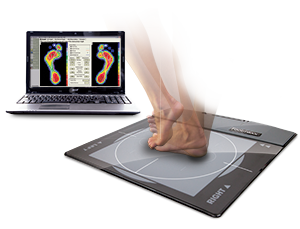
Our office has used a computerized gait analysis system for almost a decade now (I think maybe it’s time to upgrade the software…) and the orthotics are made based on the data obtained from walking across a pressure plate during a normal walking pace.  Pretty cool to be able to see how your foot strikes the ground.  This information can be very helpful for those suffering from low back pain.  Support the arches (especially if your work duties involve standing for prolonged periods) and control the shock of the heel striking the ground and this can really be the final piece of the puzzle to help resolve or better control chronic low back pain.

So what did the researchers find 8 weeks later?

  1.  Both groups had improved.
  2. The orthotic group had a lower disability scores (as measured by the Oswestry Disability Index).
  3. Those in the orthotic group were using less pain meds by the end of the study period.

Pretty impressive for a simple intervention with almost no downside.  On top of that, the money saved on the medications alone would likely pay for the orthotics.

The bottom line is that, whether you’re suffering from a chronic work place injury or chronic low back pain unrelated to a work injury, make sure you ask your chiropractor if he or she thinks orthotics may help your chronic low back pain.


Filed Under: Chiropractic Care, Low Back Pain, Work Injuries Tagged With: chronic low back pain, foot orthotics, low back pain, orthotics, worker's compensation, workplace injury

18 US Women Per Day Die From Common Drug: 3 Scary Stats

August 15, 2013 by James Bogash

For those of you into math, that’s about 550 deaths per month, or more than a Boeing 747 could hold.  Imagine the heat on the FAA if one was dropping out of the sky monthly.  Would you fly?

For those of you following the Rantings, you can begin to guess that it is prescription opioids I’m talking about.  Not just OxyContin and morphine, but also Percocet and Vicodin.  They are handed out like candy in urgent care and the ER and concern has been raised to the equivalent of a Homeland Security threat level RED.  Earlier this year, the FDA reached out to providers asking them to increase their training in the prescribing of this dangerous class of drugs.

If the FDA has to politely ask providers to better understand the use of these drugs (this IS, after all, the regulatory agency tasked with protecting the public), one has to assume that the education required to prescribe these drugs may be lacking.

Scary.  And profoundly upsetting because I am, after all, a chiropractor.  I can’t count how many times over the years that a patient came in for a problem that was resolved in a visit or two, and yet had been given opioids after an urgent care or ER visit.  Completely avoidable had the patient been steered towards chiropractic treatment.  We remain a profession at the red-headed-stepchild level and yet hold the answers to many of the ills in medicine today.

With that intro, we need to move on to this particular article, which highlights just how dangerous this class of drugs has become.  Researchers looked at opioid deaths from 1999 to 2010 in women.  Here’s what they found:

  1. Nearly 48,000 women died of prescription painkiller overdoses  between 1999 and 2010.
  2. Deaths from prescription painkiller overdoses increased over 400%, compared to 265% in men.
  3. For every woman who dies of a prescription painkiller overdose, 30 go to the ER for misuse or abuse.

Despite these numbers, I still have patients coming into my office every week who have been given prescriptions for this class of drugs.  Much like the decades long delay that occurred to get pediatricians to stop giving antibiotics for ear infections, these statistics seem to be falling on deaf ears.

The next time a provider wants to given you a prescription of Percocet or Vicodin for some type of new-onset musculoskeletal disorder (neck pain, shoulder pain, low back pain…) but does NOT recommend seeing a chiropractor, maybe it’s time to find a new provider that keeps your best interests in mind.


Filed Under: Chiropractic Care, Elbow Pain, Knee Pain, Low Back Pain, Neck Pain, Osteoarthritis, Shoulder Pain Tagged With: opioids, OxyContin, pain medication deaths, Percocet, prescription drug deaths, Vicodin

Lumbar Belts Fail to Prevent Back Pain or Back Pain Disability – (03-08-01)

August 7, 2013 by James Bogash

Lumbar Belts Fail to Prevent Back Pain or Back Pain Disability

Despite their widespread use and general acceptance, several large studies have not demonstrated any benefits from the use of back belts. One of the reasons for this is that many may use the belt and consider themselves safe from poor lifting habits. This is NOT true. A back belt is supposed to be used as a reminder when you exceed or perform certain undesirable movements. I believe many may cause their own injuries thinking that back belts make them “super” lifters, immune from injury.

Back Letter 16(1):1, 6, 7, 8, 2001 According to a large new prospective cohort study conducted by researchers at the National Institute of Occupational Safety and Health (NIOSH) back belts do not prevent back pain or back pain disability, according to James T. Wassell, PhD, and colleagues. (See Wassell et al., 2000.)”In the largest prospective cohort study of back belt use, adjusted for multiple individual risk factors, neither frequent belt use nor a store policy that required belt use was associated with reduced incidence of back injury claims or low back pain,” Wassell et al. conclude. (See description of Wassell study on page 6.)The study found no beneficial effect of belt use in any group: among employees with and without a history of back injury, employees with consistent belt-wearing habits, or employees with the most strenuous jobs. The study had some obvious strengths. In addition to its large size, it included subjects from a wide geographic area. The investigation had concurrent comparison groups and detailed exposure information, and was able to control for a wide variety of potentially confounding factors.”Results based on these multiple analyses of data all converge to a common conclusion: back belt use is not associated with reduced incidence of back injury claims or low back pain in material handlers,” according to Wassell et al.

Filed Under: Low Back Pain Tagged With: back pain, Lumbar Belts

Radiography of the lumbar spine in patients with low back pain – (03-01-01)

August 7, 2013 by James Bogash

Radiography of the lumbar spine in patients with low back pain

I would rarely recommend X-rays to a patient with low back pain in the absence of certain red flags or trauma. A vast majority of patients improve without ever having radiographs taken. The interesting aspect of this article is that patients who did receive radiographs had higher utilization of medical care and were also more satisfied with their care. I firmly believe that this indicates a very poor communication between doctors and patients in regards to LBP. It is possible that general practitioners are generally unfamiliar with treatment and causes of LBP and thus have a hard time communicating and educating the patient.

bmj.com Abstracts: Kendrick et al. 322 (7283): 400

Read entire article here

Filed Under: Low Back Pain Tagged With: low back pain, lumbar spine, Radiography

Activity and pain killers best for back pain – (02-19-01)

July 28, 2013 by James Bogash

Activity and pain killers best for back pain

Apparently, this author has been living in a cave and has never heard of manipulative therapy. The activity I can unquestionably agree with, but the pain killers? Does anyone out there actually still believe that pain killers and anti-inflammatories address the cause of the pain in the first place? There has never been, and probably will never be, a study on chiropractic care for low back pain. Sure, there’s been studies on manipulation on low back pain. But, (to me anyway…) chiropractic care involves soft tissue techniques, stretching, lifestyle modifications, addressing sleeping and working positions, postures and environment and yes, manipulation. It’s the global package. That is why natural medicine fits so well into the chiropractic philosophy; therapy for almost any condition involves attacking the problem from multiple angles at once, safely and effectively.

bmj.com Somani 322 (7282): 318b

Read entire article here

Filed Under: Low Back Pain Tagged With: anti-inflammatories, back pain, manipulative therapy

Trends in Surgery for Lumbar Spinal Stenosis

June 22, 2013 by James Bogash

Technically, “stenosis” is shrinking of an opening.  When we refer to “spinal stenosis” this means a shrinking of the openings of the spinal column where your nerves run through it.

There are two flavors: lateral recess stenosis and central canal stenosis. In lateral recess stenosis, the nerves exiting the spinal cord are affected, usually resulting in pain down one leg, most often aggravated by standing or walking.

In central recess stenosis, the column where the spinal cord runs through is compromised, more often resulting in cramping, pain, numbness and tingling in both legs (numbness and tingling starting in the feet and moving up over time), again aggravated by standing or walking.

Lumbar spinal stenosis (occurring in the lumbar region, as opposed to the cervical, or neck, region) is a slowly progressive condition associated with arthritis of the spine. Over time, the enlargement of the bones in the region of the openings where the nerves exit essentially chokes off the healthy function of the nerves or spinal cord.

However, there are also ligaments that get thickened and hard over time that also contribute to the shrinking of the opening, most notably the ligamentum flavum. These ligaments, I believe, can be stretched and loosened up to help with the symptoms of lumbar spinal stenosis.

In my experience, back strengthening exercises for spinal stenosis don’t seem to really help all that much. Spinal epidural injections have not been shown to help in the long run either, and may increase the need for surgery later on.

Flexibility is a definitely plus, so yoga and specific stretches for the lumbar spine can be good. I am a very big fan of inversion tables for this condition as well (you can read about this more in a older blog article by clicking here).

In our office, we have been very successful using a technique called the Cox Flexion-Distraction technique. While we don’t fix everyone, the vast majority of patients do well with this treatment, especially when combined with a home inversion table and yoga.

But what about surgery? Is surgery for lumbar spinal stenosis a good idea?

I guess that depends.

There are different procedures that have been used for lumbar spinal stenosis. They range from “simple” decompressive laminectomies to complicated fusions. As always, simple is the best approach and, in general, the patients who I know who had this procedure done years ago seemed to do well. Complicated fusions, on the other hand, are a toss up.

Here’s the kicker: the outcomes are usually equivalent while the complications are far greater with the more complicated surgeries. That being said, fusions are likely a better option for those patients who also have instability present (usually from a condition called spondylisthesis) or patients with a higher curvature scoliosis of the spine.

One other little tidbit—there was a huge push for a period of time to use an artificial compound mixed in with bone, called bone morphogenetic protein – BMP, for spinal fusions. The problem is that the bone grew too fast and couldn’t be controlled, leaving a much higher complication rate. Luckily, the company that made BMP did a great job of paying off doctors to promote its use and hiding the concerns.

So, with this in mind, you would think that most of the surgeries done for lumbar spinal stenosis should NOT be fusions, right?

This particular study gives us some enlightening answers. Researchers looked at the data from 2004-2009. They looked at 3 situations:

  1. Lumbar spinal stenosis without any other factors
  2. Lumbar spinal stenosis with spondylolisthesis
  3. Lumbar spinal stenosis scoliosis

Surgical treatment was then divided into 3 groups:

  1. Decompression only (laminectomy, discectomy)-the “simple” option.
  2. Simple fusion (1–2 disc levels, single approach.
  3. Complex fusion (>2 disc levels or a combined front and back approach).

Here’s what the researchers found:

  1. The rate of decompressions dropped from 58.5% to 49.2%.
  2. The rate of simple fusions increased from 21.5% to 31.2%.
  3. The use of a compound called BMP more than doubled from 14.5% to 33.0% of all fusions.
  4. The use of interbody devices increased from 28.5% to 45.1%.
  5. In 2009, 26.2% of patients with stenosis without instability had a fusion procedure.

The bottom line is that, in a period of 5 years, while the numbers of procedures did not increase greatly, there was a shift from simpler surgeries that were cheaper with less complications, to more complicated procedures that were far more expensive and used a compound that was known to further increase complication rates.

No wonder our healthcare system is going broke.

If you have stenosis, I would STRONGLY recommend that you find a chiropractor that does Flexion Distraction, buy a home traction unit and get a 2nd and 3rd opinion on whether you really need that surgery.


Filed Under: Chiropractic Care, Low Back Pain, Osteoarthritis Tagged With: chiropractic for stenosis, flexion distraction, lumbar spinal stenosis, lumbar spine surgery, Spinal Stenosis, surgery for stenosis

Current Tests Cannot Identify Pain of Discogenic Origin – (08-25-00)

June 17, 2013 by James Bogash

Current Tests Cannot Identify Pain of Discogenic Origin

research strongly points to annular tears of the intervertebral disc as a major cause of low back pain. The problem with this is that diagnosing tears is very difficult using modern technology. The author of this study than goes on to infer that the difference between patients with and without LBP is psychological. This wouldn’t be the first time that mainstream medicine has suggested a psychologic origin for pain or symptoms that they did not know how to diagnose. Mainstream medicine has to find a STRUCTURAL problem for disease to be present. One day they will come to realize that FUNCTIONAL problems exist long, long before structural problems arise. Chiropractors have and will continue to do well treating LBP because we don’t keep ourselves limited by typical “Western Medicine” which can be very narrow minded.

The Back Letter 15(6):61,68,69, 2000 The study found that high-intensity zones (HIZs) on MRI scans – even when accompanied by a positive discogram – are not reliable indicators that pain stems from the disc. “For better or for worse, the identification of an annular tear has been one of the main tools used to diagnose the cause of low back pain, and now it looks like it’s a false start in many patients,” said Eugene Carragee, MD, lead author of the new study. Carragee says that he personally believes that annular fissures may be the cause of some forms of low back pain. However, he suggests that what distinguishes self-limiting back pain from severe, disabling low back pain illness may not be physical pathology. “I think that those with annular fissures and low back pain of no consequence may not have different spinal pathology than people with severe low back pain illness,” Carragee suggests. “However, their coping mechanisms, emotional responses, and social circumstances may be very different.”

Filed Under: Low Back Pain Tagged With: Discogenic Origin, low back pain

  • « Go to Previous Page
  • Page 1
  • Interim pages omitted …
  • Page 3
  • Page 4
  • Page 5
  • Page 6
  • Page 7
  • Interim pages omitted …
  • Page 11
  • Go to Next Page »

Primary Sidebar

Patient Quick Guide

Schedule An Appointment
Contact Our Office
Download Patient Forms

Categories

Chiropractic Mesa Arizona

Arthritis Chiropractor Mesa AZ
Graston Technique Mesa AZ
Back Pain Chiropractor Mesa AZ
Back Pain Doctor Mesa AZ
Wrist Pain Chiropractor Mesa AZ
Rotator Cuff Chiropractor Mesa AZ
Shoulder Pain Chiropractor Mesa AZ
Knee Pain chiropractor Mesa AZ
Manipulation Under Anesthesia In Mesa AZ
Headache Chiropractor Mesa AZ
Chiropractic Mesa AZ
Stem Cell Therapy Mesa AZ
Regenerative Medicine Mesa AZ
Massage Therapist Mesa AZ
Shoulder Pain Doctor Mesa AZ
PRP Therapy Mesa AZ
Chiropractic Mesa AZ
Who Is The Top Chiropractor In Mesa AZ?
Knee Injury Doctor Mesa AZ?

Footer

Resources

Site Map
Disclosure
Additional Resources

Best Massage Therapist Mesa AZ
Arthritis Doctor Mesa AZ
Chiropractic Mesa AZ
Back Pain Doctor Mesa AZ
Rotator Cuff Doctor Mesa AZ
Chiropractor Mesa AZ
Massage Therapist Mesa AZ
PRP Therapy Mesa AZ
Knee Pain Doctor Mesa AZ
Stem Cell Therapy Mesa AZ
Headache Doctor Mesa AZ
Shoulder Pain Doctor Mesa AZ

Office

Lifecare Chiropractic
1830 S. Alma School Rd, Ste 135
Mesa, AZ 85210
(480)-839-2273
Also Serving Tempe, AZ

Get Directions

  • Home
  • About
  • Common Conditions
  • Additional Services
  • Testimonials
  • Blog
  • E-Books
  • Contact

Copyright © 2026 · LifeCare Chiropractic · All Rights Reserved.